
Planting
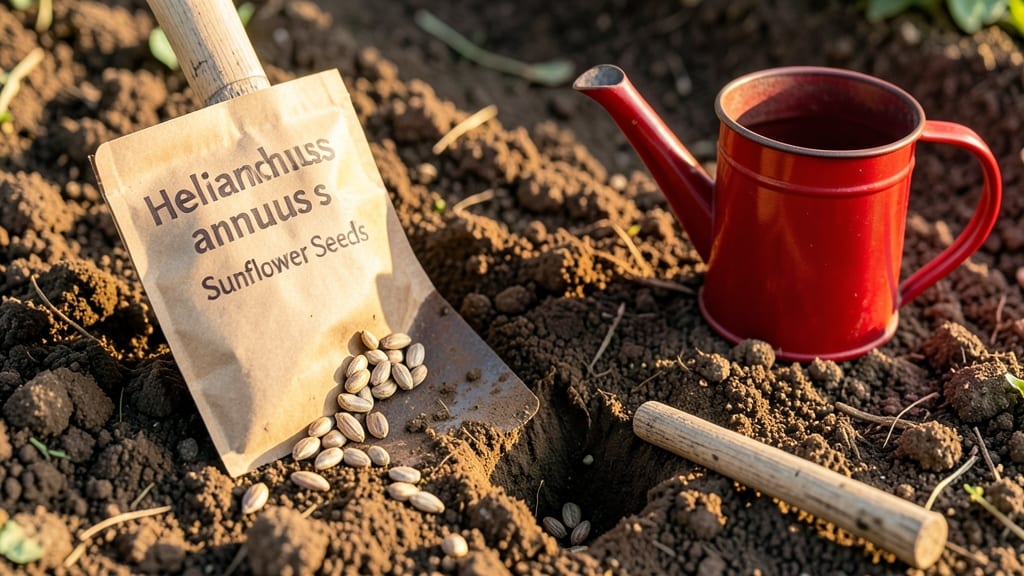
Planting sunflower seeds at the right depth—1 inch deep—is the secret to fast germination and stems strong enough to support those towering 🌻 blooms you love.
Too shallow, and they’ll struggle to push through the soil; too deep, and they’ll rot before they even sprout. I’ve seen 6-foot sunflowers snap in a breeze because their roots never got the right start—and you can avoid that with just a little precision.
This guide covers the exact planting depth for your sunflower variety, soil adjustments for clay or sandy ground, and pro tips to keep those seedlings thriving from day one.
Whether you’re growing dwarf varieties in containers or giant sunflowers in the garden, you’ll learn how to plant them for fast, healthy growth that stands up to wind and weather.
Optimal sunflower seed planting depth by variety and soil type
Sunflower seeds need precise planting depths to thrive—too shallow, and they’ll dry out; too deep, and they’ll struggle to reach the surface. The right depth ensures strong roots and sturdy stems capable of supporting those massive blooms.
For most varieties, I aim for 1 inch deep, but adjustments are key based on your sunflower type and soil conditions.
Dwarf varieties like 'Teddy Bear' (1-3 feet tall) have delicate stems that benefit from shallower planting—just ¼ to ½ inch deep.
Mid-size varieties such as 'Moulin Rouge' (3-6 feet) thrive at ½ to 1 inch, while giant varieties like 'Russian Giant' (10+ feet) need 1 to 1½ inches to develop robust root systems for their towering height.
Soil type dramatically impacts planting depth. In sandy soil, which drains quickly, I plant seeds slightly shallower (¼ inch less) to prevent them from drying out before sprouting.
Conversely, clay soil holds moisture longer, so I increase depth by ¼ inch to protect seeds from rotting in waterlogged conditions.
The science behind these depths is simple: seeds need moisture and warmth to germinate, but they also require oxygen for root development. Planting too deep suffocates the seed, while shallow planting exposes it to drying out.
For example, 'Autumn Beauty' (a mid-size variety) planted at ½ inch in sandy soil germinates in just 7 days, but the same depth in clay soil may take 12 days due to slower moisture absorption.
For container-grown sunflowers, I reduce depth by ⅛ inch since pots dry out faster. Use a moisture meter to check soil dampness—if the top ½ inch feels dry, it’s time to water. Overwatering is just as harmful as underwatering, especially for giant varieties whose deep roots need well-aerated soil.
Pro tip: Use a seed depth gauge (or a pencil) to mark planting lines in your soil. This ensures consistency, especially when planting multiple rows. I also press the soil gently around the seed to eliminate air pockets, which can delay germination by up to 3 days.
After planting, maintain soil moisture by mulching with straw or shredded leaves. This keeps the seedbed cool and retains humidity, which is critical for the first 7–10 days post-planting. Avoid compacting the soil—lightly firm it with your fingers to create a snug fit without crushing the seed.
Watch for seedling rot if your climate is unusually wet. In such cases, I elevate seeds slightly by mixing sand into the planting hole to improve drainage. For drought-prone areas, a deeper planting (up to 1½ inches) helps seeds access moisture from lower soil layers.
Finally, rotate your planting direction if you’re growing multiple rows. This prevents shadows from taller varieties from stunting smaller sunflowers. With the right depth and care, your sunflowers will reward you with bold blooms and sturdy stems—ready to dance in the breeze! 🌻
Common mistakes that stunt sunflower growth (and how to fix them)
Sunflower seeds planted too shallow or too deep can trigger a cascade of problems—from slow germination to weak stems that topple before blooming. I’ve seen leggy seedlings stretch toward the sun only to flop over, or seeds rot before sprouting because they were buried too deep.
The key is finding that 1-inch sweet spot where roots anchor properly without suffocating.
Even experienced gardeners sometimes misjudge depth, especially in heavy clay or loose sandy soils. For example, clay soil can make seeds feel deeper than they are, while sandy soil may require slightly deeper planting to hold moisture.
Let’s break down the most common mistakes and how to correct them before your sunflowers even sprout.
Planting Depth Mistakes & Fixes
Mistake: Planting Too Shallow
- Symptoms: Seeds dry out, fail to sprout
- Root cause: Insufficient soil contact
- Fix: Cover seeds with 1 inch of soil
Mistake: Planting Too Deep
- Symptoms: Seedling rot, slow germination
- Root cause: Lack of oxygen, excess moisture
- Fix: Max 1.5 inches for giant varieties
Mistake: Uneven Soil
- Symptoms: Lopsided growth, weak stems
- Root cause: Inconsistent planting depth
- Fix: Level soil with rake before planting
Mistake: Overcrowding
- Symptoms: Stunted growth, competition
- Root cause: Seeds planted too close
- Fix: Space seeds 6 inches apart
Leggy sunflower seedlings often signal another planting mistake: insufficient sunlight. If your seeds are planted correctly but still stretch toward the light, they’re likely not getting 6+ hours of sun daily.
Move them to a sunnier spot immediately—they’ll thicken up and develop stronger stems within days. I’ve even seen container-grown sunflowers grow straighter when rotated daily to ensure even light exposure.
Seedling rot is another red flag, usually caused by overwatering combined with planting too deep. If you notice blackened stems at the soil line, dig up the seedling and check the roots.
Healthy roots should be white and firm, while rotted roots will be mushy and discolored. To prevent this, always plant in well-draining soil and water only when the top inch is dry.
For slow germination, try pre-soaking seeds overnight in warm water. This mimics natural rainfall and can speed up sprouting by 2-3 days. Just be sure to plant them at the correct 1-inch depth afterward—soaking won’t compensate for poor planting technique.
Once sprouted, thin seedlings to 12 inches apart to give them room to grow without competing for nutrients.
Remember, sunflowers are resilient once they get past the germination stage. With the right planting depth and a little troubleshooting, you’ll be rewarded with stems strong enough to support those iconic blooms—no flopping in sight! 🌻