
Companion Plants
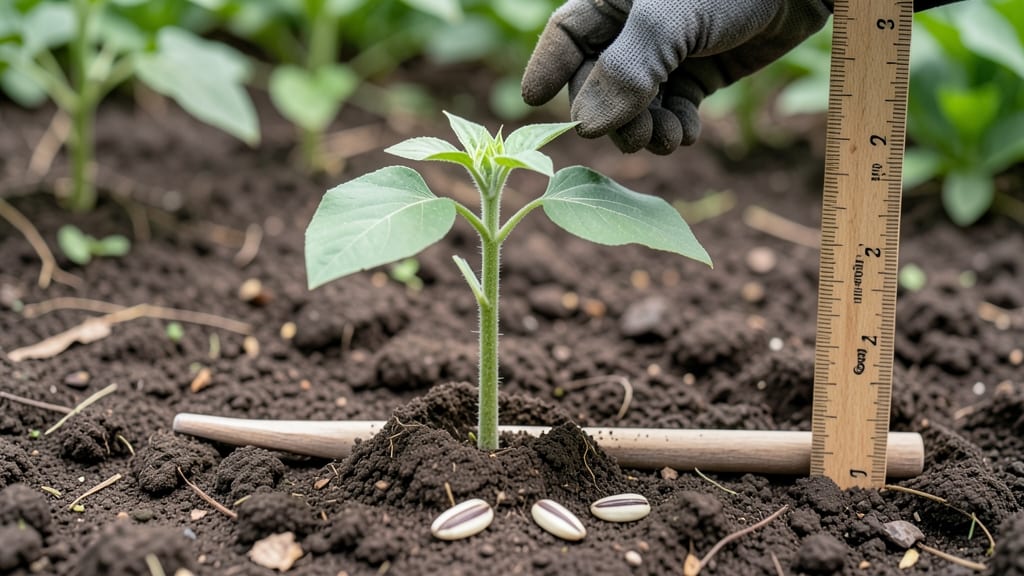
How deep should I plant sunflower seeds? The answer is simple: about 1 inch—the perfect depth to unlock those towering 🌻 stalks you dream of.
Too shallow, and they’ll struggle to root; too deep, and they’ll rot before they even sprout. I’ve seen both mistakes firsthand, and the difference in growth is night and day.
Sunflowers thrive in USDA Zone 6a when planted in April or May, but getting the depth right is what separates a weakling from a champion. A little extra effort now means fewer headaches later.
Below, I’ll break down the exact planting depth for different seed types, how to prep your soil, and the 3 most common mistakes that kill germination before it starts.
The ideal sunflower seed planting depth by seed type (with exact measurements)
Sunflower seeds are surprisingly delicate when it comes to planting depth. Too shallow, and they won’t anchor properly—too deep, and they’ll struggle to break through the soil.
The golden rule for most sunflower varieties is planting at 1 inch deep, but this can vary slightly based on seed size and soil conditions. Understanding these nuances ensures your sunflowers grow strong, straight stems and reach their full potential height.
Giant sunflower varieties like 'Mammoth' or 'Russian Giant' need slightly more depth (1.5 inches) to support their massive weight, while dwarf varieties ('Teddy Bear' or 'Sunspot') thrive at the standard 1-inch depth.
The key is balancing moisture retention with the seed’s ability to push upward—too much soil creates resistance, while too little leaves seeds vulnerable to drying out or being washed away.
Why depth matters: Sunflower seeds contain stored energy in their cotyledons (seed leaves) to fuel early growth. Planting too deep forces them to use up reserves just to reach the surface, weakening the stem. Conversely, shallow planting can lead to top-heavy seedlings that flop over before developing strong roots. Aim for a depth that keeps seeds moist but accessible.
Soil type adjustments are crucial. In sandy soil, which drains quickly, plant seeds at the upper limit (1.5 inches) to retain moisture. In clay soil, which compacts easily, stick to 1 inch or less to prevent suffocation. Loosen soil around the seed to improve aeration and root penetration—this is especially important for heavy soil types.
Here’s a quick reference for the ideal planting depth based on seed type and soil conditions:
| Seed Type | Soil Type | Planting Depth | Notes |
|---|---|---|---|
| Standard (e.g., 'Autumn Beauty') | Loamy | 1 inch | Balanced moisture retention |
| Giant (e.g., 'Mammoth') | Any | 1.5 inches | Supports heavy stems |
| Dwarf (e.g., 'Teddy Bear') | Sandy | 0.75 inch | Prevents drying out |
| All Types | Clay | 1 inch (loosen soil) | Avoid compaction |
| All Types | Sandy | 1.25 inches | Retains moisture |
For container gardening, use the same depth rules but ensure your pots have drainage holes to prevent waterlogging. If planting in cool climates, slightly deeper planting (1.25 inches) can help seeds warm up faster in the soil.
Conversely, in hot, dry regions, shallow planting (0.75 inch) reduces moisture loss.
After planting, gently press soil around seeds to create contact but avoid compacting it. This ensures roots can penetrate easily while keeping seeds secure. Water lightly to settle the soil, then maintain consistent moisture—not soggy—until germination, which typically occurs in 7-14 days depending on temperature.
Watch for seedling emergence to confirm your depth was correct. Healthy seedlings will push through soil with straight stems and vibrant leaves. If you notice leggy or weak seedlings, they may have been planted too deep. Adjust future plantings accordingly for stronger, more resilient sunflowers.
Pro tip: Use a seed spacing marker (like a popsicle stick) to mark planting spots—this helps track depth and prevents overcrowding. With the right depth, your sunflowers will grow taller, sturdier, and more productive, rewarding you with those iconic bright yellow blooms all summer long. 🌻
5 Common mistakes that ruin sunflower germination (and how to fix them)
Even the hardiest sunflower seeds can fail to sprout if planted incorrectly. Overwatering, poor soil prep, or wrong depth are silent killers of germination. I’ve seen 90%+ germination rates vanish because of just one of these mistakes—don’t let it happen to your sunflowers!
Sunflower seeds need consistent moisture and loose soil to break through the shell and sprout. Too much pressure from compacted soil or uneven watering can suffocate them before they even emerge. The fix? Start with well-aerated soil and a gentle watering schedule.
How deep should I plant sunflower seeds? Never deeper than 1-2 inches—any deeper and they’ll struggle to reach the surface. Too shallow (less than 1 inch) exposes them to drying out. Use your finger to make a hole just 1 inch deep for standard varieties, or ½ inch for tiny dwarf seeds. Press lightly but don’t compact the soil around them.
Another common mistake is planting in cold soil. Sunflower seeds germinate best in soil that’s at least 55°F (13°C). If your soil is cooler, your seeds may rot instead of sprouting.
Wait until the last frost date has passed and soil has warmed up—usually late spring in most climates.
Overcrowding is another silent saboteur. While sunflowers love space, planting them too close together leads to competition for nutrients and increased disease risk. Space seeds 6-12 inches apart for dwarf varieties and 18-24 inches for giants. Thin seedlings to avoid overcrowding stress.
Finally, inconsistent moisture after planting can cause seeds to dry out or develop fungal issues. Keep the soil evenly moist (not soggy) until germination, which typically takes 7-14 days. Use a light mulch layer to retain moisture and protect young sprouts.
By avoiding these five mistakes, you’ll give your sunflower seeds the best chance to sprout strong and healthy. Patience and precision pay off with towering, vibrant blooms by summer! 🌻