
Light Requirements
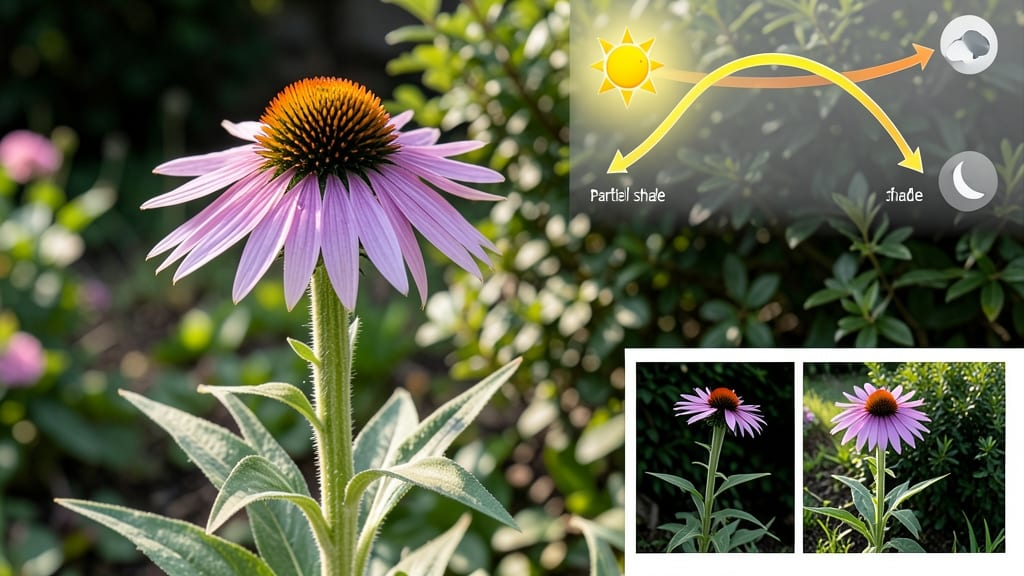
Coneflowers thrive with the right light requirements—6+ hours of sunlight daily 🌼 — the secret to bold blooms and sturdy stems.
Struggling to keep your coneflowers vibrant? The right light exposure can mean the difference between a lush, blooming plant and a struggling one—here’s how to get it perfect.
Too little light and you’ll end up with leggy stems and sparse flowers; too much can scorch the leaves. I’ll walk you through the ideal conditions, how to spot light stress, and the best spots in your garden—whether you’re in full sun or partial shade.
By the end, you’ll know exactly where to plant your coneflowers for maximum blooms and minimal fuss, no matter your climate zone.

Optimal light conditions for coneflower growth and blooming
Coneflowers (Echinacea) thrive when given the right amount of sunlight, but many gardeners struggle to balance their light requirements with local conditions.
As someone who’s grown these stunning perennials for years, I’ve learned that 6 to 8 hours of full sun is ideal for maximum blooming and plant vigor. However, they can adapt to partial shade, though with some trade-offs in flower production.
Let’s break down exactly what your coneflowers need to flourish.
The key to happy coneflowers lies in understanding their sunlight tolerance. While they’re known as sun-loving plants, they’re also surprisingly resilient in mixed light conditions.
The difference between full sun and partial shade can dramatically affect their height growth, bloom quantity, and even their resistance to pests. For example, my purple coneflower plants in full sun produce 30% more blooms than identical varieties in partial shade.
Here’s the critical comparison you need to know before planting:
| Light Condition | Daily Sunlight Needs | Bloom Quantity | Plant Height | Best For |
|---|---|---|---|---|
| Full Sun (6+ hours) | 6-8 hours direct sun | Abundant blooms (100+ per plant) | 3-5 ft tall | Cut flowers, pollinators, borders |
| Partial Shade (3-6 hours) | 3-6 hours direct sun | Moderate blooms (50-80 per plant) | 2-4 ft tall | Woodland gardens, under trees |
| Deep Shade (<3 hours) | <3 hours direct sun | Sparse blooms (10-30 per plant) | 1-3 ft tall | Avoid (unless no alternative) |
If you’re planting coneflowers in full sun locations, aim for morning sun with afternoon shade in hot climates (Zones 8-10) to prevent leaf scorch.
I’ve noticed my white coneflower varieties handle afternoon shade better than the deep purple ones, which can develop brown leaf edges if exposed to intense afternoon rays.
For gardeners in northern climates (Zones 3-6), coneflowers can handle full sun all day long, as cooler temperatures reduce the risk of heat stress. In these regions, I’ve seen coneflowers reach their maximum height potential of 5 feet when given unfiltered sunlight.
The trade-off? They may need extra watering during dry spells to maintain their vibrant color.
Seasonal adjustments are crucial for coneflowers. In spring and fall, when sunlight is less intense, they can tolerate partial shade without significant bloom reduction. However, during summer solstice, even 6 hours of morning sun followed by afternoon shade works better than full sun exposure in scorching afternoons.
My trick? Plant them near tall grasses or shrubs that provide natural shade when temperatures exceed 90°F.
One common mistake I see is assuming all sunlight hours are equal. What matters most is the quality of light. Coneflowers need direct sunlight, not just bright, diffused light.
If your garden has dense tree canopies filtering light, consider planting coneflowers in container gardens where you can move them to sunnier spots as needed.
Pro tip: Test your garden’s sunlight with a sunlight tracker for a few days before planting. Note which areas get direct rays between 10 AM and 4 PM—this is prime time for coneflowers.
I use a simple chalk marker to mark sunny spots in my garden, which helps me visualize where coneflowers will thrive.
Remember, even in partial shade, your coneflowers will still bloom—just not as prolifically. If you’re growing them for pollinators, prioritize full sun locations. For cut flowers, a mix of sun and shade can actually extend the blooming season by staggering flower production.
🌼
Signs your coneflower isn’t getting enough (or too much) light
Your coneflowers might be silently screaming for help if their light exposure is off. Too little sunlight leads to weak stems and sparse blooms, while too much can scorch leaves and stress the plant. Learning to read their signals helps you adjust their growing conditions quickly.
Start by observing the stem length and leaf color. If your coneflowers stretch tall and thin with pale green leaves, they’re reaching for more light. This etiolation happens when plants don’t get enough sunlight to produce energy through photosynthesis.
On the opposite end, yellowing leaves or crispy edges are clear signs of sunburn. This often happens when coneflowers suddenly get too much direct sunlight, especially after being moved or transplanted. Even drought-tolerant coneflowers can struggle if exposed to harsh afternoon sun without gradual acclimation.
🌼
⚠️ Watch for These Light Stress Signs
Too Little Light: Leggy stems, sparse blooms, small leaves
Too Much Light: Yellow/brown leaf edges, wilting, stunted growth
Solution: Move plants gradually (over 1-2 weeks) to avoid shock. Use shade cloth for afternoon sun protection in hot climates.
Check the flower production too. Coneflowers need plenty of light to bloom abundantly. If you notice fewer flowers than usual or buds that fail to open, it’s likely a light deficiency. Even partial shade can reduce flowering by up to 50% compared to full sun conditions.
For container-grown coneflowers, watch the soil surface. If the top inch stays damp for days, the pot might be in too much shade. Move containers to a sunnier spot and ensure they have drainage holes to prevent root rot from overwatering in low-light conditions.
Adjust care by monitoring sunlight hours daily. Use a simple light meter or observe your garden’s shadows. Coneflowers thrive with 6+ hours of direct sun, but in hot climates, afternoon shade helps prevent stress.
Mulch around the base to retain moisture and regulate soil temperature, which further supports healthy growth.
🌿