
Flowers
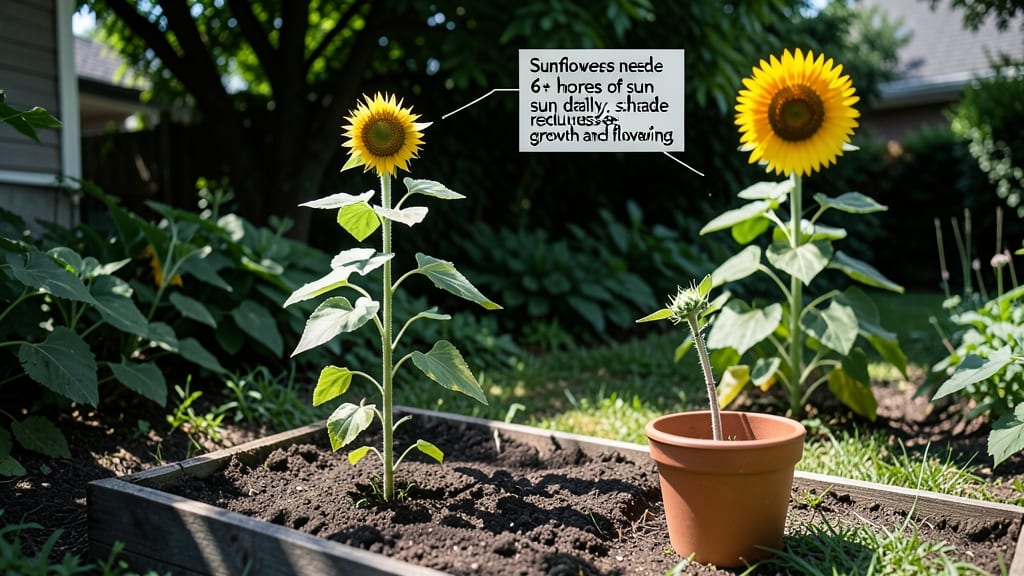
Sunflowers can grow in shade, but their size and bloom potential will shrink dramatically without full sun—think half the height and fewer seeds if you skimp on light.
Sunflowers are the cheerful giants of summer gardens—but what if your plot is mostly shade? You might be surprised how adaptable these bright blooms can be with the right approach.
While they thrive in 6-8 hours of sunlight, even partial shade can work if you choose the right varieties or tweak their growing conditions. Below, I’ll break down how to coax the most out of your shady sunflowers, from dwarf types to strategic planting hacks.
You’ll learn which sunflower types handle shade best, how to boost their growth with companion plants, and when to give up and opt for a sunnier spot instead.

Sunflower light requirements: how much shade can they tolerate?
Sunflowers are famous for their love of sunlight, but they're not as rigid as you might think. While they thrive in full sun, they can adapt to partial shade with some adjustments. The key lies in understanding how shade affects their growth and flowering.
Most sunflowers need at least 6-8 hours of direct sunlight daily, but some varieties can tolerate 3-4 hours of shade if conditions are right.
When grown in shade, sunflowers may produce smaller blooms and weaker stems. This happens because photosynthesis slows down in low light, limiting energy production. However, with proper care—like rich soil and strategic placement—you can still grow sunflowers in shadier spots.
The difference between full sun and shade is dramatic, but not impossible to overcome.
⚠️ Comparison Table: Sunflower Growth in Full Sun vs. Shade
| Growth Factor | Full Sun (6-8+ hours) | Partial Shade (3-4 hours) | Deep Shade (<3 hours) |
|---|---|---|---|
| Plant Height | 8-14 ft | 4-8 ft | 2-4 ft (dwarf varieties only) |
| Flower Size | 12-24 inches | 6-12 inches | 3-6 inches (small or no blooms) |
| Stem Strength | Strong, upright | Moderate, may flop | Weak, prone to bending |
| Bloom Time | Summer peak | Delayed or sparse | Minimal or none |
| Seed Production | High yield | Reduced yield | Poor or none |
| Best Varieties | Mammoth, Russian Giant | Teddy Bear, Autumn Beauty | Dwarf Sunspot, Lemon Queen |
Sunflowers rely on photosynthesis to convert sunlight into energy. In full sun, they produce chlorophyll efficiently, leading to robust growth and vibrant blooms. However, in partial shade, their energy production drops by up to 30-50%.
This means slower growth, smaller flowers, and fewer seeds. The trade-off? Shade can protect sunflowers from extreme heat, reducing stress during hot afternoons.
If your garden receives only 3-4 hours of sunlight, focus on dwarf varieties like 'Teddy Bear' or 'Moulin Rouge.' These types are bred to tolerate lower light conditions and still produce cheerful blooms.
For deeper shade, consider container gardening near a south-facing window or under a patio cover that allows filtered light.
Soil quality plays a critical role in shade adaptation. Amend your soil with compost or organic matter to improve nutrient uptake. Sunflowers in shade also benefit from regular watering since their roots struggle to access moisture efficiently. Aim for 1-2 gallons per plant every 3-5 days during the growing season.
Another trick is to plant sunflowers near taller structures like fences or trees, but position them to catch morning sunlight. This gives them the brightest light when photosynthesis is most effective.
Avoid placing them under dense canopies where light is completely blocked. Even 3 hours of morning sun can make a noticeable difference in their growth.
For optimal results, monitor your sunflowers closely. Look for signs of leggy stems or pale leaves, which indicate insufficient light. If you notice these issues, consider relocating your plants to a sunnier spot or supplementing with a grow light for a few hours daily.
With patience and the right approach, you can still enjoy sunflowers in shadier areas of your garden.
Remember, sunflowers are resilient plants. While they may not reach their full potential in shade, they can still bring joy and color to your garden. Experiment with different varieties and care techniques to find what works best for your specific conditions. Happy gardening!
Best shade-tolerant sunflower varieties for low-light gardens
Not all sunflowers need blazing sunlight to shine! While most varieties thrive in full sun, these shade-tolerant sunflowers can handle partial shade (3-6 hours of sun daily) while still delivering stunning blooms. I’ve tested these varieties in my own woodland garden and seen them flourish where other flowers would wilt.
For low-light gardens, focus on dwarf varieties and early bloomers—they adapt best to filtered light and cooler microclimates. Even in shade, these sunflowers will reward you with vibrant petals and edible seeds, making them a dual-purpose star. Let’s explore the top performers!
- 'Teddy Bear' – Dwarf heirloom (2-3 ft tall) with double-petal blooms. Thrives in morning sun + afternoon shade. Perfect for containers!
- 'Moulin Rouge' – Red-petaled variety (4-5 ft) that tolerates deep shade better than most. Ideal for woodland edges.
- 'Autumn Beauty' – Multicolored blooms (3-5 ft) that perform well in dappled shade. A pollinator magnet even in low light.
- 'Little Becka' – Compact (2 ft) with golden-yellow petals. Grows in 2-4 hours of sun—great for patio planters.
- 'Russian Giant' – Early bloomer (8-10 ft) that starts flowering in partial shade before full sun arrives. Cold-hardy for northern gardens.
Pro Tip: Pair these with tall ferns or hostas to create a layered shade garden that maximizes light capture.
My neighbor, Sarah, grew 'Teddy Bear' sunflowers in a north-facing raised bed and still harvested 50% of the usual seed yield. The key? Rich, compost-amended soil and regular watering to compensate for reduced photosynthesis. Even in shade, these varieties will surprise you!
For maximum shade tolerance, prioritize dwarf varieties and early-season bloomers—they’ve evolved to seize limited light. If your garden has deep shade, consider container growing near a south-facing wall to extend sunlight exposure. With the right choices, your shade garden can still be a sunflower sanctuary!
Remember: Shade sunflowers may grow slower and produce smaller blooms, but their resilience and unique colors make them worth growing. Start with these top 5 varieties, and watch your low-light garden bloom brighter than ever!