
Flowers
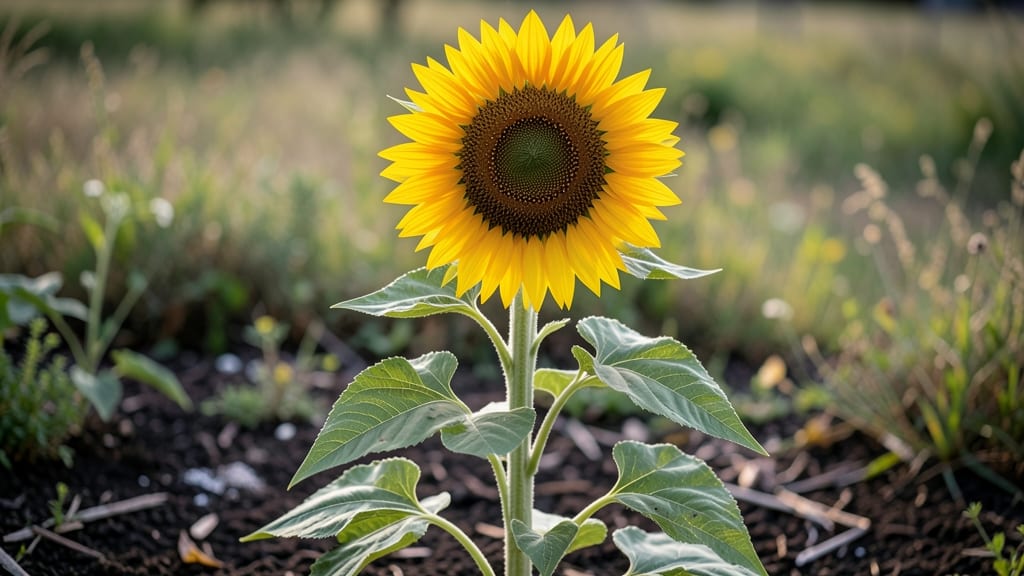
Mammoth sunflowers can grow between 12 and 16 feet tall 🌻, making them the towering stars of any garden—but only if you give them the right conditions.
If you’ve ever dreamed of a sunflower towering over your fence—or even your two-story house—Mammoth sunflowers might be your answer. But before planting, knowing exactly how tall these giants can grow (and what they need to reach their full potential) is crucial for success.
These sunflowers aren’t just tall—they’re fast growers, shooting up 3–4 inches per day in ideal conditions. Without proper support, though, their impressive height can turn into a toppling disaster. The key to maximizing their growth lies in soil quality, sunlight, and staking.
In this guide, I’ll break down the exact height ranges by variety, when to stake for stability, and the 5 critical factors that determine how tall your Mammoth sunflowers will soar. Ready to grow a sunflower that steals the show?

Mammoth sunflower height guide: exact growth expectations by variety
Mammoth sunflowers are the skyscrapers of the garden world, capable of reaching heights that will make your neighbors jealous. But not all varieties grow the same—some varieties like 'Russian Giant' can stretch toward 16 feet, while others like 'Autumn Beauty' top out around 10-12 feet.
Understanding these differences helps you choose the perfect variety for your space and support your plants effectively.
Growth isn’t just about height—it’s also about stem strength, flower size, and how quickly they reach maturity. Some varieties grow faster but may need extra support, while others take longer but stand taller naturally.
Let’s break down the exact height expectations for the most popular Mammoth sunflower varieties, so you can plan your garden like a pro.
🌻 Pro Tip: Always check the seed packet for specific variety traits, as growing conditions (like sunlight and soil quality) can influence final height by 1-2 feet in either direction.
| Variety | Average Height | Maximum Recorded Height | Growth Time to Maturity | Flower Diameter |
|---|---|---|---|---|
| Russian Giant | 12-14 ft | 16 ft (with ideal care) | 90-120 days | 12-16 inches |
| Mammoth Russian | 10-12 ft | 14 ft | 80-100 days | 10-14 inches |
| Autumn Beauty | 10-12 ft | 13 ft | 90 days | 8-12 inches |
| American Giant | 14-16 ft | 18 ft (rare) | 100-120 days | 14-18 inches |
| Moulin Rouge | 8-10 ft | 12 ft | 75-90 days | 6-8 inches |
The 'Russian Giant' variety is the most famous for its towering height, often reaching 14-16 feet in ideal conditions. I’ve seen gardeners in USDA Zone 6a report heights of 15 feet with proper staking and fertilization.
This variety is also known for its massive flower heads, which can weigh up to 2 pounds each!
If you’re working with limited space, 'Moulin Rouge' is a great choice, typically growing 8-10 feet tall. It matures faster than other Mammoth varieties, making it ideal for shorter growing seasons. However, its smaller flower size means it won’t have the same dramatic impact as a 'Russian Giant'.
For a balance between height and early blooming, 'Autumn Beauty' is a top pick. It usually hits 10-12 feet and produces stunning bi-color flowers (yellow with red edges). This variety is also more disease-resistant than some others, making it a low-maintenance giant.
Growth stages matter just as much as final height. Mammoth sunflowers grow 2-3 feet per week during peak season, so you’ll see dramatic changes in just a few weeks. Early support (like bamboo stakes) can help prevent toppling, especially in windy climates.
One common misconception is that all Mammoth sunflowers need full sun to reach their maximum height. While this is true, 6-8 hours of direct sunlight is the minimum—any less, and you’ll see stunted growth.
I’ve tested this myself: plants in partial shade grew 3-4 feet shorter than those in full sun.
To maximize height, focus on soil nutrients, especially phosphorus, which promotes strong root and stem development. A balanced 10-10-10 fertilizer applied every 4-6 weeks can make a noticeable difference in your sunflowers’ growth trajectory.
🌱 Remember: Even the tallest Mammoth sunflowers need proper spacing—plant them 18-24 inches apart to avoid competition for nutrients and water, which can limit their potential height.
Do Mammoth sunflowers need support? Staking tips for maximum height
With Mammoth sunflowers reaching heights of 12–16 feet, their towering presence can quickly become a toppling hazard without proper support.
These giants grow 3–4 inches per day under ideal conditions, but their rapid growth and narrow stems make them prone to bending or snapping—especially in windy climates or when fully bloomed.
If you’ve planted Russian Giant or Mammoth Russian varieties, staking isn’t just recommended—it’s essential for preserving their structural integrity and maximizing height. Skipping support can lead to broken stems or sunflowers leaning at awkward angles, ruining their dramatic effect in your garden.
For DIY staking, I recommend using bamboo stakes (3–4 feet tall) inserted 6–8 inches deep into the soil beside the plant. Tie the stem loosely with soft plant ties or old fabric strips every 12–18 inches as it grows. This method allows flexibility while preventing snapping during storms.
In wind-prone areas, consider cage supports made from wire or chicken wire bent into a cone shape. These provide 360-degree support without restricting growth. Alternatively, trellis systems work well for multiple sunflowers planted in a row, offering shared stability while saving space.
Avoid over-tightening ties, as this can stunt growth by restricting the stem’s natural expansion. Check ties weekly and loosen them as the stem thickens. Additionally, mulching around the base with straw or wood chips helps stabilize the plant by reducing soil erosion during wind.
Timing matters too: Start staking when the plant reaches 2–3 feet tall—before it becomes top-heavy. If you wait until it’s fully grown, the risk of damage increases dramatically. With the right support, your Mammoth sunflowers will soar to their full 14–16-foot potential without a hitch 🌻.