
Flowers
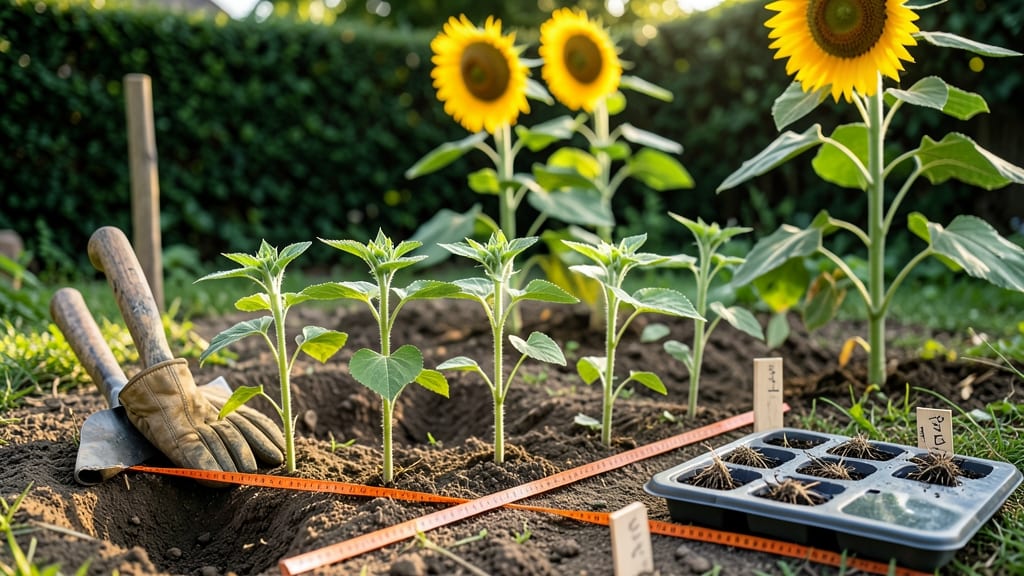
To plant sunflowers how far apart should sunflowers be planted, aim for 12 to 24 inches apart depending on their mature height—dwarf varieties need less room, while giants require more to reach their full potential.
Picture this: rows of sunflowers 🌻 stretching toward the sky, their golden blooms swaying in the breeze. But if you crowd them too closely, you’ll end up with weak stems, fewer flowers, and a garden that looks more like a jungle than a sunlit paradise.
Spacing isn’t just about aesthetics—it’s the key to stronger stems, bigger blooms, and healthier plants. Too little room means competition for sunlight and nutrients, while too much space can leave your garden looking sparse. The right distance ensures every sunflower gets the light and air it needs to thrive.
In this guide, I’ll break down the exact spacing for dwarf, standard, and giant sunflowers, plus tips for adjusting spacing in containers, raised beds, and small gardens. You’ll also learn how to spot overcrowding early and fix it before your plants suffer.
Sunflower spacing chart by variety: dwarf vs. giant vs. standard heights
Sunflowers come in stunning diversity—from dwarf varieties perfect for containers to giant sunflowers that reach skyscraper heights. But their spacing needs vary wildly. Plant dwarf sunflowers too far apart, and you waste space; crowd giant varieties, and you risk weak stems and disease.
The key? Match spacing to each variety's mature height and root spread to ensure every plant gets the sunlight and nutrients it craves.
Proper spacing isn’t just about aesthetics—it’s about maximizing blooms and preventing competition. Tall sunflowers need room to sway in the breeze without toppling, while dwarf types benefit from closer planting to create lush borders.
Below, I’ll break down the ideal spacing for each sunflower category, plus soil prep tips and companion planting strategies to set your sunflowers up for success.
Why spacing matters: Sunflowers are heavy feeders, and crowded plants compete for water, nutrients, and sunlight. Overcrowding leads to pale stems, fewer blooms, and even powdery mildew from poor airflow. But with the right distance, you’ll grow bold, healthy sunflowers that attract bees and brighten your garden from summer to fall.
| Variety Type | Mature Height | Plant Spacing | Row Spacing | Best For |
|---|---|---|---|---|
| Dwarf (e.g., 'Teddy Bear', 'Moulin Rouge') | 1–3 ft | 6–12 inches apart | 12–18 inches between rows | Containers, borders, pollinator gardens |
| Semi-Dwarf (e.g., 'Autumn Beauty', 'ProCut') | 3–6 ft | 12–18 inches apart | 24–30 inches between rows | Cut flower gardens, small plots |
| Standard (e.g., 'Mammoth', 'Russian Giant') | 6–12 ft | 18–24 inches apart | 36–48 inches between rows | Back of borders, field planting |
| Giant (e.g., 'Mammoth Russian', 'American Giant') | 12–16 ft | 24–36 inches apart | 48–60 inches between rows | Large gardens, windbreaks, statement plants |
For dwarf sunflowers, like 'Teddy Bear' or 'Moulin Rouge', keep them 6–12 inches apart in containers or borders. Their compact size makes them perfect for pollinator gardens or cutting arrangements.
Plant them in groups of 3–5 for a full, bushy look, and space rows 12–18 inches apart to allow easy weeding and airflow.
When planting standard or giant sunflowers, like 'Mammoth Russian' or 'American Giant', give them ample room to grow. These varieties can reach 12–16 feet tall, so space them 24–36 inches apart in rows 48–60 inches apart.
This prevents stem breakage and ensures each plant gets full sun exposure from top to bottom. In windy areas, consider staking taller varieties or planting them in clusters of 3–5 for mutual support.
Before planting, prep your soil with compost or aged manure to improve drainage and fertility. Sunflowers love well-draining soil with a pH of 6.0–7.5. Mix in sand or perlite if your soil is heavy clay, and avoid planting in low-lying areas where water pools.
For container growing, use a large pot (at least 12 inches deep) with drainage holes and fill it with a lightweight potting mix.
Companion planting can boost your sunflowers’ growth and deter pests. Pair them with bush beans or corn to improve soil nitrogen, or plant marigolds nearby to repel aphids and pests.
Avoid planting sunflowers near potatoes or tomatoes, as they compete for the same nutrients and can stunt each other’s growth.
If you’re short on space, try staggered planting: Sow seeds in successive batches every 2 weeks to extend your blooming season. This works especially well for dwarf and semi-dwarf varieties, which mature faster. For giant sunflowers, focus on single-row planting in wide beds to give their
How to adjust sunflower spacing for different garden layouts
Not all gardens are created equal, and neither are their spacing needs. Whether you're working with a small urban patio, a raised bed, or a sprawling in-ground plot, sunflowers need tailored spacing to thrive.
Crowding leads to weak stems and fewer blooms, while over-spreading wastes space. Let's break down how to adjust spacing for your specific setup to maximize those cheerful sunflower blooms without sacrificing yield or beauty.
For containers and small spaces, dwarf varieties like 'Teddy Bear' or 'Moulin Rouge' are ideal. These compact plants can handle closer spacing—just 6-12 inches apart—while still producing vibrant flowers.
The key is choosing the right variety for your space constraints, as even tall sunflowers can adapt if given proper support and care. Always ensure your container has drainage holes to prevent root rot, especially in heavy summer rains.
Here’s how to adjust spacing for different layouts to get the most out of your sunflowers:
For raised beds, aim for 12-18 inches between plants and 24-36 inches between rows. This spacing prevents competition for nutrients while allowing air circulation to reduce fungal diseases. Stagger your rows by 12 inches to create a natural trellis effect, supporting taller varieties without additional structures.
If space is tight, interplant sunflowers with shallow-rooted crops like lettuce or radishes to maximize your bed's productivity.
In in-ground plots, give sunflowers more room to stretch their legs—18-24 inches apart and 36-48 inches between rows. This layout accommodates their towering growth while preventing overcrowding.
For tall varieties like 'Russian Giant' or 'Mammoth', add stakes or trellises at planting to support their weight and prevent flopping. Staggering rows by 18 inches also helps distribute root systems more evenly, ensuring consistent growth across your plot.
Even in urban gardens with limited space, sunflowers can thrive with the right approach. Opt for dwarf or semi-dwarf varieties like 'Teddy Bear' or 'Sunspot' and space them 8-12 inches apart in containers. If you're growing on a balcony, ensure containers are at least 5 gallons to accommodate their root systems. Place containers in the sunniest spot possible,