
How To
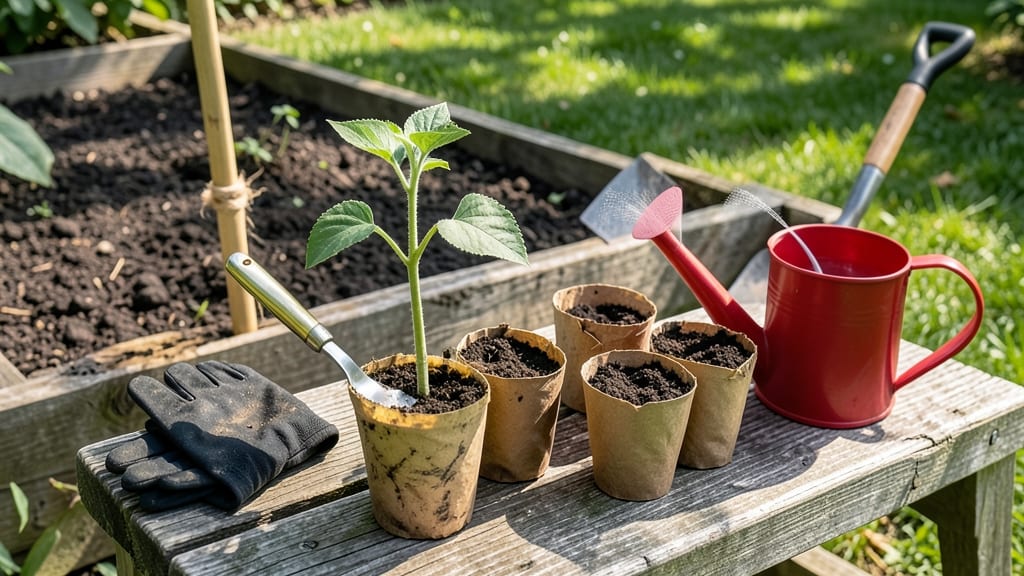
Transfer sunflower seedlings when they’ve developed 2-4 true leaves and soil temperatures stay above 50°F (10°C)—timing that right means the difference between towering 🌻 blooms and stunted growth.
Sunflowers are a gardener’s delight, but transferring delicate seedlings too early—or too late—can stunt growth or invite pests. The key is patience: rushing them into cold soil shocks their roots, while waiting too long risks overcrowding and leggy stems.
Most gardeners in USDA Zone 6 aim for late April to early May, after the last frost but before summer’s intense heat. That’s when seedlings are sturdy enough to handle outdoor conditions, but not so tall they’ll flop over in the wind.
Below, I’ll walk you through how to check if your seedlings are ready, the 7-day hardening-off schedule that prevents transplant shock, and how to adjust for early or late seasons—so you end up with sunflowers that reach their full potential.
Sunflower seedling transplant timeline: when to move them outside
Timing your sunflower seedlings' transplant is critical for their survival and growth. The ideal window is 4-6 weeks after germination, when seedlings have developed 4-6 true leaves and sturdy stems.
This period balances their need for protection with their readiness to thrive outdoors. Rushing the process risks shock or pest damage, while waiting too long may stunt their growth potential.
Sunflowers are hardy annuals that thrive in USDA Zones 2-11, but your local climate dictates the exact transplant date. In cooler zones (like Zones 2-5), aim for after the last frost date, typically mid-April to early May.
Warmer zones (like Zones 8-11) can transplant as early as late February to March, provided soil temperatures stay above 50°F (10°C).
Soil temperature is a non-negotiable factor. Use a soil thermometer to confirm readings of at least 50°F (10°C) at a depth of 2 inches. Cold soil slows root development, leaving seedlings vulnerable to rot or poor establishment.
If your soil is still chilly, consider using black plastic mulch to warm it faster.
Seedling height and leaf count are your best indicators of readiness. Look for 6-12 inches in height and 4-6 true leaves (excluding the initial cotyledons). These traits signal that the root system has strengthened enough to support outdoor conditions. A firm stem that doesn’t snap easily is another green light.
Hardiness zone adjustments are essential for early or late seasons. In northern climates (Zones 2-4), delay transplanting until mid-May to June to avoid late frosts.
Conversely, southern gardeners (Zones 9-11) can start as early as January to February, but monitor for heat stress if temperatures exceed 85°F (29°C).
Weather conditions play a pivotal role in transplant timing. Avoid moving seedlings outdoors if rain is forecasted within 24 hours, as soggy soil can suffocate roots. Similarly, high winds or extreme heat (above 90°F/32°C) should delay transplanting until conditions stabilize. Check your local 10-day forecast to plan accordingly.
Regional microclimates can shift transplant windows by weeks. Coastal areas, for example, may experience cooler, foggier conditions that delay planting until late May or June. Conversely, inland or desert regions might allow earlier transplants in March, provided irrigation is adequate. Observe nearby mature sunflowers as a natural guide.
Preparing your outdoor garden bed is just as important as timing. Amend the soil with compost or aged manure to improve drainage and fertility. Sunflowers prefer loamy, well-draining soil with a pH of 6.0-7.5.
Space seedlings 12-24 inches apart, depending on the variety—dwarf types need less room, while standard varieties require more.
Transplanting at the right time sets the stage for vibrant blooms and strong stems. By aligning your schedule with seedling maturity, soil temperature, and weather forecasts, you’ll give your sunflowers the best chance to thrive.
Keep an eye on those true leaves and stem strength—they’re your best indicators of transplant readiness!
🌱
Hardening off sunflower seedlings: a 7-Day schedule to prevent shock
Hardening off sunflower seedlings is the critical bridge between indoor starts and outdoor survival. Without this gradual adjustment, your seedlings may wilt under sunlight or succumb to windburn—costing you weeks of growth. The key is slow acclimation to mimic natural conditions, letting them toughen up before their big move.
Most gardeners in USDA Zone 6 begin hardening off in late April, about 1-2 weeks before the last frost date. Start when seedlings have 2-4 true leaves and soil temps are consistently above 50°F (10°C).
This schedule balances sun exposure, wind resistance, and temperature tolerance to prevent shock.
🌱 7-Day Hardening Off Schedule for Sunflowers
- Day 1: Place seedlings in partial shade (30% sunlight) for 1-2 hours. Monitor for wilting—water lightly if needed.
- Day 2: Increase to 3-4 hours of morning sun (avoid afternoon heat). Introduce light breeze near a window or fan.
- Day 3: Move to 50% sunlight for 4-5 hours. Place in a protected outdoor spot (e.g., porch or patio) if temps are above 55°F (13°C).
- Day 4: Gradually extend to 6-7 hours of direct sun. Introduce moderate wind by placing near a garden edge or using a small fan.
- Day 5: Full sun exposure for 8 hours (if temps are 60°F+ (16°C+)). Overnight, bring seedlings back indoors if temps drop below 50°F (10°C).
- Day 6: Leave outdoors overnight if temps stay above 50°F (10°C). Water deeply in the morning to reduce stress.
- Day 7: Full day-and-night outdoors. Seedlings should now handle wind, sun, and temperature swings without wilting. Transplant the next morning!
Adjust this schedule based on your local climate. In cooler zones (Zone 4-5), extend the process to 10-14 days to avoid frost damage. Conversely, in warmer zones (Zone 7+), you can speed up hardening off to 5 days if seedlings show no stress signs.
Watch for yellowing leaves or drooping stems—these are red flags. If you see them, move seedlings back indoors for 24 hours and resume the schedule at the previous day’s stage. Patience here pays off with sturdy, disease-resistant plants that thrive in your garden.
Once hardened off, transplant sunflowers on a cloudy day or in the early morning to minimize stress. Water deeply after planting to help roots establish quickly. With this gradual approach, your seedlings will thank you with vibrant blooms by summer! 🌻