
Planting
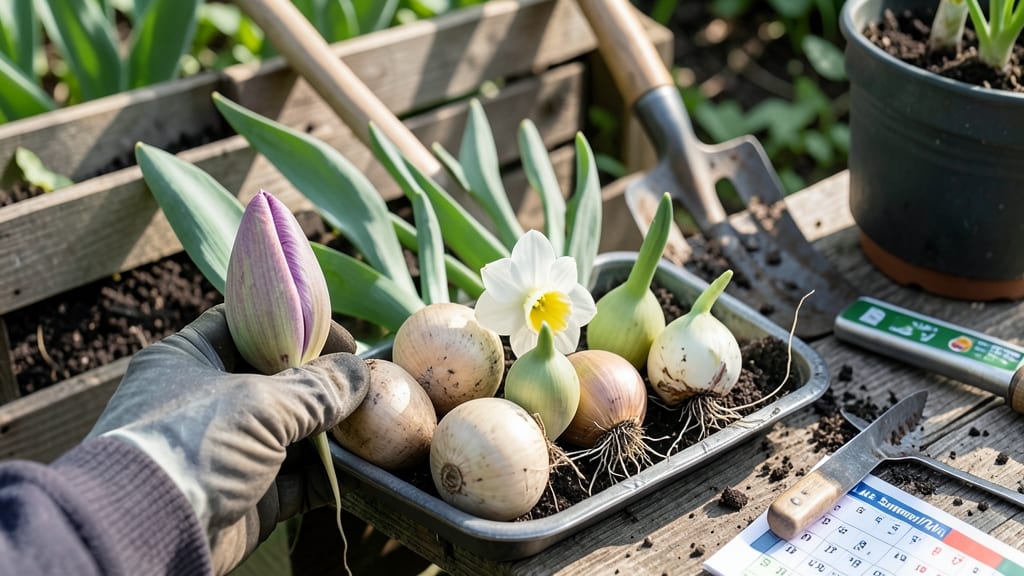
The best time to plant spring flowering bulbs 🌷 is 6-8 weeks before your first frost, when soil temps drop below 60°F but stay workable.
Did you know that planting your spring flowering bulbs at the right time—and under the right moon phase—can triple their bloom strength? Timing isn’t just about the calendar; it’s about unlocking nature’s hidden growth triggers.
For most gardeners in Zone 6a, that means late September through October, when the ground is cool but still soft enough to dig. Plant too early, and your bulbs may sprout and get fried by a late frost.
Too late, and they won’t root deeply enough for next spring’s showstopper blooms.
Below, I’ll break down the exact planting window for your region, how to prep soil for maximum root growth, and the one moon phase that makes all the difference in bulb vitality.
Optimal planting months for spring flowering bulbs by climate Zone
Planting your spring flowering bulbs like tulips, daffodils, and hyacinths at the right time ensures vibrant blooms next season. The key is planting them 6-8 weeks before the ground freezes, allowing roots to establish before winter dormancy.
Timing varies dramatically by climate zone, from mild coastal areas to harsh northern winters.
In USDA Zones 3-5 (northern regions like Minnesota or Canada), aim for September to mid-October—earlier than warmer zones.
Zones 6-8 (Midwest to Pacific Northwest) can plant until late October or early November, while Zones 9-11 (southern California, Florida) may plant as late as December or even January in frost-free areas.
European gardeners should follow similar rules: September-October for the UK and northern Europe, while Mediterranean climates (Spain, southern France) can plant into November or December. Microclimates matter—urban heat islands or protected garden spots may extend planting windows by 2-3 weeks.
| Climate Zone | Best Planting Month | Early Varieties | Late Varieties | Notes |
|---|---|---|---|---|
| USDA Zones 3-5 (Cold Winters) | September 15 - October 15 | Crocus, Snowdrops | Tulips, Daffodils | Plant early to avoid frost |
| USDA Zones 6-8 (Temperate) | October 1 - November 1 | Hyacinths, Early Tulips | Late Daffodils, Alliums | Flexible window; avoid soggy soil |
| USDA Zones 9-11 (Mild Winters) | November - January | Crocus, Miniature Daffodils | Tulips, Hyacinths | Plant after first frost risk passes |
| UK & Northern Europe | September - October | Snowdrops, Crocus | Tulips, Narcissi | Avoid waterlogged soil |
| Mediterranean (Spain, Italy) | November - December | Early Crocus | Tulips, Hyacinths | Plant in cooler months |
For early bloomers like crocuses and snowdrops, plant them 4-6 weeks before frost—they’re hardier and can handle colder soil. Late varieties (e.g., tulips and hyacinths) need that extra time to root, so push planting to the earlier end of your zone’s window.
If you miss the fall window, some bulbs (like daffodils) tolerate early spring planting (March-April), though blooms may be smaller. Tulips and hyacinths, however, must be planted in fall—they won’t survive if planted in spring. Always check your bulb’s specific variety notes for exceptions.
Soil temperature is critical: bulbs need 40-50°F soil to start rooting. Use a soil thermometer if unsure—planting too early in warm soil can trigger premature sprouting. In southern climates, pre-chill bulbs for 4-6 weeks before planting to mimic winter conditions.
Don’t forget microclimates! A south-facing slope warms faster than a north-facing bed, potentially extending your planting window by weeks. Similarly, container gardens in cold zones may need bulbs planted 2-3 weeks earlier to compensate for faster heat loss.
Pro tip: Mark your calendar 6-8 weeks before your area’s first frost date—this is your planting deadline. Use a frost chart for your region to avoid last-minute rushes.
For example, in Chicago (Zone 5), aim for mid-October, while Seattle (Zone 8) can plant until early November.
Finally, late fall planting (December-January in mild zones) is risky—bulbs may rot in wet soil. If you must plant late, choose well-draining soil and elevated beds to prevent waterlogging. Always prioritize root establishment over bloom timing—healthy roots mean stronger stems and bigger flowers next spring.
Moon phase planting calendar: how lunar cycles boost root development
Planting your spring flowering bulbs under the right moon phase isn’t old wives’ tales—it’s rooted in science. The moon’s gravitational pull affects water movement in soil, influencing how quickly bulb roots establish.
For maximum vitality, align your planting with the root moon phases, which occur during the waning moon when the moon is shrinking. This timing supercharges root growth, ensuring your tulips, daffodils, and hyacinths develop stronger foundations before winter dormancy.
Think of the moon as nature’s planting clock. During the waxing moon (growing phase), energy flows upward, making it ideal for planting leafy greens or harvesting. But for bulbs and root crops, the waning moon (shrinking phase) pulls energy downward, encouraging deep root penetration.
Miss this window, and you risk weak root systems that struggle to support next spring’s showstopper blooms. Even experienced gardeners swear by this method—because strong roots = stronger blooms.
| Moon Phase | Best For Planting | Root Growth Impact | Planting Window |
|---|---|---|---|
| Waxing Moon | Leafy plants, flowers | Moderate (energy upward) | Avoid for bulbs |
| Full Moon | Any plant (peak energy) | Excellent (balanced growth) | Good for bulbs |
| Waning Moon | Bulbs, root crops | Optimal (energy downward) | Best for spring bulbs |
| New Moon | Rest period (avoid planting) | None (dormant phase) | Skip planting |
Here’s how to use this lunar calendar for your spring bulbs: Start by checking the moon phase for your planting dates. Aim for the 7-day window before and after the full moon during the waning phase.
For example, if the full moon falls on October 15th, plant your tulip bulbs between October 8th–22nd for optimal root development. Pro tip: Use a lunar planting app to track phases—it’s like having a garden GPS for your bulbs!
But what if you miss the root moon window? Don’t panic! Planting during the full moon still yields great results, though roots may take slightly longer to establish. The key is to prioritize soil moisture—water deeply after planting to help roots adjust.
Avoid planting during the new moon or waxing crescent, as these phases can leave bulbs vulnerable to stress or poor establishment. Think of it like scheduling a root spa day—timing matters!
For extra bulb power, pair moon-phase planting with proper soil prep. Loosen the soil to 3x the bulb’s depth, mix in compost, and avoid fresh manure (it burns roots). After planting, mulch with 2–3 inches of straw to insulate bulbs through winter.
This combo—moon phase + soil science—sets your bulbs up for showstopping spring blooms that’ll make your neighbors jealous. Trust the process, and your garden will thank you with bold, vibrant flowers next year!
Ready to try it? Mark your calendar for the next waning moon and dig in! Your future spring garden will be the talk of the neighborhood—thanks to a little lunar magic and a lot of root science. 🌷