
Flowers
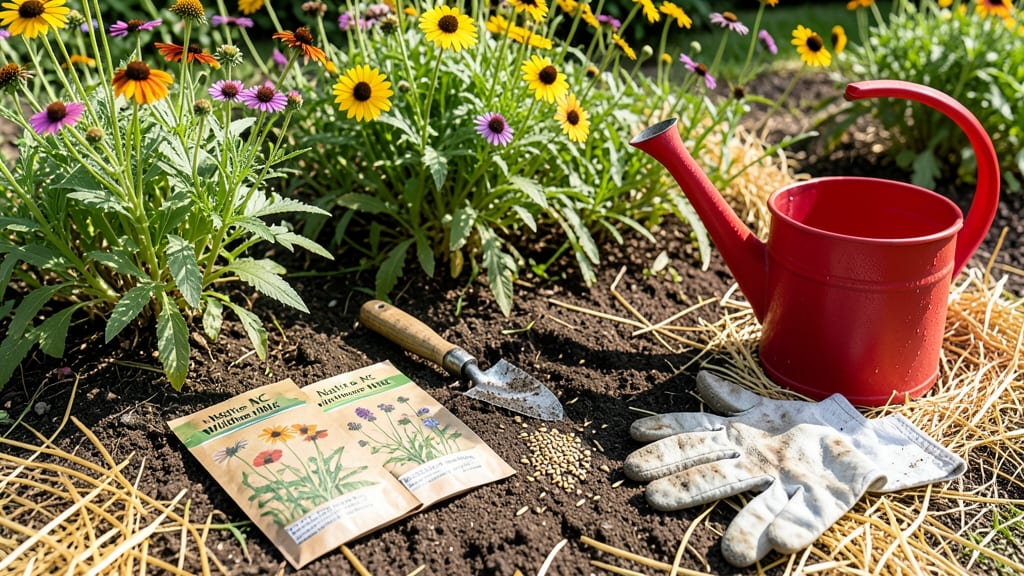
Planting wildflowers in NC at the right time ensures a long-blooming meadow that thrives year after year 🌼—and missing the window can leave you with sparse, underwhelming results.
If you’ve ever stared at a packet of wildflower seeds wondering, "Why aren’t these blooming like the pictures?" the answer is likely timing. North Carolina’s climate zones (6a-8b) create two prime planting windows: late winter to early spring or late summer to early fall.
Get this wrong, and your meadow might struggle to establish before summer heat or winter frost sets in.
This guide breaks down the best months for each zone, from coastal areas where early spring planting works best to the Piedmont’s slightly later window. We’ll also cover soil prep, native species that thrive in NC’s conditions, and how to care for your wildflowers once they’re in the ground.
By the end, you’ll know exactly when to plant for maximum blooms, how to adapt for your microclimate, and which wildflower mixes will give you the most vibrant, low-maintenance results.
Best planting months for wildflowers in NC by USDA zone (5A-8B)
North Carolina’s diverse climate—from the coastal plains to the mountainous west—creates unique planting windows for wildflowers. In USDA Zones 5A-8B, timing directly impacts germination success, bloom duration, and winter survival.
I’ve planted wildflowers across Zone 6B and Zone 7A, and the difference between spring and fall planting is dramatic. Let’s break down the best months for each zone and wildflower type.
Most gardeners focus on spring planting (March-April), but fall (August-October) often yields better results for perennial wildflowers. Annuals like cosmos and zinnia thrive with spring sowing, while black-eyed Susans and coneflowers benefit from fall’s cooler temperatures.
Your zone determines which strategy works best—mountain regions (5A-6A) need earlier fall planting, while coastal areas (7B-8B) can extend into November.
Here’s your zone-specific planting guide with key considerations for soil prep, moisture, and frost timing.
| USDA Zone | Best Planting Window | Wildflower Type | Soil Prep Tip | Key Consideration |
|---|---|---|---|---|
| 5A-6A (Mountains) | Late August - Early September | Perennials (Coneflowers, Milkweed) | Add compost; loosen soil 4" | First frost by October 15 |
| 6B-7A (Piedmont) | March 15 - April 15 OR September 1 - October 1 | Annuals (Cosmos, Sunflowers) + Perennials | Test pH (6.0-7.0); rake seeds in | Spring: 60-70°F soil temp |
| 7B-8A (Coastal Plain) | February 15 - March 30 OR September 15 - November 1 | Drought-tolerant (Blanket Flower, Gayfeather) | Sandy soil? Mix in peat moss | Fall: Humidity helps germination |
| 8B (Coastal) | January 15 - March 15 OR October 1 - November 15 | Tropical natives (Firewheel, Beach Sunflower) | Well-draining soil critical | No frost risk after January 15 |
Note: Coastal zones can extend windows by 4-6 weeks compared to inland areas.
In Zone 5A-6A, I’ve found that fall planting gives seeds time to establish roots before winter. The key is to sow 6-8 weeks before first frost—typically by September 1 in the mountains.
For Zone 7B-8B, you can push fall planting later, even into November, thanks to milder winters. I once planted black-eyed Susans in late October in Zone 8A, and they bloomed the following spring with no issues.
Spring planting works best when soil temperatures reach 60°F+. In Zone 6B-7A, this usually happens by mid-March, but coastal areas can start as early as February. The trick is to avoid planting when daytime temps exceed 85°F, as seeds may dry out before germinating.
I’ve had better luck with shade cloth during peak summer heat in Zone 7B.
For annual wildflowers, like marigolds or sunflowers, spring planting is ideal. These fast growers bloom quickly and complete their life cycle before summer’s end. Perennials, however, benefit from fall planting because they establish deeper roots over winter.
I’ve seen coneflowers planted in September produce twice as many blooms the following year compared to spring-sown seeds.
Don’t overlook soil preparation—wildflowers thrive in well-draining soil with minimal competition. In Zone 5A, I’ve had success with mulching lightly after planting to retain moisture without smothering seeds.
For sandy coastal soils (Zone 8B), mixing in composted leaves helps retain moisture. Always avoid tilling after planting to protect newly sprouted seedlings.
One common mistake I see is planting too late in fall. If seeds don’t germinate before freezing temps, they’ll rot in the soil. In Zone 6A, I’ve learned to stop fall planting by October 15, even if seeds are still available.
The same rule applies to spring planting: don’t sow after April 30 in most zones, or you’ll risk summer drought stress before germination.
Pro tip: Stratify seeds if planting in spring. Many native wildflowers, like
How NC’s microclimates affect wildflower germination success
North Carolina’s diverse geography creates unique microclimates that dramatically impact when and how wildflowers thrive. From the humid coastal plains to the cooler mountain regions, each area demands a tailored approach to planting timing and seed selection.
Understanding these differences ensures your wildflowers establish strong roots and burst into color at the right time.
In coastal NC (USDA Zones 8A-8B), milder winters and higher humidity create ideal conditions for fall planting (August-September). The warm soil and consistent moisture help seeds germinate before winter rains arrive.
Meanwhile, Piedmont and mountain regions (Zones 6A-7B) benefit from early spring planting (March-April) to avoid late frosts and drought stress.
- 🌡️ Elevation: Higher elevations (mountains) have cooler springs—wait until after last frost (typically April 15) to plant.
- 🌧️ Rainfall Patterns: Coastal areas get even rainfall year-round, while Piedmont experiences summer droughts—plant in fall for moisture.
- ☀️ Sun Exposure: Lowland areas have intense summer sun—choose heat-tolerant species like black-eyed Susans or coreopsis.
- 🌬️ Wind Exposure: Coastal winds dry soil faster—mulch heavily after planting to retain moisture.
- 🌱 Soil Temperature: Seeds need soil at 60°F+ to germinate—use a soil thermometer in cooler zones.
One common mistake is assuming a one-size-fits-all approach. For example, annual wildflowers like cosmos or zinnias germinate quickly in spring but may bolt in summer heat, while perennials like coneflowers need fall planting to establish deep roots before winter.
Always check the seed packet’s recommended zone—many blends specify coastal vs. inland suitability.
Another critical factor is moisture retention. In the Piedmont region, where summers are hot and dry, I recommend planting wildflowers in late summer (August) to take advantage of residual soil moisture from spring rains.
Coastal gardeners, however, can plant as late as October thanks to milder temperatures and higher humidity. Always water deeply after planting to encourage root growth.
For mountain gardeners (Zones 6A-7A), timing is everything. Planting too early risks frost damage, while waiting too long may result in seeds drying out before germination. Aim for mid-April to early May when soil temperatures consistently stay above 55°F.
Use a lightweight row cover if late frosts are forecasted to protect tender seedlings.
Finally, consider native species that are already adapted to your microclimate. For instance, purple coneflower thrives in both coastal and Piedmont regions but may need extra winter mulch in mountain areas. By aligning your seed choices with local conditions, you’ll see healthier, longer-lasting blooms with minimal effort. 🌻