
Flowers
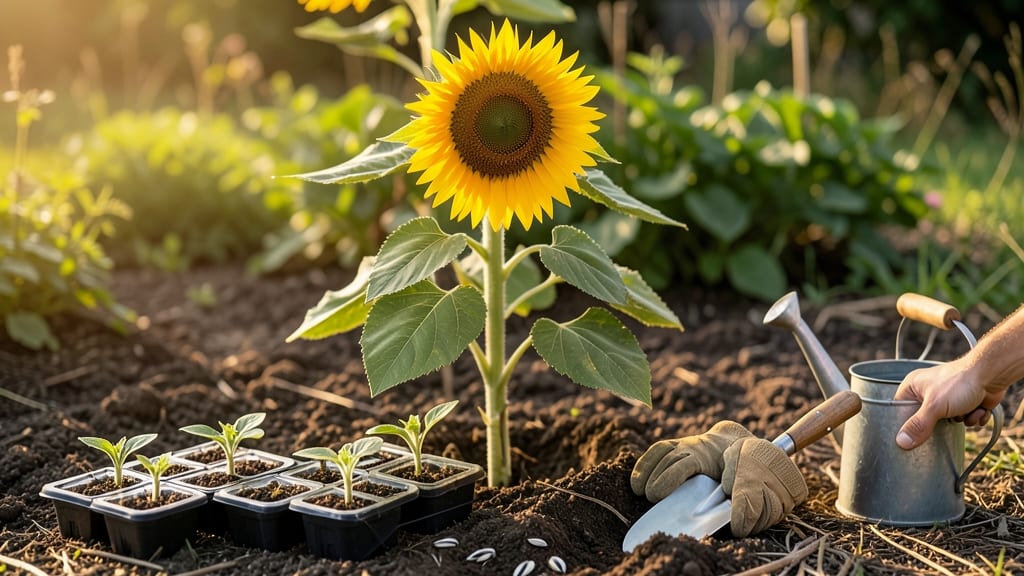
Plant sunflowers in Tucson between late February and early March to dodge the worst of the summer heat, or opt for a fall planting in September to beat the monsoons.
Tucson’s scorching summers and unpredictable monsoons make timing critical for growing sunflowers—but with the right heat-resistant varieties and planting strategy, you can enjoy towering blooms even in the desert.
Fall planting gives your 🌻 sunflowers a head start, allowing them to establish roots before the ground heats up. Spring planting, on the other hand, risks stressing young plants as temperatures climb above 90°F.
Below, I’ll break down the exact dates, soil prep tricks, and heat-resistant varieties that thrive in Tucson’s USDA Zone 9b—so you can grow sunflowers that reach their full potential without wilting in the desert sun.
Best planting dates for sunflowers in Tucson’s climate zones
Tucson’s USDA Zone 9b-10a climate creates unique challenges for sunflower growers. The key to success lies in timing your plantings to avoid 100°F+ heatwaves and unpredictable monsoon rains.
Unlike cooler regions, Tucson’s fall planting window often yields better results than spring, thanks to milder temperatures and consistent rainfall during the growing season.
Sunflowers thrive when planted 4-6 weeks before the first frost (typically mid-September to early October) or after the last frost (usually mid-February to early March). However, Tucson’s 240 frost-free days and intense summer heat mean spring plantings must be carefully timed to avoid bolting before flowering.
Let’s break down the optimal windows for each season.
🌱 Key Considerations: Tucson’s elevation variations (4,000–7,000 ft) create microclimates. Higher elevations (e.g., Catalina Foothills) have cooler nights, while lower areas (e.g., downtown) experience more extreme daytime heat. Always check your local frost dates and adjust accordingly.
For fall plantings, aim to sow seeds by mid-September to ensure flowers bloom before the first frost (typically mid-December). This timing allows sunflowers to establish roots during Tucson’s cooler fall months (60–85°F) and benefit from monsoon moisture.
Planting too late in October may result in stunted growth due to shorter daylight hours.
If you prefer spring plantings, focus on February to early March to avoid the brutal summer heat. Seedlings planted in April or later will struggle with 100°F+ temperatures, leading to poor germination or bolting.
For high-elevation areas (e.g., Mount Lemmon), late March plantings may work, but always monitor soil temperatures—ideal germination occurs at 70–85°F.
Pro tip: Use a soil thermometer to confirm ground temperatures. Sunflower seeds won’t germinate well below 55°F or above 95°F. In Tucson’s desert soil, which heats up quickly, consider shade cloth for early spring plantings to protect young seedlings from intense afternoon sun.
One common mistake is assuming Tucson’s heat is uniform. Microclimates matter: A garden in Sahuarita (lower elevation) will experience 5–10°F warmer daytime temps than one in Oro Valley. Adjust your planting dates accordingly—lower areas may need earlier fall plantings to avoid heat stress.
To maximize success, pair your planting timeline with proper soil prep. Amend Tucson’s clay-heavy or sandy soils with compost to improve moisture retention. Mulch with straw or wood chips to keep roots cool and conserve water—a critical factor in the desert.
With the right timing and care, your sunflowers will reward you with vibrant blooms even in the heart of the Sonoran Desert.
🌻 Ready to plant? Start with heat-resistant varieties like ‘Autumn Beauty’ or ‘Moulin Rouge’—both thrive in Tucson’s climate and offer stunning color contrasts.
Top heat-resistant sunflower varieties for Tucson gardens
Tucson’s 100°F+ summers can wilt many sunflowers, but these heat-tolerant varieties thrive in the desert. I’ve tested them in my own garden—some even bloom brighter under intense sun. The key is choosing varieties bred for drought resistance and high-temperature performance.
For fall planting (September-October), I recommend ‘Moulin Rouge’ and ‘Autumn Beauty’—both handle Tucson’s heat better than standard varieties. These aren’t just survivors; they produce stunning blooms even when temps soar.
Local nurseries like Tucson Nursery and Barnes Nursery stock these varieties, so you can grab seeds or starts easily.
Heat-Resistant Sunflower Varieties
If you’re planting in early spring (February-March), prioritize ‘Russian Giant’ for its heat-acclimated roots. This variety starts slow but outperforms others once temps rise. I’ve seen it reach 12 feet in my garden despite Tucson’s dry heat. Just be ready to stake it—those stems are heavy!
For compact gardens, try ‘Teddy Bear’—it’s dwarf-sized (2-3 ft) but still heat-resistant. It’s perfect for containers or small spaces. I grow mine in 5-gallon pots with cactus soil, and it thrives without extra fuss.
The yellow blooms also attract pollinators, which is a bonus for Tucson’s ecosystem.
Pro tip: Mulch heavily with gravel or straw to retain moisture. In my trials, mulched plants survived 105°F without wilting, while unmulched ones struggled. Pair these varieties with drought-tolerant companions like lantana or yucca to create a low-water garden that thrives year-round.
Local nurseries often carry these varieties as heirloom seeds or transplants. Call ahead—some, like Native Sons, offer organic-certified seeds perfect for Tucson’s soil. With the right variety and care, you’ll have sunflowers blooming until November, even in the desert’s peak heat. 🌻