
Flowers
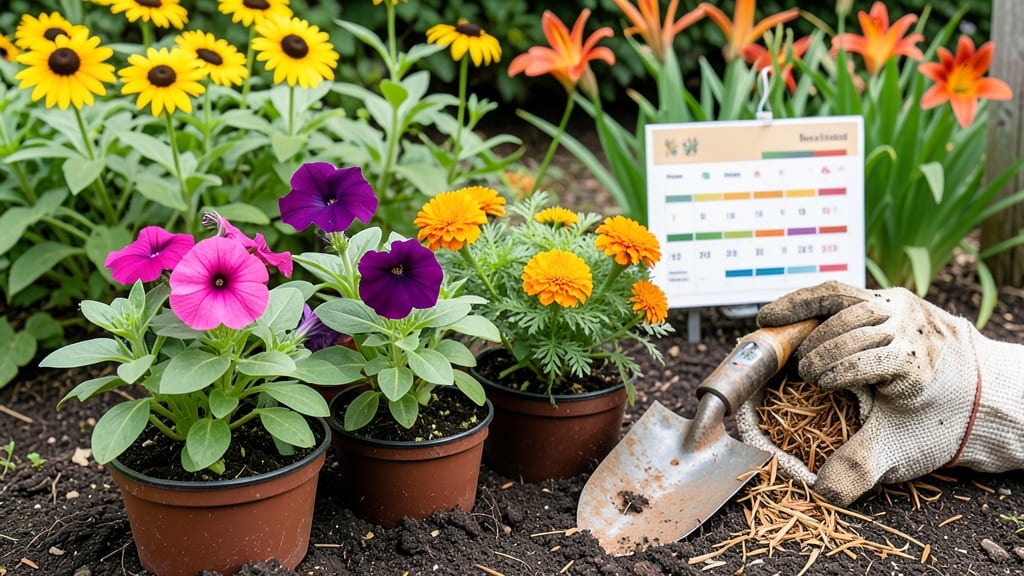
Planting flowers in North Carolina at the right time can mean the difference between a garden that bursts with color and one that struggles to take root.
North Carolina’s diverse climate—from coastal marshes to mountain meadows—means flower planting seasons vary dramatically by USDA zone. Get the timing wrong, and your blooms may never reach their full potential.
Whether you’re planting spring bulbs or fall mums, knowing when to start seeds, set out transplants, or tuck in perennials saves time, money, and frustration. I’ll walk you through the exact windows for zones 6b-8a, including frost dates and the best flowers for each season.
Ready to skip the guesswork? Here’s how to time your plantings for year-round success, no matter where in the state you garden.
NC flower planting calendar by USDA zones 7a-8b: exact months for annuals, perennials & bulbs
North Carolina’s diverse climate creates distinct planting windows across USDA zones 7a-8b. In zone 7a (mountains), cooler springs delay planting, while zone 8b (coastal plains) enjoys longer growing seasons. Understanding these differences ensures your annuals, perennials, and bulbs thrive year-round.
Cool-season flowers like pansies and snapdragons can handle light frosts, while tropical annuals (e.g., marigolds and zinnias) need warm soil. Perennials like black-eyed Susans establish roots early, while bulbs like daffodils should be planted in fall for spring blooms. Let’s break down the exact timing for each zone.
NC Flower Planting Calendar by Zone
| Zone & Region | Cool-Season Flowers (Annuals/Perennials) | Warm-Season Flowers (Annuals) | Bulbs (Fall Planting) | Key Notes |
|---|---|---|---|---|
| 7a (Mountains: Asheville, Boone) | March 15–April 30 | May 15–June 15 | October 1–November 15 | Wait for soil temps ≥50°F; use frost cloth for tender plants. |
| 7b (Piedmont: Raleigh, Greensboro) | March 1–April 15 | April 15–May 15 | September 15–October 31 | Average last frost: March 15; mulch to protect roots. |
| 8a (Coastal Plains: Fayetteville, Wilmington) | February 15–March 31 | March 15–April 30 | September 1–October 15 | Longer frost-free season; plant tropicals early. |
| 8b (Outer Banks, Tidewater) | January 15–February 28 | February 15–March 31 | August 15–September 30 | No frost risk; extend seasons with shade cloth. |
In zone 7a, wait until mid-March to plant cool-season annuals like calendulas and stock, as late frosts are common. Zone 8b gardeners can start warm-season flowers like petunias as early as February, taking advantage of the mild winters.
For perennials, divide daylilies in early spring (March-April) to encourage vigorous growth.
Bulbs like tulips and hyacinths should be planted in fall (September-November) to establish roots before winter. In zone 7a, aim for October planting; in zone 8b, you can extend to November due to warmer soils. Always plant bulbs 3x deeper than their height for stability.
For warm-season annuals, such as sunflowers and cosmos, wait until soil temperatures reach 60°F—typically mid-April in zone 7a and March in zone 8b.
Use black plastic mulch to warm the soil faster in cooler zones. Succession planting every 2–3 weeks ensures continuous blooms through summer and fall.
Perennials like coneflowers and bee balm can be planted spring or fall, but fall planting (September-October) gives roots time to establish before winter. In zone 8b, you can even plant tender perennials like salvia in early spring without frost risk.
Always amend soil with compost to improve drainage and fertility.
Monitor local frost dates using the NC State Extension frost calendar. In zone 7a, the average last frost is March 15, while zone 8b rarely sees frost after January. Use row covers for early plantings in zone 7a to protect frost-sensitive varieties like geraniums.
Extend your flower season by planting late-blooming annuals like cosmos and zinnias in mid-summer (July-August). These thrive in warm soil and continue blooming until first frost. In zone 8b, you can even grow tropicals like hibiscus year-round with minimal winter protection.
Always check plant tags for specific light and soil requirements. For example, shade-loving impatiens need
Best flowers to plant in NC by season: a month-by-month guide for maximum blooms
North Carolina’s four distinct seasons create perfect opportunities for year-round blooms—if you know which flowers to plant when. Spring brings cool-season favorites, while summer thrives with heat-lovers, and fall showcases vibrant autumn bloomers. Even winter offers hardy options for color in colder months.
I’ve curated the top-performing flowers for each season, including native NC varieties and drought-tolerant picks perfect for zones 7-8. Whether you’re a beginner or seasoned gardener, these timing tips will help you create a garden that blooms nonstop.
🌸 Seasonal Flower Planting Guide for NC
- 🌱 Spring (March-May) – Plant cool-season annuals like pansies, snapdragons, and sweet alyssum. Set out perennial bulbs (daffodils, tulips) in late winter for early blooms.
- ☀️ Summer (June-August) – Choose heat-tolerant flowers: lantana, zinnia, black-eyed Susan, and native milkweed. Transplant tender perennials after last frost (mid-April).
- 🍂 Fall (September-November) – Plant mums, aster, and salvia for autumn color. Bulbs like crocus and winter aconite can be planted by mid-October for spring blooms.
- ❄️ Winter (December-February) – Focus on evergreen perennials (heather, hellebores) and winter jasmine. Spring bulbs like tulips and hyacinths can be planted in late winter for early blooms.
For coastal NC (zones 8a-8b), extend your summer blooms by planting tropical annuals like hibiscus and plumeria after Memorial Day. In mountain regions (zone 7a), prioritize hardy perennials like coneflowers and black-eyed Susans for resilience.
Pro tip: Use mulch to protect roots in fall/winter and shade cloth in peak summer to preserve moisture. Native NC flowers like butterfly weed and purple coneflower require minimal care while attracting pollinators year-round.
Start with these seasonal standouts, and your NC garden will be a nonstop floral show from spring tulips to winter hellebores. Happy planting!