
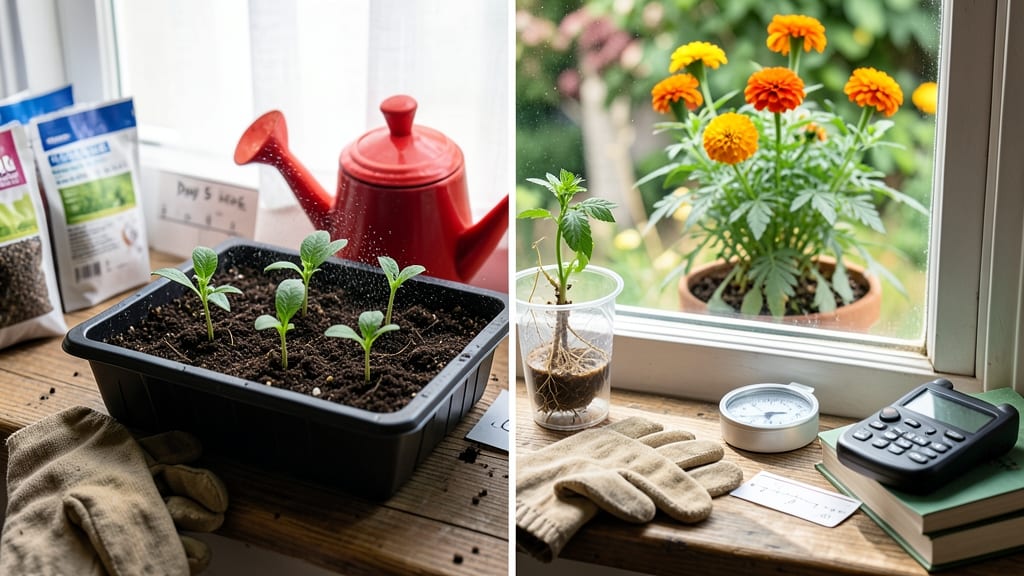
How Long Do Flower Seeds Take to Grow: Fastest Species and Soil Triggers

How To

How Long Do Flower Seeds Take to Grow: Fastest Species and Soil Triggers

Flower seeds take anywhere from a few weeks to months to grow into blooms, depending on the variety and growing conditions 🌸 — but knowing the exact timeline for your favorite flowers can save you from waiting too long.

Picture this: you’ve just planted your first batch of seeds, eager for color in your garden, only to wonder why nothing’s sprouting after two weeks. The truth?

Some flowers, like marigolds, pop up in as little as 7 days, while others, like delphiniums, take up to 3 months to reach their full glory.

What you’ll discover here is how to read the seed packet for realistic expectations, which soil triggers speed up germination, and how to troubleshoot slow starters — because the difference between a fast-blooming garden and a frustrating wait often comes down to a few simple adjustments.

From the fastest annuals (like zinnias in 8 weeks) to the secrets of coaxing perennials into earlier blooms, this guide breaks down everything you need to know to turn those tiny seeds into a vibrant display — without the guesswork.

Flower Seeds Height Range
0.0.1 ftto10 ft
0 ft 3 ft 6 ft 9 ft 12 ft
🌱 Dwarf, Small, Medium, Tall Flower

Fastest-flowering annuals: growth timelines by species

If you're impatient to see blooms, fast-flowering annuals are your best bet. Some varieties burst into color in just 6-8 weeks from seed, while others take months.

The key? Choosing the right species for your USDA climate zone and planting at the optimal time. Let’s break down the fastest performers and their growth stages.

For example, marigolds and cosmos are legendary for their speed, often blooming in 6-8 weeks under ideal conditions. Meanwhile, zinnias and sunflowers take slightly longer—8-12 weeks—but reward you with bold, long-lasting blooms. Below, I’ve mapped out the full timeline from seed to flower for 15+ top contenders.

🌱 Pro Tip: Always check your seed packet for days-to-maturity estimates, but adjust for your local climate. Cooler zones may need to start seeds indoors or use row covers to speed up growth.

Flower Germination Time Bloom Time USDA Zones Sun Needs Planting Window
Marigold 5-10 days 6-8 weeks 3-11 Full sun After last frost
Cosmos 7-14 days 6-10 weeks 3-11 Full sun Spring or fall
Zinnia 7-14 days 8-12 weeks 3-11 Full sun After frost
Sunflower 7-14 days 8-12 weeks 4-11 Full sun Spring
Bachelor's Button 10-21 days 7-10 weeks 3-9 Full sun Early spring
Nasturtium 7-14 days 6-8 weeks 2-11 Partial sun After frost
Alyssum 5-10 days 6-8 weeks 3-10 Full sun Spring or fall
Calendula 7-14 days 8-10 weeks 3-11 Full sun After frost
Sweet Alyssum 5-10 days 6-8 weeks 7-10 Full sun Spring or fall
Portulaca 10-21 days 6-

Soil and environmental triggers that speed up flower seed growth

Flower seeds don’t grow at the same speed—some sprout in days, while others take weeks or months to bloom. The difference often comes down to soil conditions and environmental triggers you may be missing.

For example, cosmos seeds need consistent moisture to break dormancy, while snapdragons stall below 70°F soil temperatures. Let’s dig into the science-backed factors that can double or triple your seedling success.

Temperature is the #1 growth accelerator for most flower seeds. Cool-season flowers like pansies and sweet peas germinate best between 50°F–65°F, while warm-season varieties such as marigolds and zinnias need 70°F+ soil.

A simple soil thermometer can save you weeks of waiting—plant too early in cool climates, and seeds may rot before sprouting. Pro tip: Use black plastic mulch to warm soil 5–10°F faster in spring.

Moisture triggers are just as critical. Seeds like cosmos and sunflowers require constant dampness (not soggy soil) to activate enzymes that break seed dormancy. Overwatering can drown seeds, while underwatering halts germination.

The fix? Use a spray bottle for fine seeds or a moisture meter to keep soil at 50–60% humidity until sprouts appear. A clear plastic dome over trays also traps humidity without overheating.

🌱

⚠️ Slow Germination? Check These 3 Fixes!

  • Temperature mismatch: Seeds need consistent warmth (use a seedling heat mat if soil is below 60°F).
  • Dormancy issues: Some seeds (like larkspur) need cold stratification—place them in the fridge for 4–6 weeks before planting.
  • Poor soil contact: Seeds need direct soil contact—press them gently into moist, fine soil (no burying deep!).

⏰ Most seeds sprout in 7–14 days if conditions are right. Wait 3–4 weeks before giving up—some (like foxglove) take longer.

Soil pH plays a hidden role in speeding up growth. Most flowers thrive in slightly acidic to neutral soil (pH 6.0–7.0), but exceptions like blueberries (pH 4.5–5.5) or sweet peas (pH 6.5–7.5) need adjustments.

Test your soil with a home pH kit—amend with lime (to raise pH) or sulfur (to lower pH) before planting. For example, petunias wilt if pH drops below 6.0, while hollyhocks prefer alkaline soil (pH 7.0+).

Light exposure after germination is another game-changer. While seeds need darkness to sprout, seedlings crave 12–16 hours of light daily to prevent leggy, weak stems. Place trays under grow lights (or a south-facing window) immediately after sprouts emerge.

Without enough light, marigolds may take 30% longer to bloom. A reflective surface (like aluminum foil under trays) can boost light efficiency by 20%.

For fastest results, combine these triggers: warm soil (70°F+), consistent moisture, optimal pH, and bright light. With these adjustments, zinnias can bloom in 6 weeks instead of 8, and cosmos may sprout in 5 days instead of 10.

Experiment with your favorite flowers—track what works best in your climate!

☀️

★★★★★4.5(1 review)
Categories How To