
How To
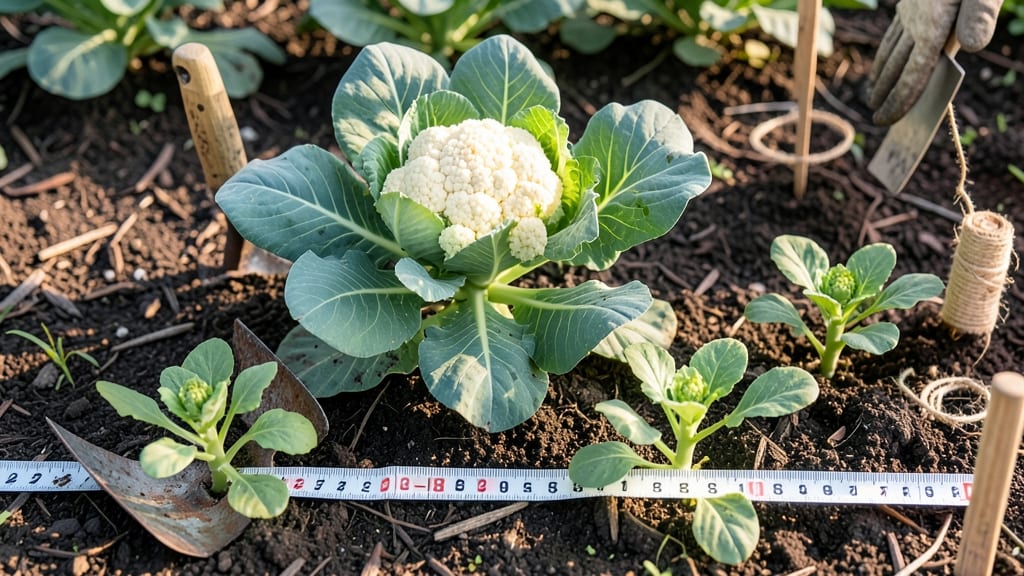
How far apart to plant cauliflower with the right spacing means bigger heads and fewer diseases—because crowding turns your garden into a damp, humid sauna where rot thrives.
You’ve probably seen those perfect, snow-white curds at the farmers’ market and wondered how they got so big. The answer? Space matters more than you think. Plant them too close, and you’ll end up with stunted, bitter heads fighting for sunlight.
Too far apart, and you’ll waste space on a vegetable that needs every inch to grow.
Here’s the secret: bush varieties need 18–24 inches between plants, while tree types (the big-headed ones) demand 24–36 inches. Row spacing? Add another 24–36 inches to keep airflow moving and diseases out.
And yes, organic growers and conventional gardeners can use the same rules—soil fertility and climate tweaks come later.
Below, I’ll break down exactly how to space your cauliflower for maximum yield, adjust for your garden’s quirks, and fix common mistakes before they ruin your harvest.
Optimal cauliflower spacing by variety: bush vs. tree types explained
Getting the spacing right when planting cauliflower can mean the difference between small, stunted heads and large, market-ready curds. Two main types dominate home gardens: bush varieties (compact, early-maturing) and tree varieties (taller, larger-headed).
Each requires different spacing to prevent disease spread and ensure proper head development. Let’s break down the exact measurements you need for each type.
Why does spacing matter so much? Crowded plants compete for nutrients and sunlight, leading to smaller heads and poor air circulation, which invites fungal diseases like black rot. Meanwhile, plants spaced too far apart waste garden space and reduce your overall yield.
The key is finding that sweet spot where heads have room to grow but aren’t isolated in empty soil.
Most gardeners start by checking the seed packet or plant tag, but even then, the numbers can be confusing. For example, a bush variety like ‘Snowball Y Improved’ might recommend 18 inches apart, while a tree variety like ‘Romanesco’ could need 36 inches.
These differences aren’t arbitrary—they’re tied to the plant’s mature size and head weight. Let’s dive into the specifics.
For bush varieties, the tighter spacing—18–24 inches apart—works because these plants stay compact and produce smaller heads (typically 4–6 inches in diameter). This spacing also makes them ideal for succession planting or squeezing into small garden plots.
Think of them as the workhorses of early spring, ready to harvest in as little as 50–60 days.
On the other hand, tree varieties need more room—24–36 inches apartlarge, heavy heads (6–10 inches across) that can weigh 2–4 pounds each. Without proper spacing, these heads struggle to form correctly, often splitting or developing uneven shapes.
The wider row spacing (30–36 inches) also improves airflow, reducing the risk of rot and mold in humid climates.
If you’re growing in containers or raised beds, you can adjust spacing slightly. For example, a 5-gallon pot can comfortably hold one bush variety plant, while a 10-gallon container might fit two if you space them 12 inches apart.
Just be prepared to harvest earlier since container-grown plants often mature faster due to warmer root zones.
One mistake many gardeners make is ignoring the row orientation. Planting in a north-south direction maximizes sunlight exposure for all plants, while an east-west layout can leave the southernmost plants shaded.
For tree varieties, this is especially critical—their taller stature means they’ll cast longer shadows as the day progresses.
Proper spacing also plays a role in pest and disease management. For instance, cabbage loopers and aphids thrive in crowded, humid conditions. By giving your cauliflower the right room to breathe, you create an environment where air circulates freely, making it harder for pests to take hold.
Plus, well-spaced plants are easier to monitor and treat if issues arise.
Ready to put this into practice? Start by sketching your garden layout, marking out rows with string and stakes for accuracy. Use a measuring tape to ensure each plant gets its designated space—don’t eyeball it! For tree varieties, consider staggering plants in a checkerboard pattern to further improve airflow.
With the right spacing, you’ll be on your way to harvesting beautiful, uniform heads that’ll be the envy of your neighborhood.
🌱
How to adjust spacing for different growing conditions
Your cauliflower spacing might need adjustments based on your local climate, soil fertility, or container limitations. While standard guidelines suggest 18-24 inches apart for bush varieties and 24-36 inches for tree types, real-world conditions often demand flexibility.
Let’s explore how to modify spacing without compromising your harvest potential.
For example, in rich, fertile soil, plants grow faster and larger, so you can safely reduce spacing by 20-30%. Conversely, in poor soil or cool climates, increasing spacing by 10-15% prevents competition for nutrients.
Always check your variety tags—some dwarf types like 'Snowball Y Improved' thrive in tighter spaces (12-18 inches), while giants like 'Romanesco' need 36 inches.
⚠️ WARNING: Overcrowding Risks Cauliflower plants need adequate air circulation to prevent disease (like clubroot or downy mildew) and pest infestations. If your plants start showing signs of stress—yellowing leaves, stunted growth, or rotting heads—it’s a clear signal to thin immediately.
In containers, reduce spacing by 50% but ensure each plant has at least 5 gallons of soil to avoid root competition.
⚠️ Critical Spacing Adjustments for Cauliflower
Rich Soil: Reduce spacing by 20-30% (e.g., 14" for bush types). Poor Soil: Increase by 10-15% (e.g., 30" for tree types). Containers: Max 2 plants per 5-gallon pot; space 12-18" apart. Succession Planting: Stagger rows by 10-14 days to avoid overcrowding.
In container gardening, spacing becomes even more critical. Cauliflower roots spread widely, so cramming 3+ plants into a 5-gallon pot will stunt growth. Instead, opt for 1-2 plants per container and space them 12-18 inches apart.
Use large pots (10+ gallons) for tree varieties to accommodate their wider root zones. If you’re growing in raised beds, maintain standard spacing but add compost-rich soil to compensate for reduced root space.
For succession planting, adjust spacing to create staggered harvests. Plant your first batch at standard spacing, then add a second row 10-14 days later with slightly tighter spacing (18-24 inches). This ensures you’re not overcrowding the bed while extending your harvest window.
In hot climates, increase spacing to 30-36 inches to improve airflow and reduce heat stress, which can cause heads to bolt prematurely.
If your cauliflower starts slowly due to cool temperatures or poor soil, avoid the urge to crowd plants. Instead, thin seedlings to double the standard spacing temporarily until they establish stronger roots.
Once growth accelerates, you can transplant excess seedlings to a nearby spot or harvest as greens. This two-step approach prevents wasted space while giving plants room to recover and thrive.
Proper spacing isn’t just about numbers—it’s about balancing growth, preventing disease, and maximizing yield. By adjusting for your specific conditions, you’ll ensure your cauliflower heads stay firm, disease-free, and abundant—no matter where you garden. 🥬