
Planting
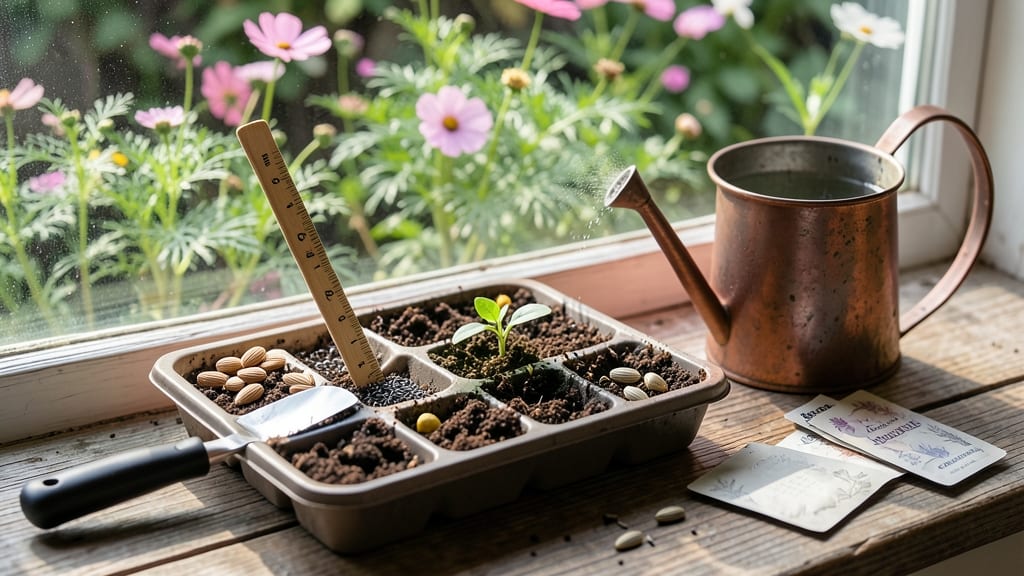
Planting flower seeds too deep or too shallow can mean the difference between a thriving garden and wasted effort—yet many gardeners guess rather than follow proven guidelines.
Imagine carefully sowing your favorite 🌸 seeds, only to watch them fail to sprout because they were buried too deep. The right depth ensures strong roots, better germination, and healthier plants from the start.
Most flower seeds need to be planted at a depth 2-3 times their diameter, but the size of your seeds matters. Tiny petunia seeds require barely a sprinkle of soil, while larger marigold seeds can handle a deeper spot.
In this guide, you’ll find a simple chart for planting depths by seed type, plus tips for adjusting based on soil and climate—so you can grow a garden that blooms with confidence.
Optimal flower seed planting depths by seed size (expert chart)
Getting the planting depth right for your flower seeds is one of the most overlooked steps in gardening. Too shallow, and seeds dry out before sprouting; too deep, and they’ll struggle to reach the surface.
The rule of thumb is to plant seeds at a depth equal to 2-3 times their diameter, but this varies wildly depending on whether you’re sowing tiny petunia seeds or larger marigold seeds.
Understanding this science-backed guideline ensures your seeds get the moisture and light they need to germinate successfully.
Why does depth matter so much? Seeds need consistent moisture to activate their enzymes and begin growth, but they also require light exposure to trigger photosynthesis once they sprout.
Burying them too deep forces seedlings to push through extra soil, which can exhaust their energy reserves before they even break the surface. On the flip side, planting too shallow risks exposing seeds to drying winds or uneven soil temperatures, which can halt germination entirely.
For tiny seeds like petunias, snapdragons, or cosmos, the ideal depth is often just 1/8 to 1/4 inch below the soil surface. These seeds lack the energy reserves to break through dense soil, so they need to stay close enough to moisture while still getting enough light.
Meanwhile, larger seeds like marigolds, sunflowers, or zinnias can handle depths of 1/2 to 1 inch because they’re packed with nutrients to fuel their initial growth spurt.
Here’s where things get tricky: seed packet instructions often override general rules. Some seeds, like lobelia or primrose, may need to be pressed barely into the soil or even scattered on top of the soil and lightly covered with a spritz of water.
Others, like delphiniums or hollyhocks, benefit from deeper planting because they have larger seed coats. Always double-check your seed packet for species-specific guidance, as this can make or break your germination rates.
| Seed Type | Seed Size | Optimal Depth | Examples | Key Notes |
|---|---|---|---|---|
| Tiny Seeds | 1/16" or smaller | 1/8" - 1/4" | Petunias, Snapdragons, Cosmos, Lobelia | Press lightly; keep moist |
| Small Seeds | 1/8" - 1/4" | 1/4" - 1/2" | Zinnias, Calendula, Alyssum | Firm soil gently after planting |
| Medium Seeds | 1/4" - 1/2" | 1/2" - 1" | Marigolds, Sunflowers, Dahlias | Rich soil helps germination |
| Large Seeds | 1/2" or larger | 1" - 2" | Delphiniums, Hollyhocks, Lupines | Deeper planting prevents rot |
| Special Cases | N/A | Surface or 1/16" | Lobelia, Primrose, Forget-Me-Nots | Mist with water, no covering |
📏 Pro Tip: Use a toothpick or pencil to mark planting depths in your garden bed for consistency.
Once you’ve mastered the basics, you’ll notice how soil texture plays a role in adjusting depth. In sandy soil, which drains quickly, you might plant seeds slightly deeper to retain moisture longer. Conversely, in clay soil, which stays damp, you
Common mistakes that kill flower seedlings (and how to avoid them)
Even experienced gardeners sometimes make critical errors when planting flower seeds, and depth mistakes top the list. Over-planting, burying seeds too deep, or leaving them too exposed can all starve your seedlings before they even sprout.
The good news? These issues are easy to fix once you know the warning signs.
One of the most common oversights is planting seeds too deep—especially with tiny varieties like petunias or snapdragons. When seeds are buried beyond their ideal depth, they struggle to push through the soil, often rotting before they can break through.
Conversely, planting too shallow can leave seeds vulnerable to drying out or being washed away during watering.
Another frequent mistake is overcrowding seedlings in the early stages. While it might seem efficient to pack seeds tightly, this leads to competition for nutrients and sunlight. Thin seedlings properly to give each plant room to grow strong roots and foliage.
⚠️ Red Flags for Depth Failures
Too Deep: Seeds take weeks to sprout or rot in the soil. Fix: Dig a shallow trench or use your finger to create a tiny furrow just 2-3x seed diameter deep.
Too Shallow: Seeds dry out or wash away during watering. Fix: Lightly press soil over seeds or use a fine mist setting on your watering can.
Overcrowded: Seedlings grow leggy or yellow. Fix: Thin to 1-2 inches apart once true leaves appear.
🌱 Pro Tip: Use a seed-starting mat to keep soil warm and moist while seeds germinate.
If you're planting in sandy soil, seeds may need to be planted slightly deeper than the general rule, as they dry out faster. For clay-heavy soil, a shallower depth helps prevent waterlogging, which can suffocate seeds.
Always check your seed packet for specific instructions, as some varieties (like larkspur) require light to germinate and shouldn't be covered at all.
Another overlooked issue is uneven soil pressure after planting. Pressing down too firmly can compact the soil, making it harder for roots to penetrate. Instead, gently pat the soil with your fingers or use a small board to create a smooth, even surface.
This ensures consistent moisture and air circulation around the seeds.
To avoid these mistakes, always test your soil depth with a ruler or your finger before planting. Mark your rows with a stick or string to maintain consistency, and keep a seedling journal to track which varieties thrive under your specific conditions.
With these adjustments, you'll see stronger, healthier seedlings ready to bloom.
Remember, the key to success is patience and precision. Even a small difference in depth can mean the difference between a garden full of vibrant blooms and a patch of bare soil. Happy planting! 🌼