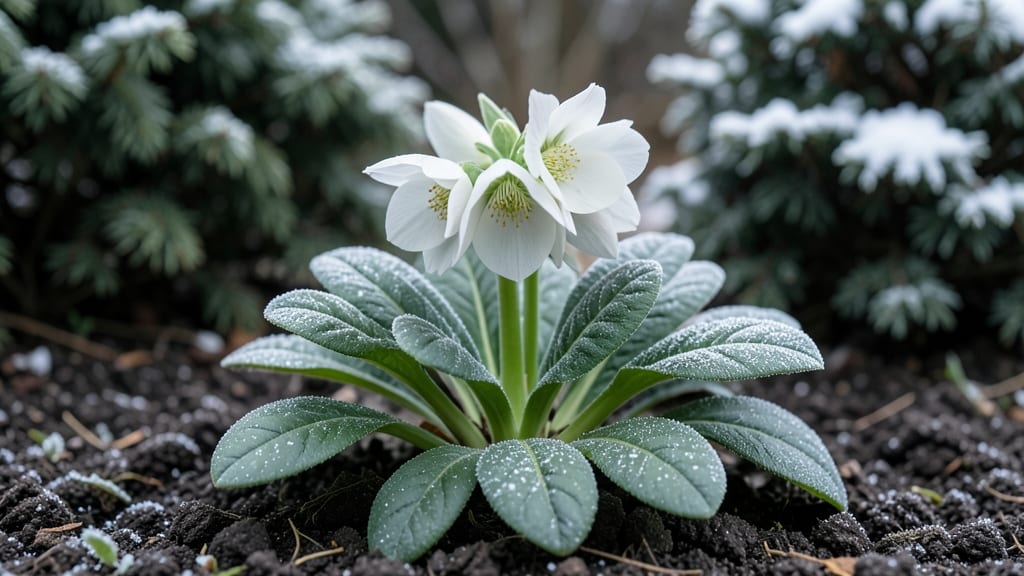
How to extend winter blooms: soil, sun, and care secrets
Winter-blooming flowers like winter jasmine and hellebores can thrive with the right care, but their success depends on soil prep and microclimate protection. Cold temperatures slow growth, so you’ll need to optimize conditions to keep blooms vibrant.
Start by testing your soil drainage—poor drainage leads to root rot, especially in frozen ground.
Most winter bloomers prefer well-draining, slightly acidic soil (pH 6.0-6.5). Amend heavy clay with compost or perlite to improve aeration. For container plants, use a mix of potting soil and sand to prevent waterlogging. A thick layer of mulch (3-4 inches) will insulate roots from temperature swings.
❄️ Winter Bloom Hack: Are there flowers that bloom in winter? Yes! Hellebores and winter pansies thrive in USDA Zones 4-8, while camellias (Zones 7-9) need sheltered spots. Snowdrops even bloom under light snow! For containers, use heat mats on frigid nights to protect roots.
Sunlight is critical—6 hours of winter sun fuels blooms, but avoid harsh afternoon cold. Place plants near south-facing walls or under dwarf evergreens for windbreak. If your garden lacks natural sun, consider LED grow lights (12 hours/day) for potted winter bloomers like poinsettias or cyclamen.
Pruning in late winter (after blooms fade) encourages new growth. For shrubs like winter jasmine, cut back 1/3 of old stems to stimulate fresh shoots. Deadhead spent blooms on perennials like hellebores to redirect energy. Never prune in fall—this removes protective buds before winter.
Watering shifts in winter: water deeply but less often (every 2-3 weeks unless potted). Frozen soil prevents absorption, so water at soil temperature (use stored rainwater). Avoid wetting foliage to prevent fungal diseases like powdery mildew. Group plants with similar water needs to simplify care.
Fertilize lightly in early spring with balanced 10-10-10 to wake up roots. Skip winter fertilizers—plants are dormant and won’t use nutrients. Instead, top-dress with compost in late winter to feed soil microbes.
Monitor for pests like slugs (they love tender winter blooms!) and use beer traps or copper barriers for organic control.
★★★★★4.7(2 reviews)
|