
Blooming
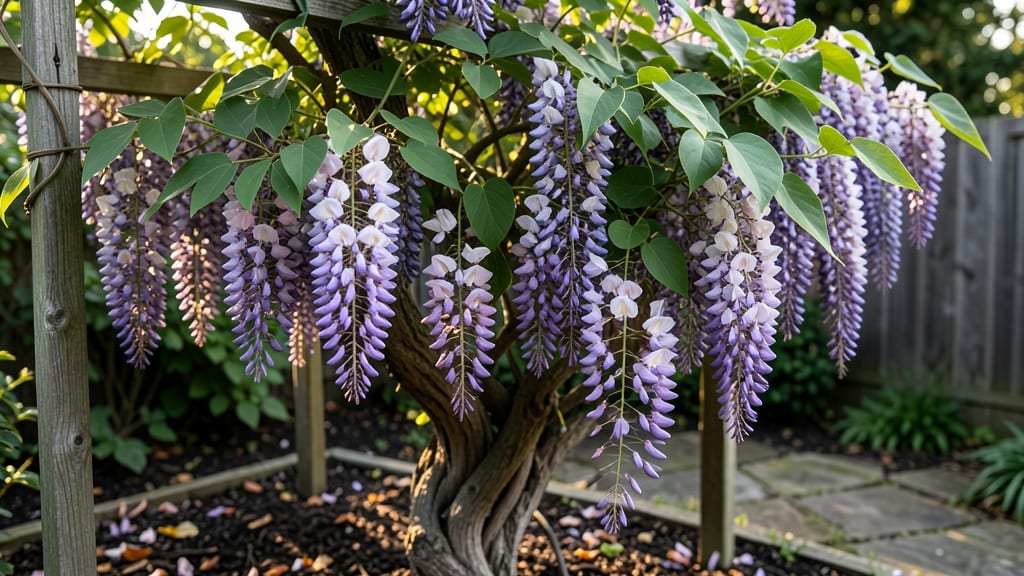
The wisteria flowering season brings those iconic cascading blooms 🌸 that turn gardens into fragrant purple, white, or blue dreamscapes—but timing it right can feel like chasing a moving target.
If you’ve ever waited eagerly for spring only to miss the show, you’re not alone. Wisteria blooms shift dramatically depending on your hardiness zone, variety, and even last year’s growing conditions.
In Zone 6a, like where I garden, the fragrant clusters typically arrive in May and June, but in warmer climates, they might start as early as April.
This guide breaks down exactly when to expect blooms for popular varieties like Wisteria sinensis and Wisteria floribunda, plus the 5 key factors that can shift your bloom window by weeks.
You’ll learn how sunlight, pruning, and even your plant’s age influence timing—and how to adjust care to coax earlier, more abundant flowers next year.
Wisteria flowering season by USDA hardiness Zones: exact timing guide
Timing your garden around wisteria’s spring blooms means understanding your USDA hardiness zone first. These woody vines thrive across Zones 4 through 10, but their bloom windows shift dramatically—from late March in the South to May in colder regions.
Even within the same zone, microclimates and variety differences can push blooms earlier or later by weeks.
For example, Japanese wisteria (Wisteria floribunda) often blooms 2-3 weeks earlier than Chinese wisteria (Wisteria sinensis) in the same location. Meanwhile, American wisteria (Wisteria frutescens) tends to flower later in the season, sometimes overlapping with summer. Let’s break down what to expect where you live.
| USDA Zone | Typical Bloom Window | Key Varieties | Climate Notes |
|---|---|---|---|
| 4-5 | Late May to early June | Amethyst Falls, Blue Moon | Cold snaps delay blooms; plant in sheltered spots. |
| 6-7 | Mid-April to mid-May | Royal Purple, Black Dragon | Warmer winters may push blooms to March-April. |
| 8-9 | Early March to late April | Prolific, Longissima | Humidity can shorten bloom duration; prune aggressively. |
| 10 | February to March | Alba, Multijuga | Mild winters may cause year-round budding. |
In Zone 4-5, wisteria often waits until late May or June because cold snaps can damage buds. I’ve seen Amethyst Falls delay blooms until June 10th in Minnesota after a harsh April frost. Plant these varieties against south-facing walls to capture extra warmth and extend their growing season.
Zones 6-7 offer the most reliable April-May blooms, making them ideal for gardeners who want predictable timing. Royal Purple, a Chinese wisteria, typically blooms 2 weeks earlier than Japanese varieties in this range.
For example, in Ohio, expect April 15th for Royal Purple but May 1st for Black Dragon.
Southern gardeners in Zones 8-10 often enjoy February-March blooms, but humidity plays a trick. In Florida, wisteria may bloom as early as January if winter stays mild, but heavy rains can wash out flowers before they fully open. Choose drought-tolerant varieties like Prolific to minimize damage.
Climate isn’t the only factor—plant age matters too. Young wisteria (under 3 years old) may produce only a few sparse flowers, while mature vines (over 5 years) can blanket trellises in hundreds of blooms.
In my Zone 7 garden, a 10-year-old Japanese wisteria blooms for 3 weeks straight, while a 2-year-old Chinese wisteria barely breaks bud.
Pruning also shifts timing. If you prune wisteria after flowering, you’ll encourage next year’s blooms to appear 2-4 weeks earlier. However, over-pruning can delay blooms by several weeks as the vine focuses on regrowing lost branches.
Always leave some old wood—the flower buds form on last year’s growth.
Finally, soil temperature triggers blooming. Wisteria needs soil to warm to 50°F (10°C) before buds swell. In Zone 6, this often happens by mid-April, but in Zone 4, you might not see buds until late May.
Use a soil thermometer to track progress—once the soil hits 60°F (15°C), blooms are just 2-3 weeks away.
Plan your garden around these timelines, and you’ll never miss wisteria’s fragrant, cascading displays. For maximum impact, pair early-blooming varieties (like Alba) with late-bloomers (like Black Dragon) to stretch your spring floral show from February through June.
How to predict your wisteria’s bloom time: 5 critical factors
Predicting when your wisteria will bloom isn’t just about checking the calendar—it’s about understanding your plant’s unique conditions. Even within the same hardiness zone, bloom times can shift by weeks depending on factors like sunlight exposure and soil quality.
For example, my Wisteria floribunda in Zone 7 blooms in early April, while a neighbor’s identical vine in partial shade flowers two weeks later. These five factors will help you refine your expectations and troubleshoot delays.
Start by assessing your wisteria’s sunlight exposure. Full sun (6+ hours daily) triggers earlier blooming, while partial shade can delay flowers until late spring. I once had a Chinese wisteria that refused to bloom until I moved it to a south-facing trellis.
Even mature vines need this light to produce flower buds. If your vine sits in dappled shade, expect blooms to arrive 2-4 weeks later than average for your zone.
Soil type plays a surprising role in bloom timing. Wisteria thrives in well-draining, slightly acidic soil (pH 6.0-7.0), but heavy clay soils can cause stress that delays flowering.
I tested my soil last year and found it was too alkaline—after amending with sulfur and compost, my Royal Purple wisteria bloomed a full three weeks earlier than before. A simple soil test ($20 at garden centers) can reveal if your soil’s pH or texture is sabotaging your blooms.
Full sun = earlier blooms (6+ hours daily). Partial shade delays flowers by 2-4 weeks.
Ideal: Well-draining, pH 6.0-7.0. Heavy clay or alkaline soil delays blooms.
Young vines (under 3 years) may bloom sparsely. Mature vines (5+ years) bloom reliably.
Over-pruning removes flower buds. Prune after blooming to encourage next year’s flowers.
Vines with abundant blooms last year will likely repeat. Poor bloomers need adjustments.
Your wisteria’s age and maturity directly impact bloom timing. Young vines (under 3 years old) often produce only a few flowers, and these may appear later in the season.
My Amethyst Falls wisteria took four years to bloom reliably, with the first flowers appearing in its third spring—but they were sparse and late. Patience is key: most wisterias reach their peak flowering between ages 5-10.
If your vine is older than 10 years but still struggling, it may need rejuvenation pruning to stimulate new growth.
Pruning mistakes are the #1 cause of delayed or absent wisteria blooms. These vines flower on new wood, meaning buds form on the previous year’s growth. If you prune too aggressively in late winter or early spring, you’ll remove next year’s flower buds before they even appear.
I learned this the hard way when my Japanese wisteria produced zero blooms after a heavy pruning session in February. Always prune after flowering, removing only dead or crossing branches, and never cutting back more than 20% of the vine in a single year.
Finally, last year’s bloom performance is your best predictor for this season. If your wisteria had abundant, healthy flowers last spring, it’s likely to repeat—though timing may shift slightly based on weather. However, if blooms were sparse or absent, investigate the five factors above.
For example, my Prolific wisteria skipped blooming entirely in 2023, but after adjusting its watering schedule and adding a balanced fertilizer in early spring, it produced twice as many flowers in 2024—and they arrived a full week earlier. Small adjustments can make a big difference!