
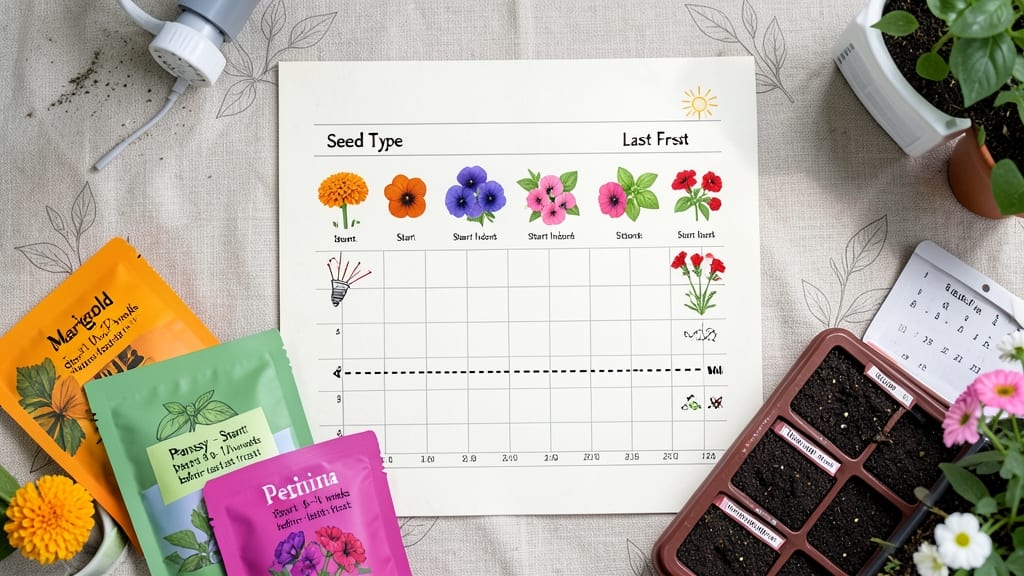
When to Start Flower Seeds Indoors Chart: Zone-Specific Deadline Calculator

Flowers

When to Start Flower Seeds Indoors Chart: Zone-Specific Deadline Calculator

Starting flower seeds indoors at the right time ensures you’ll have vibrant blooms all season — and a zone-specific chart is the secret weapon to getting it right.

Timing is everything in gardening—start too early, and you’ll crowd your seedlings; too late, and your blooms won’t thrive. This chart reveals the exact weeks before last frost to kickstart your indoor garden for summer flowers, tailored to your region.

Whether you’re growing annuals like petunias or perennials like lavender, knowing when to begin makes all the difference. Miss the window, and you’ll end up with leggy, weak plants or flowers that never open.

Below, you’ll find a simple, printable guide with start dates for USDA zones 3–10, plus tips for adjusting for early bloomers, late frost years, and even high-altitude tweaks. No more guessing—just perfect timing for a garden full of color.

Zone-by-Zone flower seed starting deadlines chart

Timing your flower seeds indoors is like setting a countdown to summer—get it wrong, and your blooms arrive too early or too late.

This color-coded chart gives you the exact weeks before last frost to start popular flowers in USDA zones 3-10, with adjustments for high-altitude areas where frost lingers later.

Whether you're growing petunias for summer containers or hollyhocks for perennial borders, knowing these deadlines ensures your seedlings are hardy and ready when it's time to transplant.

Most seed packets list a days-to-maturity range, but that doesn’t account for your local frost date or the slow start of early-season seeds. For example, tomatoes might take 70 days to fruit, but if your last frost is May 15, you’d start them March 1 in Zone 5.

The same logic applies to flowers—marigolds need 60 days, but snapdragons only need 50. This chart simplifies the math with zone-specific start windows for 20+ popular flowers, including annuals, perennials, and bulbs like tulips and daffodils.

Use this chart as your indoor seed-starting calendar. Print it, mark your last frost date (find yours here), and count backward. Pro tip: High-altitude gardeners (e.g., Denver, CO or Flagstaff, AZ) should add 1-2 extra weeks to these deadlines since frost often arrives later at higher elevations.

For instance, if Zone 5 says "start marigolds 8 weeks before last frost," and your frost date is June 1, you’d start them April 1—but at 5,000 feet, you might push that to March 25 for safety.

Flower Type
USDA Zones
Weeks Before Last Frost
Start Date (Zone 5 Example)
Notes
High-Altitude Adjustment
Annuals
3-4
8-10 weeks
Feb 15 - Mar 1
Petunias, Geraniums, Snapdragons
Add 1-2 weeks
Annuals (Fast-Growing)
5-10
6-8 weeks
Mar 1 - Mar 15
Marigolds, Zinnias, Cosmos
Add 1 week
Perennials
3-6
10-12 weeks
Jan 15 - Feb 15
Coneflowers, Black-Eyed Susans, Lavender
Add 2 weeks
Bulbs (Tulips, Daffodils)
4-8
12-14 weeks
Dec 1 - Jan 15
Start indoors for earlier blooms
Add 3 weeks
Vegetable Flowers (Tomatoes, Peppers)
3-10
8-10 weeks
Feb 15 - Mar 1
Edible blooms like nasturtiums
Add 1-2 weeks
Tropicals (Impatiens, Begonias)
9-10
10-12 weeks
Jan 15 - Feb 15
Need warmth; avoid early starts
No adjustment

How to adjust start dates for early vs late bloomers

Not all flowers bloom on the same schedule, which means their indoor starting times vary dramatically. Petunias and geraniums need a long 8-10 week head start indoors, while snapdragons and marigolds thrive with just 6-8 weeks. Understanding these differences prevents leggy seedlings or missed bloom seasons.

Your local last frost date is your anchor point, but flower type dictates how far ahead you should begin. Tropical flowers like impatiens or begonias often need extra time to mature before summer heat arrives, while cold-hardy perennials like coneflowers can handle earlier starts.

The key is matching the flower's maturity rate to your garden's growing season. For example, zinnia seeds germinate quickly but need 7-9 weeks to reach blooming size, while dahlias require 12-16 weeks of indoor care before transplanting.

1. Fast Bloomers (6-8 weeks):
  • Snapdragons - 6-8 weeks (ready by late spring)
  • Marigolds - 6-7 weeks (heat-tolerant)
  • Cosmos - 6-8 weeks (self-seeds easily)
2. Mid-Range Bloomers (8-10 weeks):
  • Petunias - 8-10 weeks (needs warmth)
  • Geraniums - 8-9 weeks (woodier stems)
  • Zinnias - 7-9 weeks (bold blooms)
3. Slow Starters (10+ weeks):
  • Dahlias - 12-16 weeks (tubers need time)
  • Rudbeckias - 8-10 weeks (long stems)
  • Tropicals (Impatiens/Begonias) - 10-12 weeks (heat-sensitive)
Pro Tip:

Use grow lights for 14-16 hours/day to speed up slow bloomers like dahlias. For cold-hardy perennials, start 4-6 weeks earlier in Zone 3-5 to extend their season.

For tropical flowers that struggle with frost, consider starting them 4-6 weeks earlier than recommended and use heat mats to maintain 70-75°F soil temps. Conversely, cold-hardy perennials like black-eyed Susans can handle 2-3 weeks later starts in cooler zones.

Always check your seed packet for specific recommendations, but adjust based on your microclimate. If your spring arrives early, push starts back by 1-2 weeks to avoid overcrowding. For late frosts, use row covers to protect early bloomers.

By matching your start dates to each flower's maturity timeline, you'll enjoy longer bloom seasons and healthier plants. Experiment with a few varieties each year to find what works best for your garden's unique conditions.

★★★★★4.5(9 reviews)
Categories Flowers