
Plants
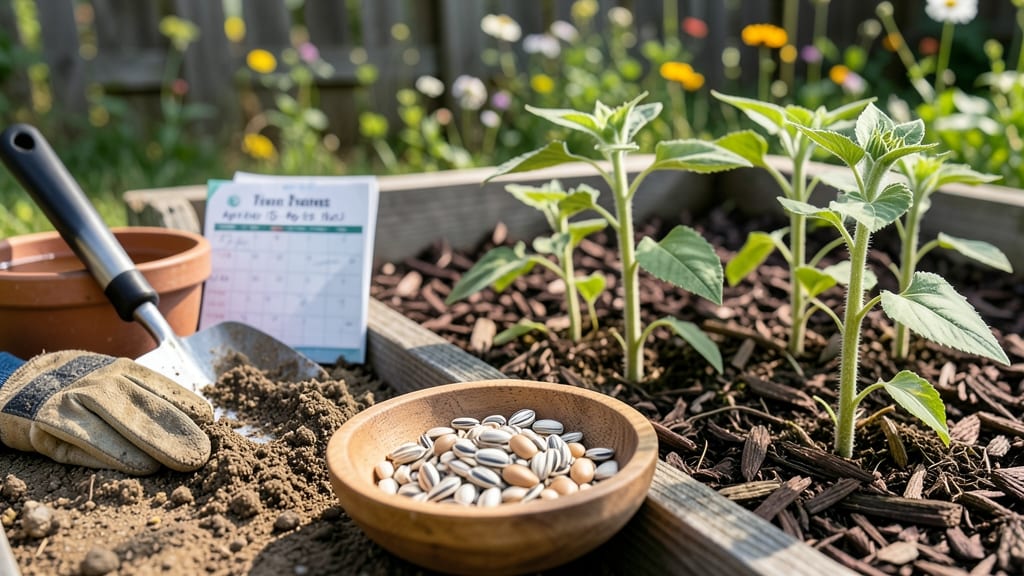
To plant sunflower seeds in Virginia, aim for mid-April through early July after the last frost—this ensures your 🌻 thrives in USDA Zones 6a-8a.
Timing is everything, especially when frost dates vary across the state. Plant too early, and a late freeze could wipe out your seedlings; too late, and you might miss the late-summer blooms you’re craving.
Virginia’s climate means you’ve got roughly 165-220 frost-free days to work with, depending on your zone. That window is your golden ticket to towering sunflowers that reach 10 feet or more by fall.
Below, I’ll break down the exact planting deadlines by zone, soil prep tips, and how to stretch your season for multiple harvests—so you can enjoy those cheerful faces from July through October.
Virginia sunflower planting deadlines by USDA Zone (6, 7, 8)
Sunflowers thrive in Virginia's warm summers, but their planting timeline depends heavily on your USDA zone and last frost date. In Zone 6, where frosts linger until mid-April, you’ll have a shorter window than Zone 8, where the last frost often arrives by early March.
Understanding these deadlines ensures your sunflowers grow tall and strong before Virginia’s first frost in October.
Sunflowers are annual plants in Virginia, meaning they complete their life cycle in one growing season. Most varieties need 60-120 days to mature, so timing your planting is critical.
For example, a 60-day variety planted in late May in Zone 6 might not reach full bloom before frost, while the same variety in Zone 8 would have time to thrive.
Soil temperature also plays a key role. Sunflower seeds germinate best when soil reaches 55-65°F. In Virginia, this typically aligns with mid-April to early May, but cooler zones like Zone 6 may need to wait until late April or early May to avoid slow germination.
Here’s a quick reference for Virginia’s USDA Zones 6, 7, and 8, including last frost dates, ideal planting windows, and harvest timelines for sunflowers:
In Zone 6, where frosts are more common, I recommend planting 60-day varieties like 'Teddy Bear' by late April to ensure they mature before the first frost.
For Zone 7 and Zone 8, you can push your planting window later, even up to early July, to enjoy sunflowers into October.
If you’re growing taller varieties like 'Mammoth' or 'Russian Giant', which can reach 12-15 feet, plant them earlier in the season (by mid-April in Zone 6) to give them time to establish strong roots before the heat of summer.
These giants need 100-120 days to mature, so timing is everything.
For shorter varieties like 'Sunspot' or 'Autumn Beauty', which mature in 50-60 days, you can even plant a second batch in late June for a fall harvest. This works especially well in Zone 8, where the growing season extends later into the year.
Always check your local Almanac’s frost dates for the most accurate timing, as microclimates can shift planting windows by 1-2 weeks. For example, areas near the Blue Ridge Mountains may experience later frosts than coastal regions.
Use a soil thermometer to confirm temperatures before planting—seeds won’t germinate well in cold soil.
Pro tip: If you’re unsure about frost dates, opt for cold-hardy varieties like 'Autumn Beauty' or 'ProCut', which can tolerate cooler temperatures better than standard types. These are great for Zone 6 gardeners who want to push their planting window earlier.
Finally, remember that sunflowers love full sun
How to extend your sunflower season in Virginia: staggered planting tips
If you love sunflowers but hate missing their golden blooms by frost, staggered planting is your secret weapon. By spacing out your plantings every 2-3 weeks, you can enjoy sunflowers from mid-summer to fall.
This simple trick works especially well in Virginia’s USDA Zones 6-8, where frost dates vary dramatically.
Start with your first planting right after the last frost date (typically mid-April to early May). Then, plant successive batches every 2-3 weeks until early July. This ensures a continuous display of blooms and a steady supply of seeds for birds or your kitchen.
For extra protection, choose cold-hardy varieties like 'Autumn Beauty' or 'Moulin Rouge'. These tolerate cooler temperatures and extend your harvest window by 2-4 weeks compared to standard varieties.
🌱 Numbered Highlights: Staggered Sunflower Planting in Virginia
- 📅 First planting: Mid-April to early May (after last frost)
- ⏳ Successive plantings: Every 2-3 weeks until early July
- 🌡️ Soil temp: Minimum 55°F (13°C) for germination
- 🌱 Depth: 1 inch deep, 6 inches apart
- 🌿 Thinning: Space mature plants 12-24 inches apart
- 🌼 Late varieties: Plant 'Russian Giant' in early June for fall harvest
- 🛡️ Frost protection: Use row covers for early seedlings
Protect young seedlings from late frosts using floating row covers or cloche tunnels. These create a 5-10°F warmer microclimate, giving delicate sprouts a fighting chance. Remove covers once plants reach 4-6 inches tall to prevent overheating.
Companion planting boosts sunflower resilience too! Pair them with basil, marigolds, or borage to deter pests like aphids and beetles. Avoid planting near potatoes or fennel, which stunt sunflower growth.
With these strategies, you’ll enjoy sunflowers from July through October—long after most gardens have faded. Happy planting! 🌻