
Plants
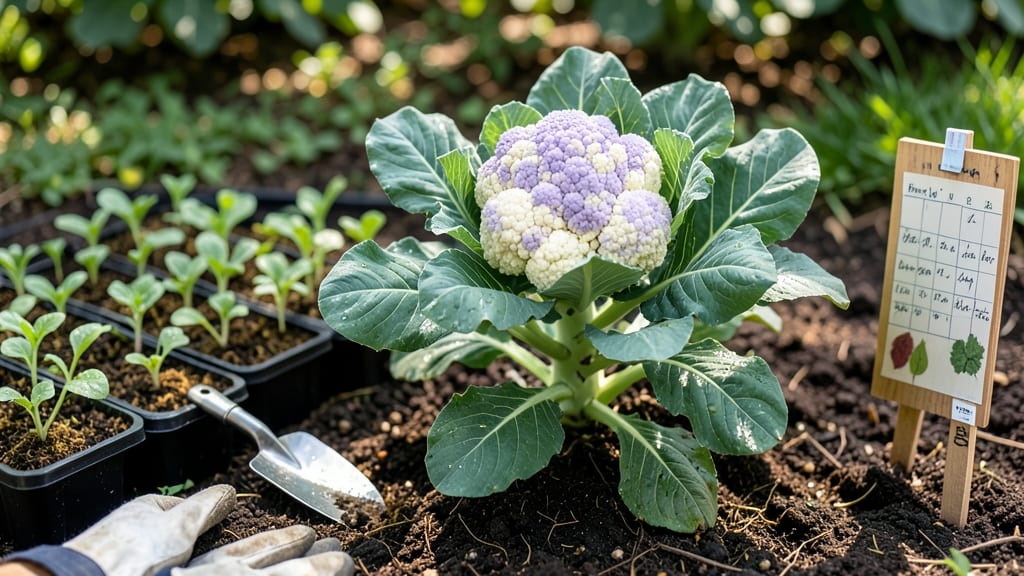
Planting cauliflower in Ohio means timing it right for sweet, tender heads—not too early for frost or too late for summer heat.
Ohio gardeners know timing is everything when growing 🥬 cauliflower—plant too early, and frost ruins your crop; too late, and summer heat turns heads into bitter bolters. Mastering the perfect planting window in USDA Zones 5-6 ensures sweet, tender curds straight from your garden.
Spring planting starts 4-6 weeks before your last frost (around mid-March to April 30), while fall crops go in August 1 to September 15 for an October-November harvest. Ohio’s unpredictable weather adds another layer—soil must be at least 50°F before seeds go in, and transplanting too soon risks stunted growth.
Below, I’ll break down the exact weeks to plant, how to adjust for your region (Columbus vs. Cleveland), and the best varieties for Ohio’s climate—so you can avoid the common mistakes that waste time and money.
Ohio cauliflower planting calendar: exact weeks for zones 5-6 success
Ohio's USDA Zones 5-6 offer two prime windows for growing cauliflower: spring and fall. In Columbus, Cincinnati, and Cleveland, average last frost dates range from April 15-20, while first frosts arrive October 15-20.
These dates create a 165-day frost-free season, perfect for timing your plantings to avoid heat stress or frost damage.
Cauliflower thrives when soil temperatures reach 50°F+ and daylengths are moderate. Spring plantings should start 4-6 weeks before last frost, while fall plantings need 10-12 weeks before first frost to mature.
Ohio's unpredictable spring weather means having backup dates is critical—especially for gardeners in colder microclimates like Northeast Ohio.
Direct sowing vs. transplanting also impacts timing. Seedlings handle cooler soil better than seeds, so transplants can go in 2-3 weeks earlier than direct-sown seeds. For Ohio, this means starting seeds indoors by February 15 for spring, with transplants ready by March 15-20.
Here’s your Ohio cauliflower planting calendar, accounting for regional variations and backup dates:
| Planting Window | Method | Columbus | Cincinnati | Cleveland | Backup Date |
|---|---|---|---|---|---|
| Spring Planting | Direct Sow | April 1-15 | March 25-April 10 | April 10-25 | May 1 (late start) |
| Spring Planting | Transplant | March 15-April 1 | March 10-March 25 | March 25-April 10 | April 15 (late start) |
| Fall Planting | Direct Sow | August 15-September 1 | August 10-August 25 | August 20-September 5 | September 10 (late start) |
| Fall Planting | Transplant | July 15-August 10 | July 10-July 25 | July 20-August 5 | August 15 (late start) |
For spring plantings, aim to have mature heads by July before summer heat sets in.
In Columbus, this means starting seeds by February 15 for transplants or direct-sowing by April 1. Cincinnati’s slightly warmer microclimate allows for earlier starts, while Cleveland’s cooler climate may need delayed plantings until April 10.
Fall plantings are trickier due to Ohio’s variable September weather. Seedlings need 10-12 weeks to mature, so transplants should go in by August 1 in Columbus or July 20 in Cleveland. Late starts can still work if you choose fast-maturing varieties like 'Snowball Y Improve' (70 days to harvest).
If you miss the primary window, succession planting can salvage your season. Sow every 2 weeks in spring until April 30 or in fall until September 1. This staggered approach ensures a continuous harvest and reduces bolting risk from heat stress.
For example, a May 1 planting might still yield small heads by June 15 before summer takes over.
Ohio’s raised beds can extend planting windows by 1-2 weeks due to faster soil warming. Fill beds with compost-rich soil to improve drainage and fertility, which helps cauliflower tolerate Ohio’s clay-heavy soils.
Add a 2-3 inch mulch layer of straw to retain moisture and regulate soil temperature—critical for preventing head splitting in hot, dry spells.
Monitor your garden’s microclimate
5 Critical factors that determine Ohio cauliflower planting success
Ohio's unpredictable spring weather and variable frost dates make cauliflower planting a delicate balance. Unlike heat-loving tomatoes, cauliflower thrives in cool temperatures (50°F-75°F), but even a late frost can devastate young seedlings.
The key isn't just planting dates—it's understanding how soil temperature, daylength sensitivity, and microclimates interact to create your ideal window.
Raised beds add another layer of complexity. They warm up faster than in-ground soil, giving you a 2-3 week earlier planting opportunity—but only if you're prepared for potential temperature swings.
Meanwhile, Ohio's long daylight hours in summer can trigger premature bolting (flowering) if you plant too late. Let's break down the 5 non-negotiable factors that separate successful harvests from bitter disappointments.
Wait until soil reaches 50°F+—cold soil stunts root growth. Use a soil thermometer to confirm.
Avoid planting until 2-3 weeks after your area's average last frost (Columbus: April 15; Cleveland: April 20).
Long summer days (14+ hours) trigger bolting—plant early spring or late summer for best results.
Raised beds warm 2-3 weeks faster—plant March 1-March 15 in raised beds vs. April 1-April 15 in-ground.
For fall harvests, plant August 1-September 15—aim for 70-80 days to maturity before first frost.
Let's tackle soil temperature first—this is your most critical factor. Cauliflower roots struggle below 50°F, leading to stunted plants that bolt prematurely. I've buried a soil thermometer at 2-inch depth in my garden beds, and I won't plant until it consistently reads 55°F+ for 3 days.
In northern Ohio (Zones 5), this often means waiting until mid-April, while southern Ohio (Zone 6) can start by early April.
Ohio's frost dates add another layer of complexity. A late frost in May (not uncommon in Zone 5) can wipe out seedlings planted too early. I use frost cloth for the first 2 weeks after transplanting to create a 5°F buffer.
For raised beds, this buffer is even more critical since they warm faster—but they also lose heat faster at night. A black plastic mulch helps maintain warmth during the day and insulates at night.
Don't overlook daylength sensitivity. Cauliflower is a short-day plant, meaning it needs 12-14 hours of daylight to form heads. Ohio's summer days exceed 14.5 hours, which triggers bolting. That's why I focus on spring (March-April) and fall (August-September) plantings.
For fall crops, I choose early-maturing varieties like 'Snowball Y Improve' (60 days) to beat the October 15 frost date.
Here's a pro tip: Succession planting in raised beds lets you stagger plantings every 2 weeks from March through May. The first batch goes in when soil hits 50°F, and each subsequent batch gets a 10°F warmer soil advantage.
This spreads your harvest window from June to August—just in time for summer meals before the heat becomes oppressive.
Remember, Ohio's microclimates vary dramatically. A south-facing slope in Cincinnati might be 5°F warmer than a north-facing valley in Cleveland. Use these 5 factors as your guide, but always adjust for your specific location's history.
Keep a garden journal to track what works best in your yard—your notes will become more valuable than any generic calendar.