
Flowers
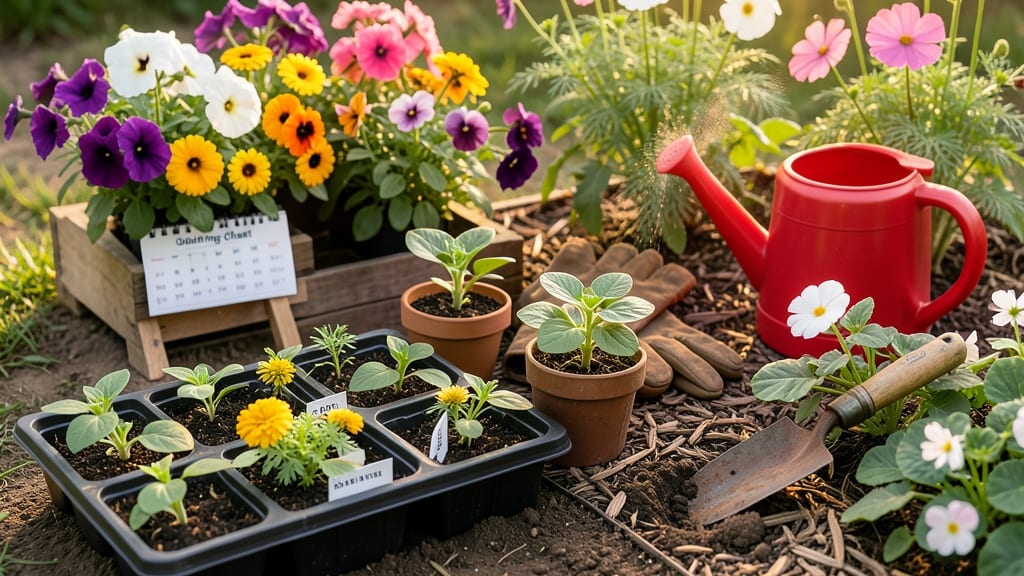
Planting flowers in Ohio at the right time means the difference between a garden bursting with color and one that struggles to take root.
Ohio’s unpredictable spring weather can turn even the most eager gardener into a second-guesser—planting flowers too early risks frost damage, while waiting too long might mean missing peak bloom season.
But with the right timing based on your hardiness zone and soil temperature, you can maximize your garden’s beauty year after year. Whether you’re growing annuals, perennials, or bulbs, knowing when to plant ensures stronger roots, faster growth, and longer-lasting blooms.
In this guide, I’ll break down the best months for planting in Ohio’s Zone 6a, how to check soil readiness, and which flowers thrive with spring or fall starts—so you can enjoy a vibrant garden from June through October.
Ohio flower planting calendar by hardiness zone (5a-6b)
Ohio’s hardiness zones 5a-6b create a unique gardening climate where spring blooms can appear as early as March in southern Ohio but wait until May in northern areas.
Knowing your last frost date and soil temperature is key—most annuals need 50°F+ soil to thrive, while bulbs like tulips can go in as early as October for spring color.
Southern Ohio (zone 6a) enjoys earlier planting windows—think late February for hardy perennials—while northern Ohio (zone 5a) gardeners should wait until mid-May for warm-season annuals. The difference between zones means marigolds might bloom in June in Columbus but not until July in Cleveland.
🌱 Comparison Table: Ohio Flower Planting by Zone & Type
| Plant Type | Zone 5a (Northern OH) | Zone 6a (Southern OH) | Soil Temp Threshold | Key Notes |
|---|---|---|---|---|
| Bulbs (Tulips, Daffodils) | October-November | September-October | 40-50°F | Plant 6-8 weeks before frost; deeper in clay soil. |
| Perennials (Coneflowers, Lavender) | April-May (after last frost) | March-April | 50°F+ | Divide clumps every 3-4 years for best blooms. |
| Cool-Season Annuals (Pansies, Snapdragons) | March-April (or September) | February-March (or August) | 45°F+ | Tolerates light frost; great for early spring color. |
| Warm-Season Annuals (Marigolds, Zinnias) | May-June (after last frost) | April-May | 60°F+ | Direct-sow after Memorial Day for best results. |
| Fall Planting (Pansies, Kale) | August-September | July-August | 55°F+ | Extends blooms until first hard frost (mid-October). |
For zone 5a gardeners, focus on cool-season flowers first—like calendulas and stock—then transition to sunflowers and cosmos once soil warms. In zone 6a, you can start petunias indoors by February and transplant them outdoors by April.
Pro tip: Use row covers to plant 2-3 weeks earlier in spring, protecting tender seedlings from late frosts. I’ve saved entire batches of geraniums this way in my zone 5b garden!
Don’t forget succession planting—sow fast-growing annuals like radishes every 2 weeks to keep your garden blooming continuously. Even in Ohio’s short season, you can enjoy color from May through October with the right timing.
If you’re unsure about your last frost date, check local Cooperative Extension Service records—many Ohio counties provide historical averages that’ll help you plan. For example, Columbus (zone 6a) averages its last frost on April 15th, while Cleveland (zone 5b) waits until May 1st.
For bulbs like daffodils, plant in fall (September-October) so they establish roots before winter. I’ve found that tulips planted in November bloom 2 weeks earlier than those planted in October—worth the extra month of prep!
Remember: Soil temperature matters more than air temperature. Use a soil thermometer to confirm 50°F+ for seeds and 60°F+ for transplants. This small tool has saved me from wasted seed packets more times than I can count.
🌷 Whether you’re in Toledo (zone 5b) or Athens (zone 6b), Ohio’s diverse zones mean your flower garden timeline should be as flexible as the weather.
Start with hardy perennials in early spring, then layer in annuals as temperatures rise—and don’t forget those fall-planted bulbs for next year’s surprises!
Soil temperature secrets: when to plant for fastest growth
Ohio gardeners know the struggle: soil temperature can make or break your flower garden. While air temperature guides frost dates, soil warmth determines when seeds sprout and transplants thrive. For fastest growth, aim for 50°F (10°C) for cool-season flowers and 60°F (15°C) for warm-season varieties.
Using a simple soil thermometer ($10 at garden centers) gives you precise data instead of guessing.
Check soil temperature in the morning when it’s coolest—this prevents overestimating warmth. For seeds, wait until the soil reaches the minimum germination temperature listed on your packet (often 60-70°F for most annuals). Transplants like petunias or marigolds need consistent warmth above 55°F to avoid shock.
Pro tip: Dark-colored soil warms faster than light soil, so mulch with black plastic or compost to speed up heating.
| Plant Type | Soil Temp for Planting | Optimal Growth Temp | Ohio Planting Window |
|---|---|---|---|
| Cool-Season Annuals (Pansies, Snapdragons) | 45-50°F (7-10°C) | 60-65°F (15-18°C) | March-April (Zone 5a) / April (Zone 6b) |
| Warm-Season Annuals (Marigolds, Zinnias) | 60-65°F (15-18°C) | 70-80°F (21-27°C) | After May 15 (Zone 5a) / After May 1 (Zone 6b) |
| Perennials (Coneflowers, Black-Eyed Susans) | 50-55°F (10-13°C) | 70-75°F (21-24°C) | April-May (Spring) / August-Sept (Fall) |
| Bulbs (Tulips, Daffodils) | 40-45°F (4-7°C) | 55-65°F (13-18°C) | October-November (Fall) / March (Spring) |
Extend your Ohio growing season with row covers or cold frames—these can add 2-4 weeks of warmth for early spring or late fall plantings. For example, floating row covers (like Reemay fabric) raise soil temps by 5-8°F, while cold frames can push temps to 80°F+ on sunny days.
Just remove covers when temps exceed 85°F to avoid overheating. I’ve used row covers to plant pansies in late February in Zone 5a Ohio with great success!
Avoid these common mistakes that stall flower growth: planting seeds too deep (most need 2x their width max), ignoring soil moisture (dry soil cools faster), or rushing transplants into chilly soil.
For example, petunia seeds need 70°F soil to germinate—planting them in 50°F soil will leave you waiting weeks. Always water thoroughly after planting to help heat the soil faster.
For fastest growth, pair soil warmth with morning watering (to retain heat) and mulch (to stabilize temps). In Ohio’s Zone 5a-6b, this means starting cool-season flowers in March and warm-season flowers after May 15. With