
Planting
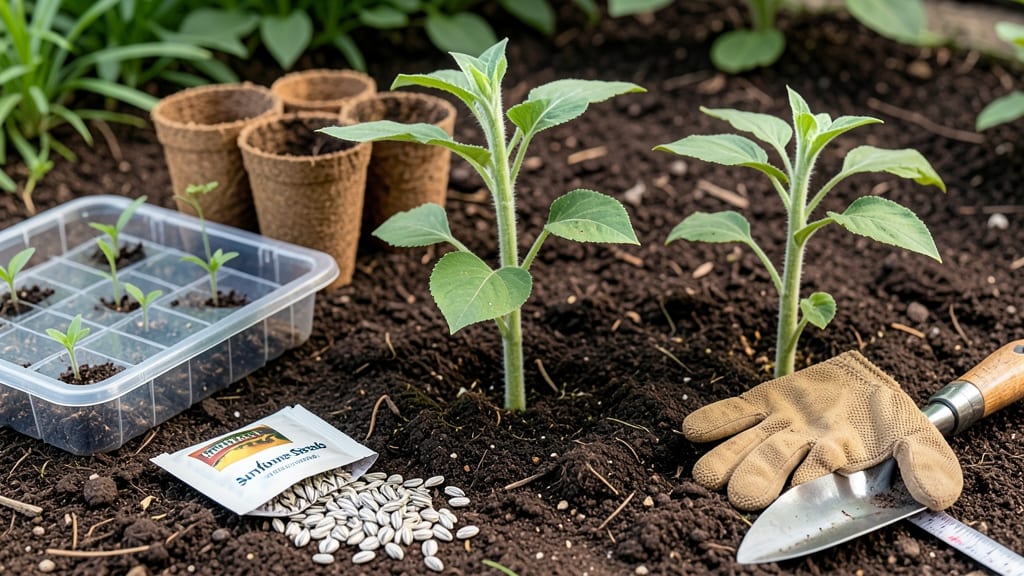
Timing your sunflower planting right is the secret to those 10-foot-tall giants you’ve always dreamed of growing 🌻 — and missing the window by even a few weeks can leave you with scraggly stalks instead.
If you’ve ever watched your sunflowers struggle to reach their potential, it’s likely because you planted them too early or too late. The right moment depends on your zone, soil temperature, and even the variety you’re growing.
Get it wrong, and you’ll end up with weak stems or no blooms at all.
In Zone 6a and similar climates, the ideal planting window is April to May, after the last frost has passed. But if you live in warmer regions, you can stretch that window into early summer.
Below, I’ll break down the exact months for your zone, soil prep tips, and how to time it for maximum height.
You’ll also discover how to avoid common mistakes like planting too deep, spacing seeds incorrectly, or skipping the right soil conditions. Follow these steps, and you’ll be harvesting sky-high sunflowers in no time.
Best sunflower planting months by US hardiness zone (with exact dates)
Sunflowers thrive when planted at the right time—too early and frost will kill seedlings, too late and they’ll bolt before reaching their full 10-15 foot height. The key is aligning your planting with your USDA hardiness zone and last frost dates.
In my Zone 6a garden, I’ve learned that even a few weeks off can mean the difference between towering giants and sad, stunted stems. Let’s break down the perfect planting windows for every zone to maximize those sky-high blooms.
Most sunflower varieties need 60-85 days to mature, so timing depends on your zone’s frost dates. Early varieties (like 'Moulin Rouge') can handle cooler soils, while late varieties (like 'Russian Giant') need warmer temperatures to avoid leggy growth.
I always check my local last frost date and count backward—adding 10-14 days for germination gives me the ideal window.
Here’s the zone-by-zone breakdown with exact months and frost risk analysis to help you plan for maximum height and disease resistance:
In colder zones (1-5), I always opt for early-maturing varieties to avoid frost damage. For example, in Zone 3, planting in late May gives seedlings enough time to establish roots before the first frost in October.
Meanwhile, in warmer zones (8-11), you can push the timeline earlier—some gardeners in Zone 10 even plant in January for summer blooms.
Adjusting for early/late varieties is key to maximizing height. Early varieties like 'Autumn Beauty' can handle cooler soils and shorter growing seasons, while late varieties like 'Russian Giant' need warmer temperatures to reach their full 12-15 foot potential.
I’ve found that in Zone 6a, planting 'Moulin Rouge' in mid-April gives me blooms by July, while 'Russian Giant' planted in late May still reaches 10 feet by September.
Disease resistance also plays a role in timing. Planting too early in humid zones (7-9) can lead to powdery mildew, so I always wait until soil temperatures hit 60°F (16°C) before sowing.
In drier zones (4-6), you can plant slightly earlier, but I still monitor for stem rot if rains are heavy. Mulching with straw helps keep soil temperatures stable and reduces disease risk in all zones.
For succession planting, I make 2-3 sowings every 2 weeks in zones with long growing seasons (6-11). This ensures a continuous display of blooms from summer through fall.
In Zone 8, for example, I plant my first batch in March, then follow up in April and May. This strategy also extends the harvest window for seed production.
One common mistake I see is planting sunflowers too close to summer’s end. If you’re in Zone 5 or colder, avoid planting after June 15—your plants won’t have enough time to mature before frost.
In warmer zones, you can push it to July 1, but expect shorter stems. Always check your first frost date and count backward from your variety’s maturity time.
Pro tip: Use a soil thermometer to confirm temperatures before planting. Sunflower seeds need 55-60°F (1
How to time sunflower planting for maximum height (pro tips)
Sunflowers are fast growers, but their height potential depends entirely on when you plant them. The key is waiting until the soil reaches 55-60°F—any cooler, and germination slows to a crawl.
For commercial varieties, this means planting after your last frost date, while ornamental types can handle slightly cooler soils but still need warmth to avoid leggy stems.
I’ve learned the hard way that planting too early leads to bolting (premature flowering) or weak stems that flop over. The best approach is to check soil temperature with a soil thermometer—if it’s below 55°F, wait another week.
Warm soil ensures strong root development, which translates to taller, sturdier plants that can support those massive blooms.
- 1. Soil Temp Check: Wait until soil hits 55-60°F—use a thermometer for accuracy. Commercial varieties need warmer soil (60°F+) for best results.
- 2. Seed Depth: Plant seeds 1 inch deep—deeper planting delays germination. Ornamental types can handle slightly shallower depths (½ inch) in warm climates.
- 3. Spacing Matters: Start seeds 6 inches apart, then thin to 12-18 inches for standard varieties. Dwarf types need only 6-12 inches of space.
- 4. Succession Planting: For continuous blooms, sow new seeds every 2-3 weeks after the first planting. This works best in Zones 7-10 where frost isn’t a concern.
- 5. Avoid Overcrowding: Too many plants compete for nutrients, leading to leggy stems. Thin seedlings early to prevent this common mistake.
For maximum height, focus on commercial varieties like ‘Mammoth’ or ‘Russian Giant’—these need the longest growing season and benefit from late spring planting. Ornamental types, such as ‘Autumn Beauty’ or ‘Teddy Bear,’ can handle slightly later plantings but won’t reach the same heights.
One pro tip I swear by is succession planting. By sowing seeds every 2-3 weeks after your initial planting, you’ll have sunflowers blooming all summer long. This is especially useful in warmer climates (Zones 8-10), where you can extend the season into early fall.
Just be sure to monitor for pests like sunflower moths—they love fresh seedlings!
Finally, watch for bolting, which happens when plants flower too early due to stress or cold snaps. If you notice stems elongating rapidly without blooms, provide consistent moisture and move pots to a warmer, sunnier spot if growing in containers.
With the right timing and care, your sunflowers will reach sky-high glory in no time 🌻.