
How To
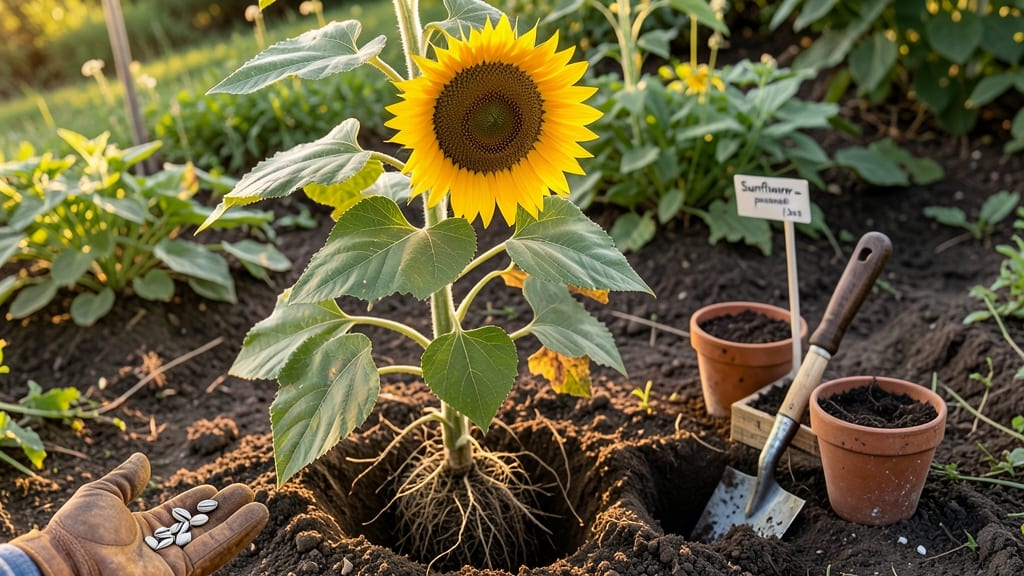
Planting one or two sunflower seeds per hole is the trick to strong stalks that reach their towering potential—no more weak, spindly plants or wasted seeds.
Picture this: you’ve cleared your garden bed, the soil is warm, and your 🌻 sunflower seeds are ready—but planting too many in one spot means competition for nutrients, leaving you with scraggly stems instead of the 10-foot giants you dreamed of.
Too few seeds per hole, and you’re left with sparse rows. Too many, and the plants fight for space, weakening their structure. The right balance ensures each seedling gets the room it needs to grow tall, sturdy, and full of sun.
Below, I’ll break down the exact spacing for different sunflower varieties, whether to plant seeds individually or in pairs, and how to avoid the most common mistakes that stunt growth from the start.
Optimal sunflower seed spacing by variety: giant vs dwarf sunflowers
Sunflowers thrive when given the right amount of space to grow strong, sturdy stalks and vibrant blooms. The number of seeds per hole and spacing between plants vary dramatically depending on whether you're growing giant varieties like 'Mammoth' or compact dwarfs like 'Teddy Bear'.
Getting this right prevents competition for nutrients and sunlight, ensuring your sunflowers reach their full potential—whether that's towering over your garden or creating a cheerful border.
For tall sunflowers (6+ feet), proper spacing is critical to prevent weak, floppy stalks that can't support their own weight. These varieties need ample room to develop deep root systems and sturdy stems.
On the other hand, dwarf sunflowers (3 feet or shorter) can handle closer spacing since they won't grow as tall, making them perfect for containers or small gardens. Let's break down the exact spacing guidelines for each type to maximize your sunflower's growth and beauty.
| Variety Type | Mature Height | Seeds per Hole | Plant Spacing (inches) | Row Spacing (feet) | Best For |
|---|---|---|---|---|---|
| Giant (e.g., 'Mammoth', 'Russian Giant') | 10-16 ft | 1 seed per hole | 12-18" | 3-4 ft | Backyard displays, cut flowers |
| Standard (e.g., 'Autumn Beauty', 'Procutto') | 6-10 ft | 1 seed per hole | 10-12" | 2-3 ft | Cutting gardens, borders |
| Semi-Dwarf (e.g., 'Teddy Bear', 'Moulin Rouge') | 3-6 ft | 1-2 seeds per hole | 6-10" | 1.5-2 ft | Containers, small gardens |
| Dwarf (e.g., 'Sunspot', 'Peko') | 1-3 ft | 2-3 seeds per hole | 4-6" | 1-1.5 ft | Patio pots, window boxes |
🌱 Pro Tip: Thin seedlings to the strongest plant per hole after germination to avoid overcrowding.
When planting giant sunflowers, always use one seed per hole to ensure each plant has enough space to develop a thick, sturdy stalk. These varieties need 12-18 inches between plants and 3-4 feet between rows to prevent competition.
If you're growing 'Mammoth' or 'Russian Giant', this spacing will help them reach their 10-16 foot potential without toppling over.
For standard sunflowers, like 'Autumn Beauty', you can plant one seed per hole with 10-12 inches between plants. These varieties are slightly less demanding but still benefit from 2-3 feet of row spacing.
This spacing ensures they get enough sunlight and nutrients to produce large, vibrant blooms perfect for cutting.
If you're growing semi-dwarf varieties, such as 'Teddy Bear', you can plant 1-2 seeds per hole since they won't grow as tall. Space these plants 6-10 inches apart and keep rows 1.5-2 feet apart.
This spacing works well for containers or small gardens where you want a fuller look without sacrificing growth.
For dwarf sunflowers, like 'Sunspot', you can get creative with spacing. Plant 2-3 seeds per hole and space them 4-6 inches apart. These compact plants thrive in 1-1.5 feet of row spacing, making them ideal for patio pots or window boxes.
Their smaller size allows for denser planting without competition issues.
Regardless of the variety, always plant seeds 1 inch deep in well-draining soil to ensure proper germination. After thinning seedlings, monitor your sunflowers for signs of overcrowding, such as yellowing leaves or weak stems.
If you notice these issues, gently remove excess plants to give the remaining ones room to thrive.
Proper spacing isn't just about maximizing growth—it's also about preventing disease and improving air circulation. Crowded sunflowers are more susceptible to powdery mildew and stem rot, so following these guidelines will keep your plants healthy and strong.
With the right spacing, your sunflowers will reward you with taller stalks, bigger blooms, and a bountiful harvest.
How to plant sunflower seeds correctly: step-by-step for maximum growth
Sunflowers thrive when planted with precision—especially when it comes to how many seeds per hole. Overcrowding weakens stalks, while over-spacing wastes seeds. The key is balancing seed density with stalk strength to ensure those towering 10+ foot giants reach their potential.
I’ve planted sunflowers for years, and these steps guarantee the healthiest, most vibrant blooms.
Most gardeners make one of two mistakes: planting too many seeds in a single hole (leading to thin, leggy stalks) or spacing them too far apart (wasting seeds and space). The solution?
Plant 1-2 seeds per hole for standard varieties, or 1 seed per hole for giant types. This spacing ensures each plant gets the nutrients and sunlight it needs to grow strong.
- Step 1: Choose your sunflower variety. Giant types (like 'Mammoth') need 1 seed per hole, while dwarf varieties (like 'Teddy Bear') can handle 2 seeds per hole.
- Step 2: Dig holes 1 inch deep and 6-12 inches apart for standard varieties. For giant sunflowers, space holes 18-24 inches apart to prevent overcrowding.
- Step 3: Place 1-2 seeds in each hole, gently covering them with soil. Avoid pressing down too hard to prevent seed damage.
- Step 4: Water deeply but gently to settle the soil around seeds. Keep soil moist (not soggy) until germination, which takes 7-14 days.
- Step 5: Thin seedlings to 1 strong plant per hole once they’re 3-4 inches tall. Snip weaker stems at the base to avoid disturbing roots.
- Step 6: Mulch around the base with 2-3 inches of straw to retain moisture and suppress weeds. Replenish mulch as it breaks down.
- Step 7: Fertilize lightly with a balanced 10-10-10 fertilizer once seedlings are 6 inches tall. Avoid over-fertilizing, which can weaken stalks.
After planting, monitor your sunflowers closely. The first 2 weeks are critical for germination. If soil feels dry 1 inch below the surface, water deeply in the morning to prevent fungal issues.
Once established, sunflowers are drought-tolerant, but consistent moisture during growth ensures thicker stalks and larger blooms.
Pro tip: If you’re growing sunflowers for cut flowers or seed harvest, prioritize single-stem varieties like 'Autumn Beauty' or 'Russian Giant'. These need more space (24+ inches apart) to develop their iconic 6-10 foot stalks.
For bushier, shorter varieties, like 'Sunspot', you can plant 2 seeds per hole and let them grow as a cluster.
Finally, don’t forget to rotate your sunflowers next year. Planting them in the same spot annually can deplete soil nutrients. Instead, move them to a new location each season for healthier growth and fewer pests.
With these steps, you’ll harvest sunflowers that tower over your garden—and maybe even your neighbors’ fences!