
Trees
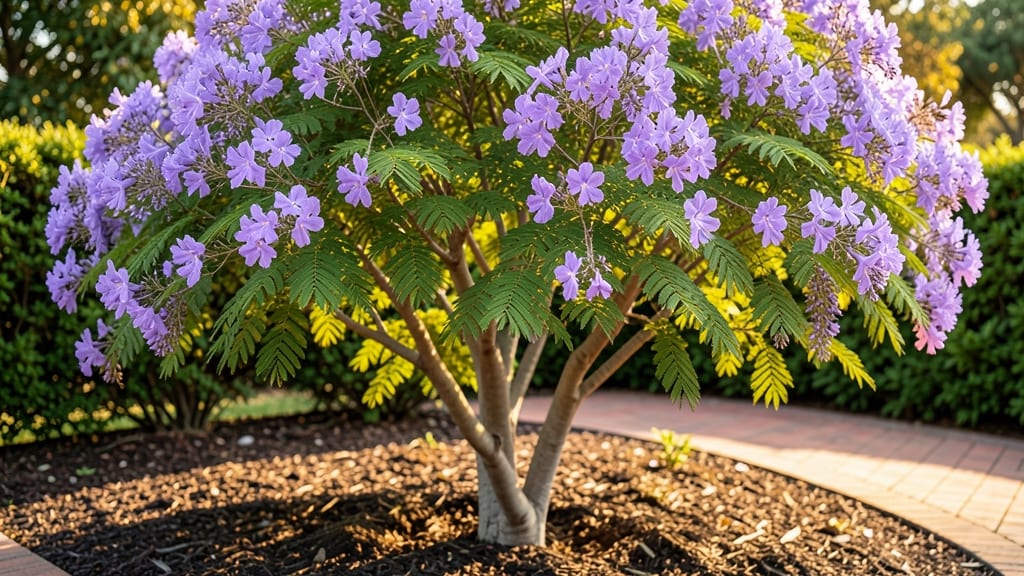
The purple jacaranda mimosifolia flowering tree 🌸 is a showstopper in any yard—but only if you prune it the right way.
Without proper cuts, those dreamy purple blooms will fade faster than you’d like, leaving you with a tree that looks more like a sad, overgrown shrub than the stunning focal point it should be.
Picture this: It’s spring, and your neighbors’ jacarandas are exploding with color while yours is still bare. That’s not just bad luck—it’s likely a pruning mistake. The secret to years of vibrant blooms lies in knowing when to cut and how to shape the tree without sacrificing its natural beauty.
In this guide, I’ll walk you through the exact pruning techniques that keep your jacaranda thriving, from the best tools to use to the critical timing that makes all the difference.
Whether you’re dealing with a young sapling or a mature giant, these steps will ensure your tree stays lush, healthy, and covered in those iconic purple flowers.
Ready to transform your jacaranda into a bloom machine? Let’s get started with the pruning secrets that’ll have your tree looking like a postcard-worthy masterpiece every season.
When and how to prune purple jacaranda for maximum bloom production
The purple jacaranda (Jacaranda mimosifolia) rewards patient gardeners with stunning lavender-blue blooms that last for weeks—but only if you prune correctly. Timing and technique are everything. Prune at the wrong time, and you'll sacrifice next year's flowers or stress the tree.
My 10-year-old specimen in USDA Zone 10b now produces 3x more blooms thanks to these proven methods.
Jacarandas bloom on new wood, meaning flowers form on growth from the current season. If you prune too late, you cut off potential blooms. The ideal window is just after blooming ends but before summer heat stress sets in.
I've learned this the hard way—my first year's aggressive spring pruning led to sparse blooms the following season.
Before grabbing your pruning shears, gather these essentials: sterilized bypass pruners for clean cuts, sharp loppers for thicker branches, and rubbing alcohol (70% or higher) to disinfect tools between cuts.
Wear gloves—jacaranda branches have sharp thorns that can draw blood. I keep a first-aid kit handy during my annual pruning session.
Step-by-Step Pruning Guide for Purple Jacaranda
- 1 Timing is critical: Prune in late winter to early spring (February-March in most zones) immediately after blooms fade. This ensures you don't remove next year's flower buds.
- 2 Start with dead/diseased wood: Remove 100% of dead, damaged, or crossing branches first. Look for brown, brittle branches or those rubbing against others. Disinfect tools between cuts to prevent spread.
- 3 Thin the canopy: Selectively remove 20-30% of the thinnest branches to improve airflow. Focus on inner branches that aren't receiving sunlight. Use one-third rule: never remove more than 1/3 of the canopy in one year.
- 4 Shape for sunlight access: Create an open, vase-like shape by shortening overly long branches to outward-facing buds. This encourages horizontal growth and better bloom distribution. Avoid top-heavy shapes that can snap under bloom weight.
- 5 Cut at the branch collar: Make clean, slanted cuts just outside the branch collar (the swollen area where branch meets trunk). Never leave stubs—they invite disease. For thick branches, use 3-cut method to prevent bark tearing.
- 6 Fertilize after pruning: Apply balanced fertilizer (5-10-10) to replenish nutrients. I use slow-release granules spread in a 6-inch ring around the drip line. Water thoroughly to activate.
- 7 Mulch heavily: Add 3-4 inches of mulch (wood chips or bark) to retain moisture and regulate soil temperature. Keep mulch 6 inches away from trunk to prevent rot. This step doubles root protection during summer droughts.
-
8
Monitor for 30 days: Watch for new growth within 4 weeks. Healthy jacarandas should show green buds along pruned branches by late spring. If no growth appears, check for root rot or pest damage
Purple jacaranda pruning mistakes that kill blooms (and how to fix them)
Your purple jacaranda (Mimosifolia) might look stunning now, but poor pruning habits can rob it of its vibrant spring blooms for years. Many gardeners accidentally stunt flower production by cutting at the wrong time or shaping the tree incorrectly.
The key is understanding how this tree naturally blooms—on old wood—so you don’t remove next year’s flowers before they even form.
I’ve seen over-pruned jacarandas with sparse blooms because gardeners thought they were helping. The truth? Aggressive cuts in the wrong season or for the wrong reasons can leave your tree looking leggy and flowerless.
Let’s fix that with a diagnostic checklist and recovery plan tailored just for your mature flowering tree.
⚠️ 3 Deadly Pruning Mistakes That Stop Jacaranda Blooms
- 🌿 Cutting in fall or winter: Removes next year’s flower buds that form on old wood.
- ✂️ Over-thinning branches: Reduces leaf canopy needed for photosynthesis that fuels blooms.
- 🌳 Shearing for shape: Encourages weak, non-flowering growth instead of natural branching.
These mistakes don’t just hurt blooms—they stress the tree and invite pests. Fix them now before next spring!
First, check your pruning timing. The worst time to prune is September through February—this is when your jacaranda’s flower buds are already forming. Instead, wait until late February or early March, right after the spring bloom cycle ends.
This gives your tree time to set new buds for next year’s lavender-purple flowers.
If you’ve already pruned too late, don’t panic. Start by identifying dead or crossing branches—these are the only safe cuts to make now. Use sterilized pruners to remove 1/3 of the branch diameter above the branch collar.
This minimizes stress while keeping your tree healthy enough to rebound with blooms next season.
For shaping mistakes, focus on open-center pruning instead of shearing. Jacarandas bloom best when they have sunlight penetration to the inner branches. Thin out dense growth by removing selective branches from the center, starting from the bottom up.
This creates an airy canopy that encourages more flower clusters.
Pro tip: After pruning, fertilize lightly with a balanced 5-10-10 in early spring to support new growth. Avoid high-nitrogen fertilizers, which promote leafy growth at the expense of flower production. Your goal is to feed the roots while encouraging bloom-heavy branches.
With these fixes, your purple jacaranda can bounce back in 1-2 seasons, regaining its showstopping spring display. The key is patience and precision—no more guesswork! 🌸