
Flowers
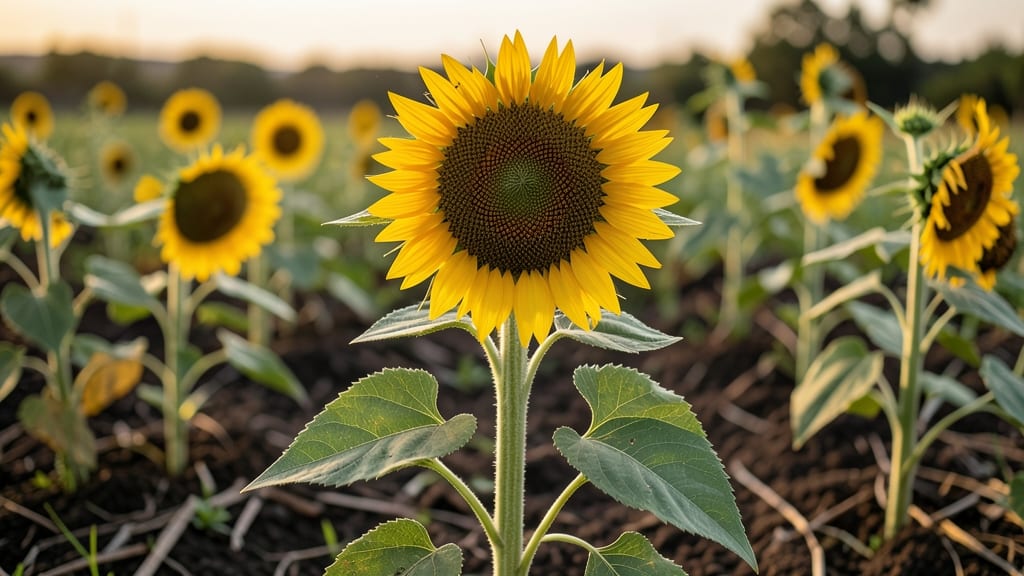
How tall do sunflowers grow? They can range from 3 feet to towering heights of 16 feet, depending on the variety you choose—making them the perfect plant for both small containers and bold garden statements.
Picture this: a 12-foot sunflower 🌻 standing taller than your fence, its golden face tracking the sun like a natural sundial, or a compact 2-foot variety spilling over a patio planter. The difference isn’t just in the numbers—it’s in how you design your space.
If you’ve ever wondered how to pick the right sunflower for your garden, the answer lies in understanding the height ranges of popular varieties. Dwarf types stay manageable, while giants demand space (and staking).
Below, I’ll break down the exact heights of sunflower types, how to support tall varieties, and how sunlight and soil can push those stems even higher—or keep them neatly trimmed.

Sunflower height ranges by variety: dwarf to giant types explained
Sunflowers offer an incredible range of heights, from tiny dwarf varieties perfect for containers to giant sunflowers that can rival your house in stature. The final height of your sunflower depends on the variety you choose, with some reaching 14+ feet while others stay under 3 feet.
Understanding these height differences helps you plan your garden layout, whether you're creating a vertical focal point or adding compact blooms to a patio.
Most sunflowers fall into three broad categories: dwarf varieties (1-3 ft), standard varieties (6-12 ft), and giant varieties (12-16+ ft). Each category has unique growing requirements and design applications.
For example, tall sunflowers need extra space and support, while short sunflowers thrive in containers or small gardens. Let's explore the specific height ranges and ideal growing conditions for each type.
🌱 Did You Know? The tallest sunflower ever recorded reached 25 feet in height, but this required specialized growing techniques and ideal conditions.
| Variety Type | Height Range | Example Varieties | Ideal Growing Conditions |
|---|---|---|---|
| Dwarf | 1-3 ft | 'Teddy Bear', 'Moulin Rouge' | Full sun, well-draining soil, containers or small gardens |
| Semi-Dwarf | 3-6 ft | 'Autumn Beauty', 'ProCut' | Full sun, regular watering, 18-24" spacing |
| Standard | 6-12 ft | 'Russian Giant', 'Mammoth' | Full sun, deep soil, 2-3 ft spacing, staking for tall varieties |
| Giant | 12-16+ ft | 'Russian Giant', 'American Giant' | Full sun, rich soil, 3-4 ft spacing, strong support |
If you're working with limited space, dwarf sunflowers like 'Teddy Bear' (1-2 ft) are ideal for containers or window boxes. These varieties produce bright, cheerful blooms without requiring much room.
They also mature quickly, making them perfect for seasonal color in small gardens or urban patios. Just ensure they receive at least 6 hours of sunlight daily for optimal growth.
For mid-height options, semi-dwarf varieties like 'Autumn Beauty' (4-5 ft) strike a balance between space efficiency and dramatic impact. These work well as border plants or in mixed flower beds.
They typically require 18-24 inches of spacing between plants to allow for airflow and prevent disease. Regular watering during their growth phase helps them reach their full potential height.
The tallest sunflowers, like 'Russian Giant' (10-14 ft), create stunning focal points in large gardens or fields. These varieties need ample space—at least 3-4 feet between plants—to prevent overcrowding.
They also benefit from staking or trellising to support their heavy flower heads, especially in windy conditions. Plant them in well-draining, nutrient-rich soil to encourage maximum height and vigor.
When selecting sunflower varieties, consider your garden layout and the visual impact you want to achieve. For example, pairing tall sunflowers with shorter perennials creates a layered look, while dwarf varieties can be used to fill gaps in containers or window boxes.
Always check the mature height on seed packets to ensure your chosen variety fits your space.
Another factor to consider is the growth rate of sunflower varieties. Taller sunflowers often grow 6-12 inches per week during peak season, while dwarf varieties grow more slowly. This means that giant sunflowers may reach their full height in just 8-10 weeks, while shorter varieties take 6-8 weeks.
Plan your planting timeline accordingly to enjoy blooms at the right time.
For gardeners in small spaces, consider pruning techniques to control height. You can pinch back the top growth of young plants to encourage bushier growth and shorter stature. This works particularly well with standard varieties that you want to keep slightly more compact.
Just be sure to prune before the plant reaches 3 feet in height for best results.
🌻 Whether you're drawn to the whimsical charm of dwarf sunflowers or the grandeur of giant varieties, there's a sunflower height to suit every garden.
By matching the variety to your space and growing conditions, you'll create a stunning display that brings joy and color to your outdoor space all season long.
How sunflower height affects garden design and planting strategies
Sunflowers aren’t just vibrant blooms—they’re vertical design elements that can transform your garden’s structure. Their height directly impacts pollination success, wind resistance, and even seasonal shade patterns. For example, a 12-foot giant will cast dramatic shadows by midday, while 2-foot dwarf varieties create low, cheerful borders.
Understanding these dynamics lets you strategically place sunflowers to enhance your landscape’s visual impact and ecological function.
Taller sunflowers also play a crucial role in pollinator support. Their elevated flower heads attract bees and butterflies from greater distances, boosting your garden’s biodiversity. However, their height requires thoughtful spacing strategies—crowding can lead to overcompetition for nutrients and wind damage.
Meanwhile, shorter varieties thrive in container gardens or urban spaces, offering flexibility for small-scale designs.
Here’s how sunflower height influences your planting approach, from companion choices to structural support:
- 1 Dwarf varieties (1–3 ft) are ideal for front-of-border planting or container gardens. Their compact size makes them perfect for companion planting with herbs like basil or lettuce, which benefit from their shallow root competition.
- 2 Semi-dwarf types (3–6 ft) strike a balance, working well in mid-border placements or as living trellises for climbing plants like morning glories. Space them 18–24 inches apart to prevent overcrowding and improve air circulation.
- 3 Standard varieties (6–10 ft) demand 3–4 feet of spacing to avoid shading out neighbors. Plant them near tall perennials like hollyhocks or ornamental grasses to create layered visual interest while maintaining pollinator access.
- 4 Giant sunflowers (10–16 ft) require staking or caging in windy areas and 5–6 feet of spacing. Use them as backdrop plants behind shrubs or as solitary focal points in large gardens, where their towering presence draws the eye.
- 5 Seasonal shade impact varies by height: taller varieties cast deep shade in summer, which can suppress shade-sensitive plants like marigolds. Pair them with deep-rooted companions (e.g., yarrow or salvia) that tolerate partial shade.
For wind-prone areas, consider windbreaks or sturdy supports like bamboo stakes for varieties over 8 feet. Their flexible stems can bend but may snap under heavy winds, risking damage to nearby plants. In contrast, dwarf sunflowers are naturally wind-resistant and perfect for coastal gardens or balcony planters.
Height also affects pollination efficiency. Taller sunflowers attract pollinators from farther away, increasing cross-pollination rates. If you’re growing heirloom varieties for seeds, place them 10–15 feet apart from other sunflowers to avoid unwanted hybridization.
For cut-flower gardens, prioritize standard or semi-dwarf types—their manageable height makes harvesting easier without requiring ladders.
Finally, use height to create seasonal transitions. Plant early-blooming dwarf varieties in spring for quick color, then add tall summer varieties as they mature. By autumn, the dried seed heads of taller sunflowers provide winter interest and food for birds.
With the right placement, your sunflowers will do more than just grow—they’ll shape your garden’s story from season to season. 🌻