
Watering
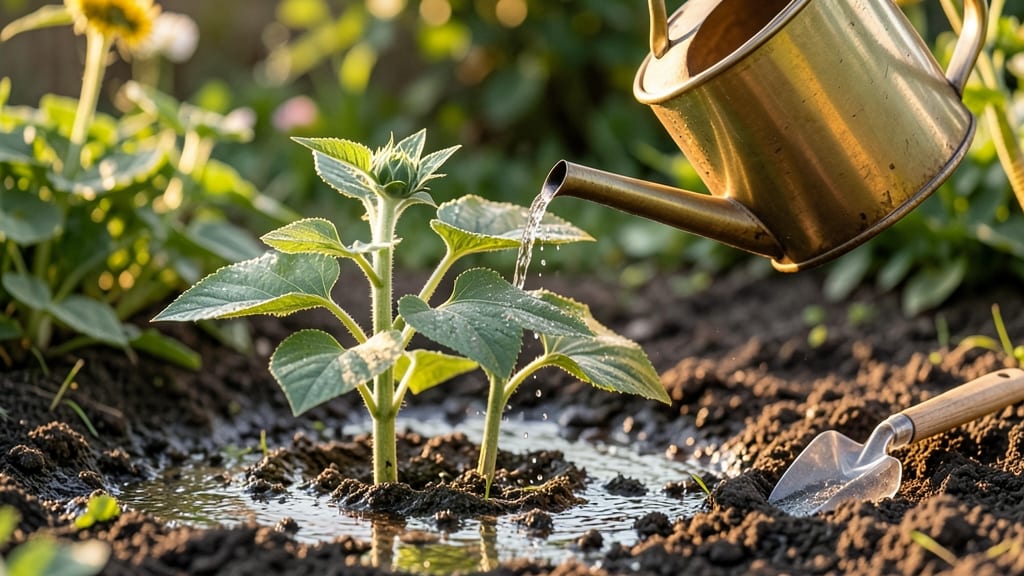
To water sunflower seedlings properly, aim for consistent moisture without drowning them—every 1–2 days is the sweet spot, but it depends on your soil and weather.
Sunflower seedlings need precise watering to avoid stunted growth or root rot—getting the balance right can mean the difference between a thriving 10-foot giant and a sad, wilted sapling.
Too much water suffocates roots, while too little stresses young plants before they’ve built a strong taproot. The key is checking soil moisture at the base—damp but not soggy is ideal.
In this guide, I’ll break down the exact schedule for your soil type, how to test moisture without guesswork, and the telltale signs of over- or under-watering so your seedlings grow tall and strong.
The ideal watering schedule for sunflower seedlings based on soil type
Sunflower seedlings thrive when their watering routine matches their soil type. Unlike mature sunflowers, which can handle drought conditions, seedlings need consistent moisture to develop strong roots. The key difference? Sandy soil drains too fast, while clay soil holds too much water—both extremes stress delicate seedlings.
Understanding your soil's moisture retention helps you avoid root rot or stunted growth before they even reach 6 inches tall.
Most gardeners overlook how soil composition changes watering needs. For example, loamy soil (the gold standard for sunflowers) holds moisture just long enough to keep roots happy without drowning them. Meanwhile, sandy soil acts like a sieve, requiring daily checks in hot weather.
Let’s break down the science-backed schedule for each type so you can give your seedlings the perfect drink—not too much, not too little.
Why soil type matters: Sunflower roots need oxygen to grow, but they also crave hydration. Clay soil suffocates roots by trapping air pockets, while sandy soil starves them by drying out too quickly. The solution? Adjust your watering frequency and depth based on what your soil can hold.
| Soil Type | Moisture Retention | Watering Frequency | Watering Depth | Key Risks |
|---|---|---|---|---|
| Sandy Soil | Low (drains fast) | Daily (morning) | 1–2 inches deep | Drought stress, shallow roots |
| Loamy Soil | Moderate (balanced) | Every 2–3 days | 2 inches deep | None (ideal for seedlings) |
| Clay Soil | High (slow drainage) | Every 3–4 days | 1–1.5 inches deep | Root rot, fungal issues |
💧 Pro Tip: Use a moisture meter or stick your finger 1 inch deep—if it’s dry, water!
For sandy soil gardens, I recommend using a drip irrigation system or soaker hose to deliver water slowly. This mimics natural rainfall and prevents the soil from drying out between waterings.
If you’re hand-watering, focus on the base of the plant and avoid wetting the leaves to reduce fungal diseases. In my experience, seedlings in sandy soil often need a second watering in the late afternoon during heatwaves.
If your soil is clay-heavy, improve drainage by mixing in compost or perlite before planting. This creates air pockets so roots don’t suffocate.
When watering, let the top 1 inch of soil dry out between sessions—clay holds moisture like a sponge, and overwatering leads to blackened stems and mushy roots. A quick fix? Raise beds for clay soil to speed up drainage.
Loamy soil is the easiest to manage because it strikes the perfect balance. Here, I water every 2–3 days in the morning, giving the soil time to absorb moisture without pooling. The goal is to keep the top 2 inches of soil consistently moist, not soggy.
If you’re unsure, perform the finger test: Insert your index finger into the soil—if it feels dry at 1 inch, it’s time to water.
Container-grown sunflower seedlings dry out faster than in-ground plants, regardless of soil type. For pots, check moisture daily and water whenever the top ½ inch feels dry. I’ve found that terracotta pots dry out quicker than plastic, so adjust accordingly.
Add a layer of mulch (like straw) to retain moisture and keep roots cool—this reduces evaporation and cuts watering needs by 30%.
Watch for visual cues that your watering schedule needs tweaking. Wilting leaves signal underwatering, while yellowing or drooping leaves (especially at the base) mean overwatering. In my garden, I’ve seen seedlings collapse from root rot in just 48 hours if left in waterlogged clay soil.
Always prioritize morning watering to let excess moisture evaporate during the day.
Adjust your schedule based on weather conditions. During hot, dry spells, sandy soil may need watering twice daily, while clay soil might only need every 4–5 days. Use a weather app to predict rain—hold off on watering if ½ inch of rain is forecasted.
Over time, you’ll learn your soil’s unique quirks, turning watering from a guess into a science.
Remember, consistency is key for sunflower seedlings. Whether you’re dealing with sandy, loamy, or clay soil, the goal is to keep roots happy and hydrated without drowning them. Start with the soil-specific schedule above, then fine-tune based on your garden’s feedback.
With the right watering routine, your seedlings will grow into strong, sun-loving giants ready to reach for the sky. 🌻
Soil check method: how to test moisture levels without overwatering
Sunflower seedlings thrive when their roots stay in consistently moist but not soggy soil. The best way to avoid overwatering? Skip the guesswork and use a simple soil check method that combines touch and visual cues.
This tactile approach ensures your seedlings get just the right amount of water—no more, no less—to prevent both root rot and drought stress.
Overwatering is the #1 killer of young sunflowers, causing yellowing leaves, moldy soil, and stunted growth. But underwatering can be just as damaging, leading to weak stems that snap in wind or fail to support those towering blooms.
The key is checking the soil at the base of the plant, where the roots are actively growing.
How to Test Soil Moisture in 3 Simple Steps
-
Step 1: The Finger Test (Best for Seedlings)
Insert your index finger 1–2 inches into the soil at the base of the plant. -
Step 2: Check Moisture Level
If soil feels damp but not wet, wait to water. If it’s dry at this depth, it’s time to water deeply. -
Step 3: Look for Visual Cues
Healthy seedlings have green leaves and firm stems. Wilting or yellowing signals it’s time to adjust your watering.
For container-grown seedlings, check moisture daily since pots dry out faster. In garden beds, you can extend the time between checks to every 2–3 days, depending on rainfall and soil type. Always water until you see moisture 1–2 inches deep—this encourages deep root growth.
Watch for these red flags of overwatering: moldy soil, yellow lower leaves, or seedlings that feel mushy at the base. If you spot these, let the soil dry out slightly before watering again.
Underwatering signs include crispy leaf edges and wilting despite damp soil—this means you need to water more frequently.
With this method, you’ll avoid the common pitfalls of over- or under-watering and give your sunflower seedlings the perfect foundation for reaching their full 10-foot potential. Consistency is key—stick to the soil check routine, and your seedlings will reward you with strong, healthy growth.