
Plants
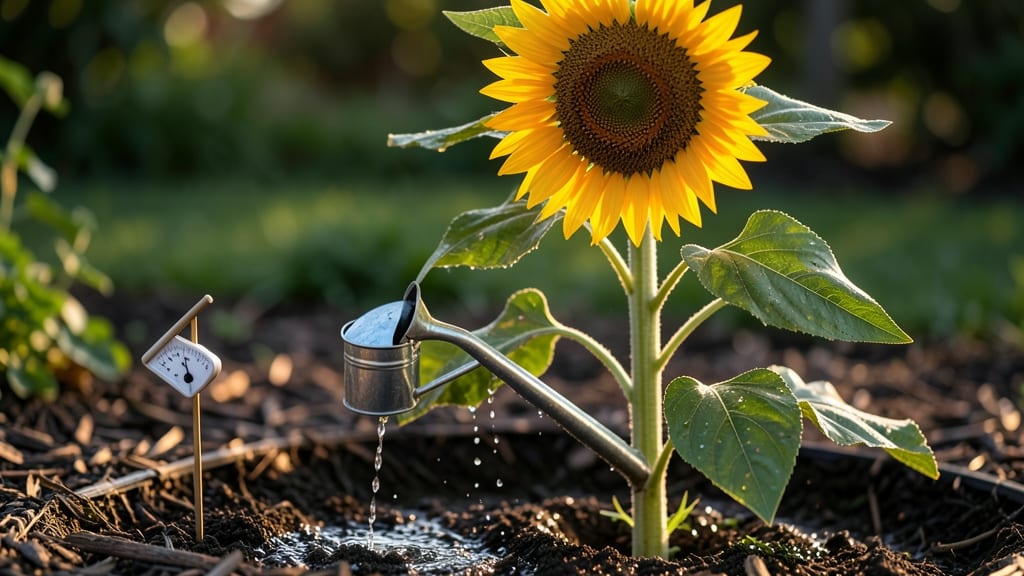
To water a sunflower plant correctly, aim for deep soaks every 3 to 5 days once established, but the real trick is checking the soil—not the calendar.
Sunflowers may seem low-maintenance, but their towering beauty depends on precise watering—too much or too little can stunt growth or invite disease. Discover the science-backed soil check method to keep your sunflowers thriving without guesswork.
Most gardeners overwater because they assume sunflowers need constant moisture, but these 🌻 giants actually prefer their roots to dry out slightly between waterings. The key is balancing hydration with airflow to prevent rot while supporting rapid growth.
In this guide, I’ll walk you through the finger-test method, seasonal adjustments, and how to spot overwatering vs. underwatering—so you can grow sunflowers that reach their full potential without the guesswork.
The perfect watering schedule for sunflowers using the finger test method
Mastering the watering schedule for sunflowers isn't about rigid timelines—it's about understanding your plant's needs at every stage. The finger test method gives you real-time data on soil moisture, helping you avoid both underwatering stress and overwatering rot.
Unlike other flowers, sunflowers develop deep taproots that need consistent moisture, but they hate soggy soil. Let's break down how to check soil moisture and adjust your watering routine for each growth phase.
Sunflowers go through three critical growth stages that each demand slightly different watering approaches: seedling, budding, and flowering. Climate plays a huge role too—what works in humid climates (like the Southeast) fails in arid zones (like the Southwest).
The finger test method adapts to these variations by giving you a hands-on way to monitor moisture levels without overcomplicating your routine. Ready to learn how to keep your sunflowers thriving with minimal guesswork?
Step-by-Step Finger Test Method for Sunflower Watering
Test soil moisture early morning (6-8 AM) when evaporation is low. Avoid testing after rain or watering to get accurate readings.
Gently push your index finger 2-3 inches deep into the soil near the plant's base (but not touching the stem). This mimics the depth of sunflower roots.
Dry: Soil feels powdery or crumbly = water immediately
Ideal: Soil feels slightly damp like a wrung-out sponge = wait 2-3 days
Wet: Soil feels cold and clumps around your finger = skip watering
Seedlings (0-4 weeks): Keep soil consistently moist (test daily)
Budding (4-8 weeks): Water when top 2 inches dry (test every 2-3 days)
Flowering (8+ weeks): Reduce frequency; water when 3 inches dry (test weekly)
Arid Zones: Water deeply every 3-5 days (encourages deep roots)
Temperate Zones: Water every 2-4 days (adjust for rain)
Humid Zones: Water every 4-7 days (prevents fungal issues)
During the seedling stage (first 4 weeks), sunflowers need the most frequent attention. Their shallow roots can't reach deep moisture yet, so I test soil moisture daily during this critical period.
If the top 1 inch of soil feels dry, it's time to water—aim for 15-20 minutes per plant to saturate the root zone. Overwatering here leads to damping-off disease, which kills seedlings before they sprout properly.
When sunflowers reach the budding stage (4-8 weeks), their roots grow deeper, but they still need consistent moisture to support rapid growth. I adjust my finger test to check moisture at 2-3 inches deep and water when the soil feels dry.
In hot climates, this might mean watering every other day, while cooler regions can stretch it to 3-4 days. Look for wilting leaves as a late warning sign—if leaves droop by midday but perk up in the evening, your plant is thirsty.
At the flowering stage (8+ weeks), sunflowers become more drought-tolerant, but their nutrient demands peak. I extend my finger test to 3-4 inches deep and only water when the soil feels completely dry.
This stage is where many gardeners overcorrect by watering too much, thinking the plant needs extra hydration for its heavy blooms. In reality, overwatering now causes root rot and drops buds before they open. Aim for deep, infrequent watering—about once a week in most climates.
Climate makes all the difference in sunflower watering. In arid regions like Arizona or Nevada, I water sunflowers deeply every 3-5 days to encourage deep root growth. The key is to water slowly (over 30 minutes) to prevent runoff in sandy soils.
In humid climates like Florida or Louisiana, I space waterings out to every 5-7 days and always water in the morning to reduce
Sunflower watering mistakes that kill growth (and how to fix them)
Even the hardiest sunflowers can suffer from watering mistakes that stunt growth or invite disease. I’ve seen root rot from overzealous watering and wilting from inconsistent schedules—both preventable with the right approach. The key is understanding your sunflower’s moisture needs at each growth stage and adjusting for your climate.
Most gardeners assume sunflowers are drought-tolerant, but young plants need consistent moisture to establish roots. Overwatering is just as deadly as underwatering—both create stress signals like yellowing leaves or drooping stems. Let’s fix these common mistakes with science-backed solutions.
How Often Should You Water a Sunflower Plant?
| Growth Stage | Watering Frequency | Soil Check Method |
|---|---|---|
| Seedlings (First 2 Weeks) | Every 2-3 days | Top 1-2 inches dry |
| Vegetative Growth (3-6 Weeks) | Every 3-5 days | Top 2-3 inches dry |
| Flowering Stage (6+ Weeks) | Every 5-7 days | Top 3-4 inches dry |
- Water deeply in the morning
- Use mulch to retain moisture
- Adjust for seasonal heat
- Water at night (fungus risk)
- Let soil stay soggy
- Skip watering during drought
One of the biggest mistakes is overwatering young sunflowers, which causes root rot from oxygen deprivation. I’ve seen seedlings collapse within days when planted in heavy clay that doesn’t drain.
Always check soil moisture by sticking your finger 2 inches deep—if it’s damp, wait. For container-grown sunflowers, they dry out faster, so check daily.
Inconsistent watering creates drought stress, where leaves curl and growth stalls. I recommend setting a weekly reminder for your sunflowers’ watering schedule, especially during hot summer months when evaporation speeds up. A drip irrigation system can automate this while keeping water at the roots where it’s needed most.
Seasonal changes often get overlooked. In spring and fall, sunflowers need less frequent watering, while summer heat demands daily checks. I’ve learned to adjust by observing leaf turgor—plump leaves mean adequate moisture, while wilted leaves signal thirst.
Never ignore these visual cues, as they’re your sunflower’s way of communicating.
To revive an overwatered sunflower, stop watering immediately and improve drainage by amending soil with perlite or compost. For underwatered plants, give them a deep soak and apply mulch to lock in moisture. Both conditions require patience—sunflowers are resilient but need time to recover.
Remember, the goal is consistent moisture, not soggy soil or bone-dry ground. Master this balance, and your sunflowers will reward you with vibrant blooms that reach for the sky. 🌻