
Flowers
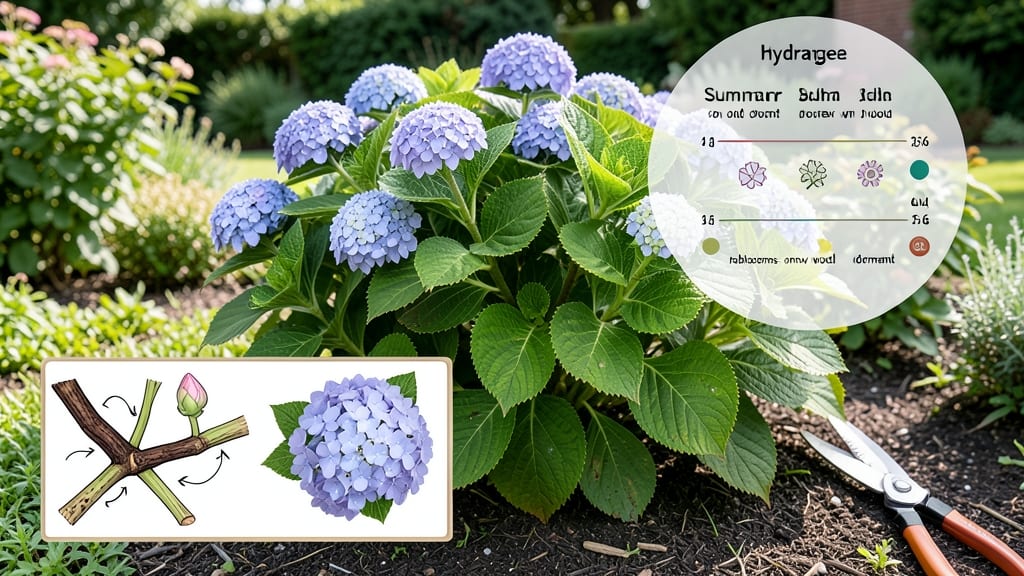
Hydrangeas flower with striking regularity, but the frequency depends entirely on the variety and your pruning habits—some burst into bloom just once a year, while others reward you with two flushes of color.
If you’ve ever stared at your 🌸 hydrangea in late summer and wondered why it’s gone quiet, you’re not alone. The answer lies in whether you’ve got a spring-only bloomer or a repeat-flowering type, and how you’ve treated it over the past year.
Bigleaf hydrangeas, like the classic mopheads, typically put on one dramatic show in spring or summer, while panicle varieties often deliver a second wave of blooms in fall. Oakleaf hydrangeas? They’re the overachievers, with season-long interest from spring to winter.
Below, I’ll break down the blooming cycles by type, the pruning mistakes that kill repeat flowers, and the simple tricks to coax your hydrangeas into flowering twice—or even three times—a year.
Hydrangea blooming cycles: annual vs. repeat flowering varieties
If you’ve ever wondered why your hydrangeas produce stunning blooms in spring but then fade away until next year, you’re not alone. The answer lies in their blooming cycles, which vary dramatically by variety.
Some hydrangeas—like the classic bigleaf types—rely on spring buds that form the previous summer, while others, such as panicle and oakleaf varieties, can produce repeat blooms throughout the season. Understanding these differences is key to selecting the right plants for your garden’s climate and maintenance goals.
The key to unlocking year-round color often comes down to temperature triggers and pruning timing. For example, bigleaf hydrangeas (like 'Endless Summer') can rebloom if you prune at the right time, while panicle hydrangeas (such as 'Limelight') naturally produce summer and fall blooms without extra effort.
Let’s break down how these cycles work and what you can do to maximize your hydrangea’s potential.
| Variety | Blooming Cycle | Seasonal Triggers | Pruning Impact |
|---|---|---|---|
| Bigleaf (e.g., 'Nikko Blue') | Primarily spring blooms; some rebloom with care | Spring buds set in late summer; reblooms triggered by late pruning | Prune after blooming to avoid cutting off next year’s buds |
| Panicle (e.g., 'Limelight') | Summer and fall blooms; no spring reliance | New buds form on current season’s growth; thrives in heat | Prune late winter/early spring to encourage vigorous growth |
| Oakleaf (e.g., 'Snow Queen') | Summer to early fall blooms; some late-season color | Bud formation after last frost; tolerates drought better | Light pruning in late winter to shape; avoid heavy cuts |
| Reblooming Bigleaf (e.g., 'Endless Summer') | Spring and summer blooms with proper care | Requires late pruning (after first bloom) and consistent water | Prune dead flowers in late summer to encourage fall blooms |
The bigleaf hydrangea is the most common type you’ll find, and its spring-only blooms are a classic garden staple. These plants set their flower buds in late summer, which means if you prune too late, you risk cutting off next year’s blooms.
For example, traditional varieties like 'Annabelle' rely entirely on these spring buds, so they’ll disappear until next year unless you’ve chosen a reblooming variety like 'Endless Summer'.
On the other hand, panicle hydrangeas are the rebloomers of the hydrangea world. Varieties like 'Limelight' and 'Little Lime' produce summer and fall blooms because their flower buds form on new growth throughout the season.
This makes them ideal for gardeners who want extended color without the guesswork of reblooming techniques. The trade-off? They often require more frequent pruning to keep them compact and encourage new growth.
Oakleaf hydrangeas offer a unique twist with their summer-to-fall blooming cycle and stunning foliage that turns crimson in autumn. Unlike bigleaf types, oakleaf hydrangeas form their buds in spring but bloom later in the season. This makes them more forgiving if you miss the late-summer pruning window for bigleaf varieties. Plus, their drought tolerance makes them a great choice for low-maintenance gardens.
One of the biggest misconceptions about hydrangeas is that all varieties bloom just once a year. In reality, proper pruning and seasonal care can turn a single-bloom bigleaf hydrangea into a reblooming powerhouse.
For instance, if you prune your 'Nikko Blue' hydrangea right after its spring blooms fade, you can encourage a second flush of flowers in late summer. However, this requires consistent watering and balanced fertilization to support the extra growth.
Temperature also plays a critical role in hydrangea blooming cycles. Cool spring nights trigger bud formation in bigleaf varieties, while warm summer days encourage continuous blooming in panicle types.
If you live in a hot climate, like Zone 8 or higher, you might find that bigleaf hydrangeas struggle to set buds in the heat. In these cases, panicle or oakleaf varieties are often the better choice because they adapt better to warmer temperatures.
To maximize your hydrangea’s blooming potential, start by identifying your specific variety and its natural blooming cycle. If you’re unsure, check the plant tags or consult a local nursery. Once you know, you can tailor your pruning schedule and fertilizer plan to match. For example, reblooming bigleaf hydrangeas
When and why hydrangeas stop flowering: common mistakes and fixes
Hydrangeas are famous for their show-stopping blooms, but many gardeners struggle when their plants suddenly stop flowering mid-season. The culprit is often over-pruning or nutrient imbalances, which disrupt the plant's natural blooming cycle.
Understanding these common mistakes—and how to fix them—can transform your hydrangeas from bare stems to lush, flowering shrubs.
First, let’s tackle the biggest mistake: pruning at the wrong time. If you cut back hydrangeas in late winter or early spring, you’re likely removing next year’s flower buds before they even form. This explains why some varieties bloom once in spring and then disappear until the following year.
⚠️ callout warning
Most bigleaf hydrangeas (like 'Nikko Blue') bloom on old wood, meaning buds form in late summer/fall. If you prune too late, you risk removing next year’s flowers. Panicle hydrangeas (like 'Limelight') are more forgiving—they bloom on new wood, so pruning in late winter/early spring is safe. Always check your variety first!
Another common issue is nutrient deficiencies, especially a lack of phosphorus or potassium, which are critical for flower production. If your hydrangeas have yellowing leaves or stunted growth, they may need a balanced fertilizer (like 10-10-10 NPK) applied in early spring and mid-summer.
Over-fertilizing with nitrogen, however, can lead to leafy growth at the expense of blooms.
Environmental stressors like extreme heat or drought can also shock hydrangeas into dropping buds or stopping flowering. These plants thrive in partial shade and consistently moist soil. If your area experiences a heatwave, mulch around the base to retain moisture and provide afternoon shade to prevent bud drop.
For repeat blooming, focus on late-summer pruning (after the first flush of flowers) to encourage new growth. Varieties like 'Endless Summer' are bred for this trait, but even traditional hydrangeas can benefit from this technique.
Just avoid heavy pruning—stick to light trimming to maintain shape while preserving next year’s buds.
Finally, don’t overlook soil pH. Hydrangeas are sensitive to acidity levels, which affect flower color. If your soil is too alkaline, blooms may turn pink instead of blue—and stressed plants may skip flowering altogether.
Test your soil and amend with sulfur or aluminum sulfate if needed to achieve the ideal pH of 5.2–5.5 for blue flowers.