
How To
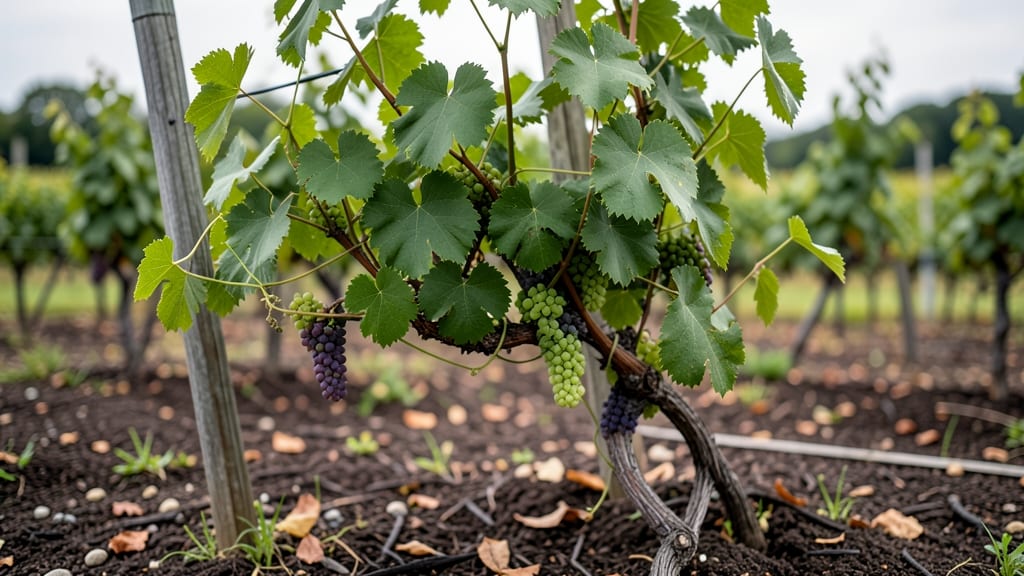
Grapes take between 70 and 120 days to grow after flowering, turning tiny buds into plump, sweet fruit ready for harvest.
If you’ve ever watched those first blossoms appear only to wonder, "Will I ever get to taste them?"—the answer depends on variety, climate, and a few key care steps.
Some grapes mature in as little as two months, while others need nearly four, and knowing the difference can mean the gap between a bountiful harvest and disappointment.
This timeline isn’t set in stone, though. Warmer temperatures can speed things up, while cool springs or drought may stretch it out. Below, I’ll break down the stages—from berry set to veraison—and share how to track progress so you’re ready when those grapes finally ripen.
You’ll also discover how to adjust care to meet your growing season, whether you’re dealing with a short summer in Zone 6a or a long, hot one. By the end, you’ll know exactly when to start checking for that telltale color change and firmness that means: harvest time is near.

Grapes growth timeline after flowering: 70-120 days explained
After your grapevines flower, the real magic happens in the next 70-120 days as those tiny blossoms transform into plump, flavorful grapes. This growth period is packed with critical stages—each one shaping the size, sweetness, and quality of your harvest.
Understanding these phases helps you predict when to expect fruit and how to optimize conditions for success.
The journey from flower to harvest isn’t linear—it’s influenced by variety, climate, and your care routine. For example, Thompson Seedless table grapes often mature in 90-100 days, while Cabernet Sauvignon wine grapes can take 120-150 days to reach peak ripeness.
Even within the same vineyard, environmental factors can shift timelines by weeks.
Berry set occurs 7-14 days after flowering, when fertilized flowers swell into tiny berries. This stage is delicate—too much heat or water stress can cause berry drop, where the vine aborts underdeveloped fruit. Pruning before flowering helps balance the vine’s energy so it can support more berries.
Veraison is the most dramatic phase, typically 50-70 days after flowering. That’s when green grapes turn their mature color—deep purple for reds, golden for whites—and begin accumulating sugars. This is your first clear signal that harvest is approaching. Watch for color change and slight softening of the skin as key indicators.
| Stage | Days After Flowering | Key Visual Cues | Optimal Conditions |
|---|---|---|---|
| Berry Set | 7-14 | Tiny green berries form | Consistent water, 60-75°F |
| Rapid Growth | 15-40 | Berries enlarge quickly | Full sun, balanced fertilizer |
| Veraison | 50-70 | Color change begins | Warm days, moderate water |
| Ripening | 70-120 | Full color, sweet taste | Sunny, dry conditions |
| Harvest Ready | 90-150 | Firm, juicy, seeds brown | Cool mornings, dry vineyard |
During the rapid growth phase (15-40 days), berries expand rapidly, doubling in size. This is when sunlight becomes non-negotiable—vines need 6-8+ hours of direct sun daily to fuel this growth. Shade cloth or nearby trees can stretch out this phase by weeks, while full sun accelerates it.
I’ve seen Thompson Seedless grapes go from pea-sized to harvest-ready in just 30 days under ideal conditions.
The final ripening stage (70-120 days) is where grapes develop their signature flavors and sugars. Here, temperature plays a starring role: cooler nights (55-65°F) preserve acidity, while hot days (85°F+) can concentrate sugars too quickly, sometimes at the cost of flavor complexity.
In my Zone 7 garden, I monitor daily highs—if temps hit 95°F for more than 3 days, I’ll use shade cloth to protect grapes from sunscald.
Water management is equally critical during ripening. Overwatering here dilutes sugars, while drought stress can cause berry shriveling. Aim for deep watering every 3-5 days, focusing on the vine’s root zone. Drip irrigation is ideal—it delivers water directly to roots without wetting foliage, reducing disease risk. I’ve found that muscadine grapes, native to humid climates, handle slightly more moisture than wine grapes like Merlot.
Climate also dictates your harvest window. In cool climates (Zones 4-6), grapes may take 120-150 days to mature, while warm climates (Zones 8-10) can see harvest in as few as 70-90 days.
For example, Concord grapes in Michigan often ripen in early September, but in California’s Central Valley, they’re ready by mid-August. Use your local frost dates as a guide—aim to harvest before the first 32°F night to avoid damage.
To track progress, I mark the day of flowering and use a growth journal. Note the date of veraison—this helps predict harvest timing for future years. For instance, if veraison occurs on July 15 one year, I can expect harvest around August 20-25 for most varieties.
Adjust this window by ±5 days based on weather patterns in your region.
Understanding these stages lets you anticipate challenges and optimize care. For example, if your grapes are running late, you might reduce water slightly to concentrate sugars or prune excess leaves to improve
How to speed up or slow down grape ripening naturally
Want to control your grape harvest timing? The 70-120 days between flowering and ripening can be adjusted naturally with the right techniques. Understanding how to speed up or slow down grape development helps you avoid late-season frosts or rushed harvests. Let’s explore proven methods to optimize your vineyard’s productivity.
Your grapevine’s growth rate depends on three key factors: temperature, water availability, and nutrient balance. Even small adjustments in these areas can shift your harvest window by 2-4 weeks.
For example, Thompson Seedless grapes typically ripen in 90 days, while Cabernet Sauvignon needs 120+ days—but with the right care, you can fine-tune either variety’s timeline.
⚠️ callout-warning Common Mistake Alert: Overwatering after veraison (color change) can delay ripening by up to 3 weeks. Grapes need less water as they near maturity to concentrate sugars. If your grapes are staying green or soft, check your irrigation schedule—you might be watering too much.
Reduce to every 7-10 days in late summer to speed up sugar development. 🌱
To accelerate ripening, focus on pruning and sun exposure. Prune vines in late winter to remove excess foliage, which allows more sunlight to reach the fruit clusters.
Thin out overcrowded bunches to reduce competition for nutrients, and use reflective mulch (like white plastic) to bounce extra sunlight onto the grapes. These tweaks can shorten ripening by 10-15 days in ideal climates.
For slowing down ripening, prioritize shade cloth and controlled watering. If you’re in a hot climate and fear early harvest stress, drape 30-50% shade cloth over vines during peak afternoon sun.
This extends the growing season by 2-3 weeks while preventing sunburn. Pair this with deep but infrequent watering—soak the soil every 10-14 days instead of daily to reduce vine stress.
Soil nutrients also play a critical role. A balanced fertilizer (10-10-10 NPK) applied in early spring ensures steady growth, but avoid high-nitrogen feeds after flowering—this promotes leafy growth over fruit development.
Instead, switch to a low-nitrogen, high-potassium fertilizer (like 5-10-15) at veraison to boost sugar accumulation and speed up ripening.
Monitor your grapes closely for veraison signs: color change from green to purple/red or yellow. Once this stage begins, reduce watering by 50% and stop fertilizing to let the vine focus energy on fruit maturation.
With these adjustments, you’ll master your grapevine’s timeline—whether you’re racing to harvest before frost or savoring a slower, sweeter development. 🍇