
Light Requirements
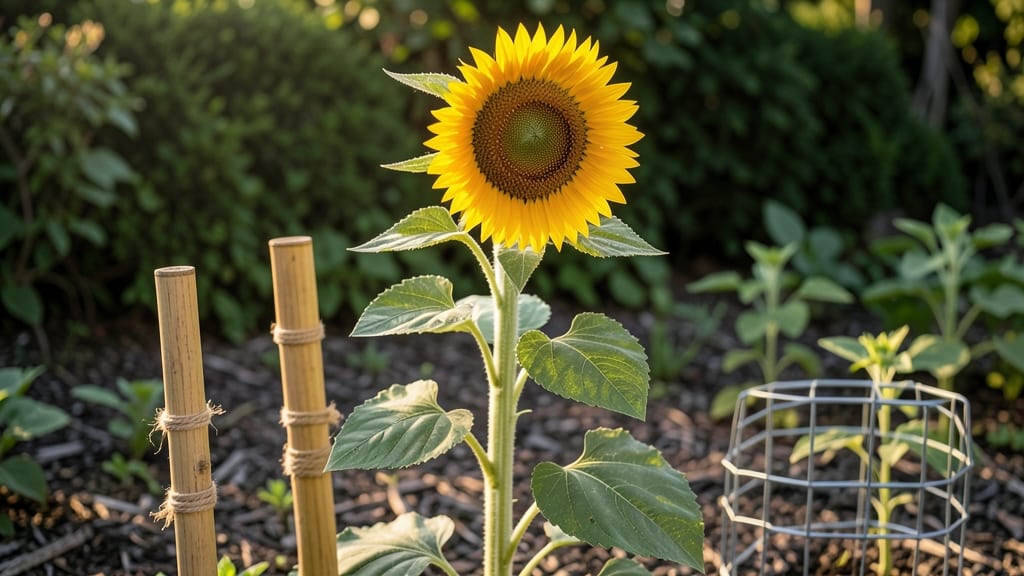
Do sunflowers need to be staked when they reach 6 feet or taller, especially in windy areas or loose soil where their heavy blooms can snap stems?
Picture this: a 12-foot 'Russian Giant' swaying in a summer breeze, its stem bending like a bow. Without support, even the sturdiest varieties can topple under their own weight—or worse, break at the base when the first storm hits.
If you’re growing sunflowers in Zone 6a or windier regions, staking isn’t just helpful; it’s a game-changer for saving your harvest.
But here’s the catch: not all sunflowers need stakes. Shorter varieties like 'Teddy Bear' or 'Sunspot' often stand strong on their own, while tall types demand extra care.
Below, I’ll walk you through when to stake, how to do it right, and the best natural alternatives to keep your 🌻 garden thriving without the hassle.
You’ll learn the 3 key signs your sunflowers need support, the easiest DIY staking methods (no fancy tools required), and how to avoid common mistakes that leave stems weak or bent. Ready to grow sunflowers that reach their full potential?
When and why tall sunflowers need staking for wind resistance
Tall sunflowers like 'Autumn Beauty' or 'ProCut' can reach heights of 10-16 feet, making them stunning garden focal points—but their towering stature comes with risks. Without proper support, their thin, woody stems can bend or snap under heavy blooms or strong winds, especially in exposed locations.
Even varieties with thick stems may need staking if grown in windy climates or loose, sandy soil.
Staking isn’t just for aesthetics; it’s a preventative measure to ensure your sunflowers grow straight and strong without wasting energy bracing against gusts.
The root system of sunflowers isn’t always deep enough to anchor such tall plants, leaving them vulnerable to stem breakage—a common issue in late summer storms when blooms are at their heaviest.
The need for staking depends on three key factors: sunflower height, wind exposure, and soil stability. For example, a 6-foot 'Teddy Bear' might thrive without support in a sheltered spot, while a 14-foot 'Mammoth' in an open field will almost certainly need staking.
Let’s break down the high-risk scenarios where staking is non-negotiable.
| Factor | Risk Level | Staking Recommendation | Example Scenario |
|---|---|---|---|
| Height | High (10+ ft) | Required | 'Russian Giant' in open field |
| Wind Exposure | Extreme (coastal, open) | Required | Any variety near waterfront |
| Soil Type | Loose/sandy | Recommended | 'Autumn Beauty' in desert garden |
| Bloom Weight | Heavy (large heads) | Recommended | 'ProCut' for cutting gardens |
| Location | Sheltered (fenced) | Optional | 'Sunspot' in backyard |
Staking works by transferring wind load from the stem to a support structure, preventing the plant from leaning or snapping. Without support, sunflowers may waste energy growing thicker stems to compensate, which can delay flowering or reduce seed production.
In extreme cases, a broken stem can kill the plant entirely, leaving you with a wilted, unusable bloom.
For tall varieties, I recommend installing stakes early—as soon as the plant reaches 12-18 inches. This gives the stem time to bond naturally to the support without restricting growth.
Use soft ties (like fabric strips) to avoid girdling the stem, which can strangle the plant as it thickens. The goal is to guide, not restrict, the sunflower’s growth.
Even if your sunflowers aren’t wind-prone, staking can help with harvesting. Varieties like 'ProCut', grown for long-stemmed blooms, benefit from staking to keep stems straight and unbroken.
A bent stem can make cutting difficult and reduce vase life. Plus, staked sunflowers reach their full height potential, making them ideal for backdrop planting or cutting gardens.
If you’re unsure whether to stake, observe your sunflowers’ growth habits. Do they lean noticeably after rain or wind? Are the stems thin and flexible? These are red flags. For heavy-blooming varieties
Best staking methods for sunflowers: DIY supports vs. commercial options
Choosing the right staking method for your sunflowers depends on their height variety and your garden’s wind exposure. Tall varieties like 'Russian Giant' (up to 16 feet) need sturdy support, while shorter types may thrive without it.
DIY options like bamboo stakes or repurposed tomato cages are budget-friendly, but commercial flexible stakes or spiral ties offer convenience and durability.
Your garden layout also plays a role. Row planting with stakes along edges works well for large patches, while individual staking suits scattered sunflowers. For windy areas, multiple supports or trellis structures can prevent leaning. Let’s break down the best options to keep your sunflowers standing tall and proud.
DIY vs. Commercial Staking: Pros & Cons
| Method | Pros | Cons | Best For |
|---|---|---|---|
| Bamboo Stakes | Affordable, biodegradable, easy to install | May need multiple stakes for tall varieties; less flexible | Medium-height sunflowers (6-10 ft) |
| Tomato Cages | Reusable, provides full 360-degree support, budget-friendly | Can take up space; may not support 16+ ft varieties | Semi-dwarf to standard sunflowers (3-12 ft) |
| Flexible Stakes | Bendable, wind-resistant, easy to attach with ties | Higher cost; may require additional ties for extra stability | Tall varieties (10-16 ft) in windy areas |
| Spiral Ties | Adjustable, gentle on stems, reusable | Can loosen over time; requires regular checks | All varieties with delicate stems |
💡 Pro Tip: For extra stability, combine bamboo stakes with soft ties to avoid stem damage.
For DIY solutions, bamboo stakes are my go-to for medium-height varieties. Split a stake lengthwise and insert it gently into the soil beside the sunflower stem, securing it with soft cloth or jute twine.
This method costs almost nothing and works wonders for 'Autumn Beauty' or 'ProCut' varieties reaching 8-10 feet. Just remember to loosen ties as the stem thickens to prevent constriction.
When dealing with tall giants like 'Russian Giant', commercial flexible stakes are a game-changer. These stakes bend with the wind, reducing the risk of snapping. Pair them with plastic spiral ties for a secure, low-maintenance setup.
The initial investment pays off in wind resistance and long-term stability, especially in exposed garden spots.
If you’re growing sunflowers in a small-space garden or container, consider trellis structures or A-frame supports. These allow multiple sunflowers to share support while saving space. For containers, use deep pots with built-in stakes or repurpose old wire hangers shaped into gentle cages.
Just ensure the container is at least 18 inches deep to accommodate the roots of taller varieties.
One common mistake is waiting too long to stake. Install supports when the sunflower reaches 12-18 inches tall, before the stem becomes too thick or brittle. Also, avoid metal stakes, as they can damage stems and may conduct heat in sunny climates.
Instead, opt for wooden or plastic-coated stakes to keep your sunflowers happy and healthy.
For a low-maintenance approach, plant sunflowers in a sheltered location, like near a fence or building, where wind is less of an issue. Combine this with well-draining soil rich in organic matter to strengthen stems naturally.
With the right support—or no support at all—your sunflowers will stand tall and proud, turning heads all season long. 🌻