
Light Requirements
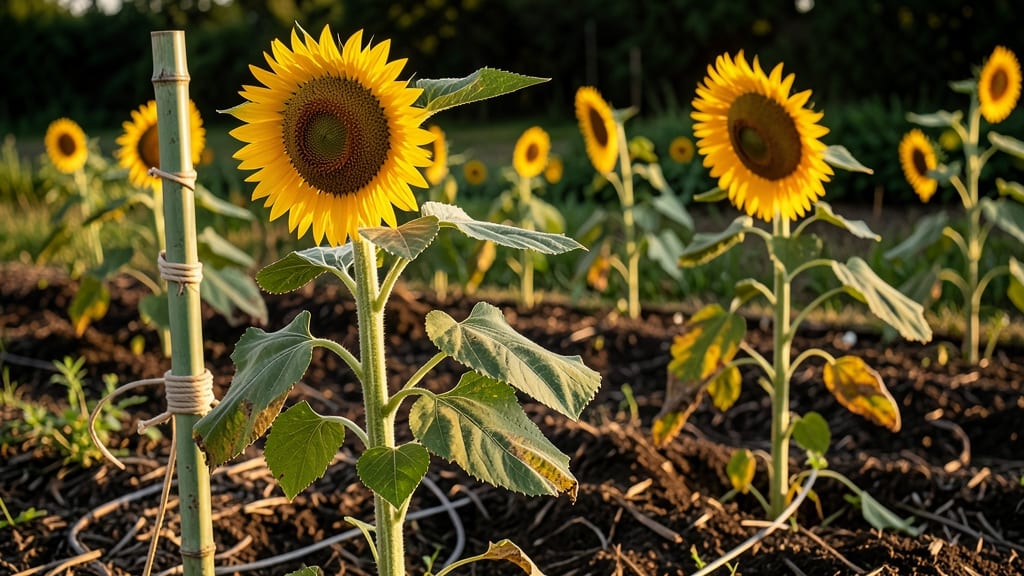
Sunflowers need support when their towering stems face wind, rain, or weak genetics—especially for tall varieties that can bend under their own weight.
Picture this: a 12-foot sunflower 🌻 swaying in a summer storm, its head dragging toward the dirt. That’s the moment most gardeners reach for stakes—but is it always necessary? The answer depends on the variety, your climate, and how much you’re willing to let nature take its course.
Dwarf sunflowers (under 3 feet) often stand proudly without help, while giants like ‘Mammoth’ or ‘Russian Giant’ may need reinforcement to avoid snapping. Even then, some gardeners swear by planting in clusters to create natural windbreaks, eliminating the need for stakes entirely.
Below, I’ll walk you through the signs your sunflowers need support, the best ways to provide it (and when to skip it), and how to grow sturdy stems from the start—so you can enjoy those golden blooms without the worry.
When sunflowers need support: identifying weak stems and wind risks
Sunflowers are nature’s architectural marvels, but their towering heights create a delicate balance between strength and vulnerability. Some varieties, like the Russian Giant or Mammoth sunflowers, can reach heights of 10-16 feet, making them prime candidates for wind damage or stem breakage.
Others, like dwarf varieties (1-3 feet tall), often stand alone with ease. The key lies in understanding your sunflower’s genetic resilience and environmental risks.
Before reaching for stakes or trellises, observe your sunflowers for early warning signs. Weak stems may show leaning, bending under their own weight, or cracking sounds during windy days.
Even sturdy varieties can struggle in exposed locations, like open fields or coastal gardens, where gusts exceed 15 mph. Genetics play a role too—tall, thin-stemmed varieties are inherently riskier than short, stocky ones.
Here’s how to assess whether your sunflowers need support based on their variety, growth stage, and local climate:
| Factor | Dwarf Varieties (1-3 ft) | Semi-Dwarf (3-6 ft) | Standard/Tall (6-16 ft) |
|---|---|---|---|
| Stem Strength | ✅ Naturally sturdy | ⚠️ Moderate risk | ❌ High risk |
| Wind Exposure | 🌬️ Safe in open areas | 🌬️ Stake if gusts >10 mph | 🌬️ Always stake or trellis |
| Soil Conditions | Well-drained soil helps | Rich, loose soil reduces risk | Needs deep, fertile soil |
| Growth Stage Risk | Low (rarely needs support) | Moderate (watch after flowering) | High (stake at 3-4 ft) |
| Support Needed? | ❌ No | ⚠️ Optional (if windy) | ✅ Yes (essential) |
Note: Even "low-risk" varieties may need support in extreme weather.
Your sunflower’s stem thickness is a critical clue. Run your fingers along the base—if it feels hollow or paper-thin, it’s a red flag. Thick, woody stems (1+ inch in diameter) are far more resilient.
Pay attention to how the plant reacts to rain: if heavy droplets cause leaves to droop or stems to bend, support is likely needed. Genetics matter too; heirloom varieties like Russian Giant often require staking, while Teddy Bear sunflowers (a dwarf type) rarely do.
Location dictates everything. Sunflowers planted in wind tunnels (like between buildings) or coastal areas face constant stress. Even a 3-foot gust can snap a 10-foot stem. If your garden is exposed, consider group planting—sunflowers lean into each other for natural support.
For solitary giants, trellises or cages distribute weight and reduce breakage risks by up to 70%.
Timing is everything when it comes to providing support. Install stakes or trellises early—when seedlings reach 6-12 inches tall. This prevents stem damage from sudden wind or rain. Use soft ties (like fabric strips) to avoid girdling the stem as it grows.
Pro tip: Bury stakes 1/3 of their length into the soil for maximum stability. Overwatering can also weaken stems, so ensure your soil drains well.
Not all sunflowers need support, but misjudging their needs can lead to heartbreak. A snapped stem won’t recover, and the plant may rot or attract pests from the open wound.
If you’re unsure, err on the side of caution—temporary support is easier to remove later than dealing with a fallen giant. For high-value varieties (like those used for seed production), staking is almost always worth the effort.
Consider your garden’s microclimate. A sunflower in a sheltered backyard may thrive without support, while the same variety in an open field could topple. Watch for early morning dew clinging to leaves—this adds weight and increases the risk of stem fatigue. If your sunflowers start
Best support methods for sunflowers: stakes, trellises, and natural alternatives
Choosing the right support for your sunflowers depends on their variety and growing conditions. Tall varieties like 'Mammoth' (12-16 ft) often need support, while dwarf types like 'Teddy Bear' (1-3 ft) usually stand alone.
Even sturdy stems can bend under heavy rain or wind, so having backup options is wise.
Support isn't just about preventing falls—it also improves flower health by keeping stems upright for better sun exposure. Whether you choose wooden stakes, trellises, or natural alternatives, the key is timing and technique. Let’s explore your best options for keeping sunflowers standing tall.
🌱 Best Support Methods for Sunflowers
- Wooden Stakes – Best for tall varieties. Use 3-4 ft stakes for dwarf types, 6-8 ft for standard, and 10+ ft for giants. Drive stakes 3-4 inches deep near the stem and tie with soft cloth strips or plastic spiral ties.
- Trellises – Ideal for crowded gardens or windy areas. Use metal or wooden lattice and attach stems with soft ties. Great for multiple plants sharing support.
- Cages or Rings – Pre-made sunflower cages (6-12 ft) are easy to install. Bury the base 1/3 deep and gently weave stems through the mesh as they grow. Perfect for container gardening.
- Natural Alternatives – For eco-friendly gardens, try pea sticks (bamboo or corn stalks) or planting in groups. Cluster 3-5 plants together to brace stems naturally against wind.
- Spiral Ties – Adjustable plastic or fabric ties are gentle on stems. Replace every 2-3 weeks as stems thicken. Avoid wire or tight ties, which can damage growth.
For large gardens, consider cost-effective bulk solutions like bamboo stakes or DIY trellis panels. If you’re growing sunflowers for seeds, sturdy support ensures the flower heads stay upright for even drying. Always secure ties loosely—too-tight supports can restrict growth.
Pro tip: Install support early (when stems reach 12 inches tall) to prevent sudden bending. Monitor plants weekly, especially after heavy rain or storms. A little prevention keeps your sunflowers proud and healthy all season.
Don’t let wind or weak stems ruin your sunflower dreams—pick the right support and watch them thrive like nature intended. 🌻