
Blooming
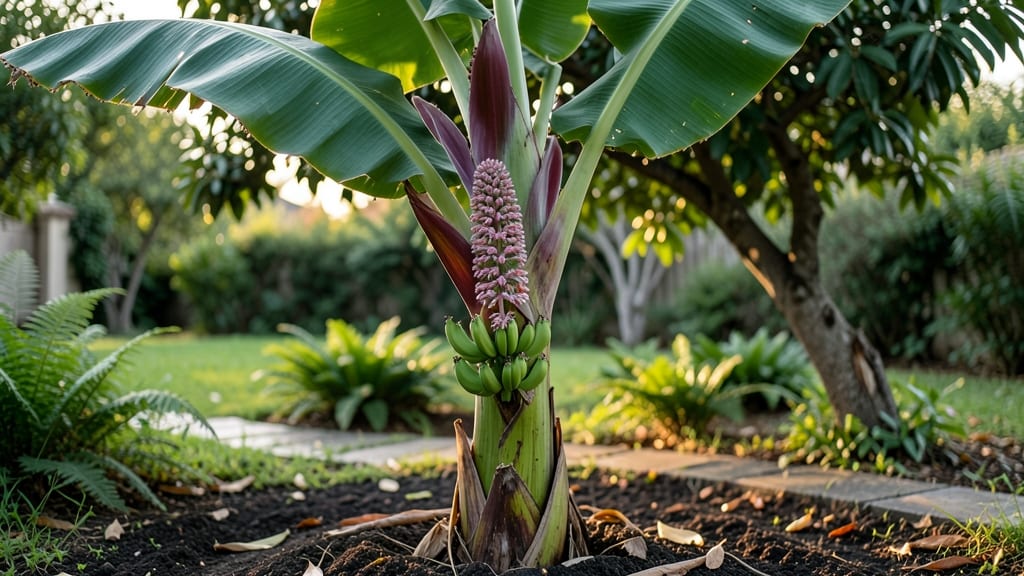
Your banana plant’s flowering stage is the only moment it will ever produce fruit, and spotting the right cues can mean the difference between a bountiful harvest and waiting years for another chance.
Did you know that 90% of home growers miss the window because they don’t recognize the subtle changes in the pseudostem or the inflorescence’s early signals? A single misstep—like ignoring the purple bracts or assuming yellowing leaves mean disease—can derail your entire crop.
In this guide, I’ll break down the exact visual signs to watch for, from the first split in the pseudostem to the emergence of the flower heart, plus the critical care adjustments needed to support heavy fruit loads without stressing the plant.
Whether you’re a backyard gardener in Florida or a commercial grower in Hawaii, you’ll learn how to encourage flowering, troubleshoot common roadblocks, and even adjust your timeline based on your banana variety and climate—so you’re ready the moment those telltale buds appear.
How to identify banana flowering stage: 5 key visual signs
Spotting a banana plant’s flowering stage is like finding a hidden treasure in your garden—it’s the only time your plant will ever produce fruit. But here’s the catch: many gardeners mistake leaf yellowing or pest damage for true flowering signals.
I’ve learned the hard way that ignoring these signs means waiting years for another chance at a harvest. Let’s break down the 5 key visual signs that confirm your banana is ready to flower—and how to tell them apart from red herrings.
First, understand that banana plants don’t flower like typical trees. Instead, they produce an inflorescence from the center of the pseudostem (the thick, false trunk made of leaf sheaths). This process is subtle at first but becomes unmistakable once you know what to look for.
The timing varies by variety—some dwarf types flower in 6-12 months, while standard varieties take 18-24 months. But the visual cues are universal, so let’s dive into the details.
🌱 Numbered Highlights: 5 Key Visual Signs of Banana Flowering
- 1. Pseudostem Splitting: The tight leaf sheaths at the base of the pseudostem begin to split apart vertically, revealing a small gap (1-2 inches wide). This is your first clue—the plant is preparing to push out the inflorescence.
- 2. Red or Purple Bracts: A bright red or deep purple bract (modified leaf) emerges from the center. This is the protective covering for the flower cluster. In some varieties like Red Dacca, the bracts are vibrant magenta; in others like Cavendish, they’re a duller maroon.
- 3. Inflorescence Emergence: The flower stalk (a thick, fleshy spike) slowly unfurls from the bracts. It starts as a tight cluster but will eventually elongate into a 1-3 foot long arch. This is the male flower phase—critical for pollination.
- 4. Leaf Slowdown: New leaves stop emerging or grow much slower. The oldest leaves may yellow at the tips, but this is normal—don’t prune them yet! The plant is redirecting energy to the flower and future fruit.
- 5. Fruit Hand Formation: After the male flowers wilt (usually within 1-2 weeks), tiny green fruit hands appear at the base of the stalk. These are the female flowers that will develop into bananas. This is the final confirmation of flowering!
⚠️ Pro Tip: Avoid confusing leaf yellowing (often from pests or nutrient deficiency) with true flowering. True flowering starts at the pseudostem, not the leaves!
Now, let’s talk about common mistakes that trip up even experienced growers. I’ve seen gardeners prune off yellowing leaves too early, thinking they’re diseased—only to realize later it was a false signal of stress, not flowering.
The key is to wait for the pseudostem to split and the red bracts to emerge. These are the non-negotiable signs that your plant is truly flowering.
Another pitfall? Pest damage can mimic flowering. For example, banana weevils or fungal infections might cause the pseudostem to discolor or soften. But unlike true flowering, pest damage will spread unevenly and often emit a foul odor.
Always inspect the base of the plant for boring holes or mushy tissue—these are red flags for pests, not flowers.
Once you’ve confirmed the flowering stage, your next move is critical. The first 2 weeks after the inflorescence emerges are make-or-break for fruit development.
I recommend increasing potassium in your fertilizer (switch to a 6-6-6 or 8-3-9 NPK ratio) and boosting watering slightly to support the heavy fruit load. But here’s a secret: hand-pollination can double your yield in areas with low bee activity.
I’ll cover this in detail in the next section!
For potted banana plants, flowering is even more exciting because it signals your plant has matured enough for fruiting. However, the container size matters. If your pot is too small (under 15 gallons), the plant may flower but struggle to support fruit.
In this case, you’ll need to prune off the flower to encourage root and leaf growth for next season. It’s a tough call, but sometimes delaying gratification pays off with a bigger harvest later.
If you’re growing dwarf varieties like Dwarf Brazilian or Lady Finger, the flowering signs are faster and more dramatic. Their pseudostems split wider (sometimes 3-4 inches), and the fruit hands appear sooner—often within 3-6 months of the first bract emerging.
This makes them ideal for beginners because the process is easier to spot.
Finally, remember that climate plays a role. In cooler subtropical zones (like parts of California or Australia), flowering might slow down or even halt if temperatures drop below 60°F (15°C).
If you see the pseudostem split but the bracts fail to emerge, your plant might be stressed by cold
Banana flowering timeline: when to expect fruit based on variety and climate
Knowing exactly when your banana plant will bear fruit after flowering can transform your harvest from guesswork to precision. The timeline varies dramatically between Cavendish, Red Dacca, and Lady Finger varieties, as well as your local climate.
In tropical zones like Hawaii, flowering bananas can produce fruit in as little as 90 days, while indoor growers in California might wait 180 days or longer.
Climate plays a critical role—tropical regions offer ideal 80-90°F temperatures year-round, while subtropical areas (like Florida) may see delays during cooler months. Even indoor growers can achieve fruiting, though with extended timelines due to limited sunlight and controlled humidity.
The key is understanding your variety's natural rhythm and adjusting care accordingly.
| Variety | Tropical Climate | Subtropical Climate | Indoor Growing |
|---|---|---|---|
| Cavendish | 90-120 days | 120-150 days | 150-180 days |
| Red Dacca | 105-135 days | 135-165 days | 165-200 days |
| Lady Finger | 75-105 days | 90-120 days | 120-150 days |
*Timelines measured from first visible flower emergence to harvest-ready fruit
For Cavendish bananas, the most common grocery store variety, tropical climates deliver fruit in just 90-120 days after flowering. In my subtropical Florida garden, I’ve seen this stretch to 150 days during cooler winters.
The Lady Finger variety is the fastest, often bearing fruit in 75-105 days in ideal conditions—perfect for impatient gardeners! However, indoor growers should expect at least 120 days due to lower light intensity.
Temperature fluctuations can dramatically alter these timelines. For example, Red Dacca bananas in Hawaii might fruit in 105 days, but in my USDA Zone 10 coastal garden, they often take 135-165 days.
Indoor growers using grow lights can reduce delays by maintaining 75-85°F temperatures and 60-70% humidity. I’ve found supplementing with CO₂ during flowering can also shave off 10-15 days from the timeline.
One common misconception is that all banana varieties follow the same schedule. In reality, dwarf varieties like Lady Finger mature faster than tall Cavendish types.
If you’re growing multiple varieties, track each plant’s flowering date separately—my Red Dacca often flowers 2-3 weeks earlier than my Cavendish, even when planted the same day. This staggered timing can actually extend your harvest window across seasons.
For indoor growers, the biggest challenge is replicating tropical conditions. While natural sunlight is ideal, LED grow lights with a red-blue spectrum can help maintain the 12-14 hour daylight bananas crave. I’ve had success with a 10,000-hour LED setup placed 12-18 inches above the plant, run on a timer.
Combine this with daily misting to maintain humidity, and you can cut indoor fruiting times by nearly 30%.
Remember: once your banana flowers, it’s a one-time event for that plant—the mother plant will die after fruiting. That’s why timing is everything. Use this timeline as your guide, but always monitor your plant’s specific responses to your local conditions.
With the right variety and care adjustments, you could be harvesting homegrown bananas in as little as 3 months—no grocery store needed! 🌱🍌