
Flowers
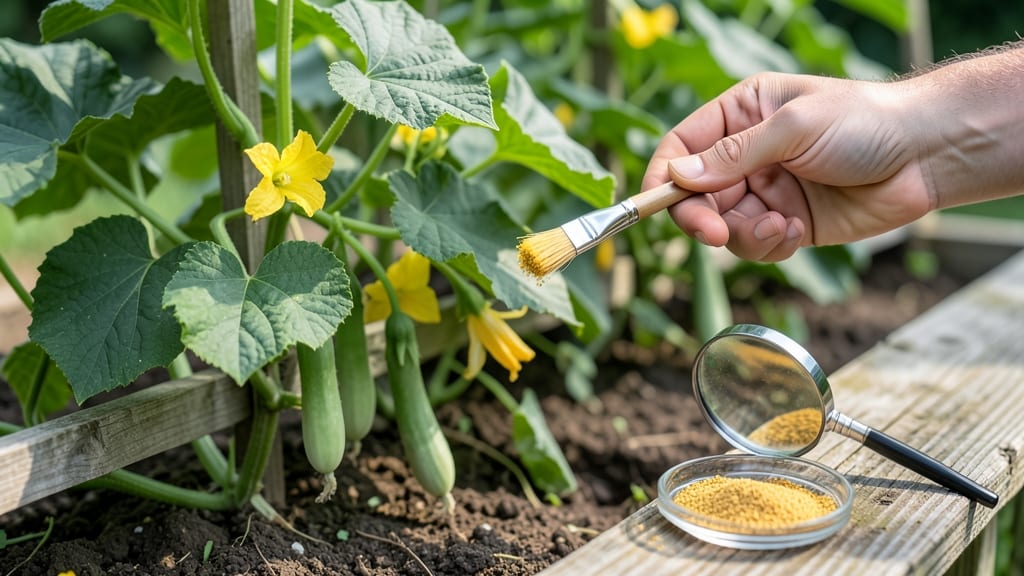
To pollinate cucumbers without male flowers, you’ll need to hand-pollinate female blooms with a simple technique that mimics nature—and it’s easier than you think 🥒.
Struggling with cucumbers that refuse to produce fruit? Many gardeners face this issue when male flowers dominate, leaving female flowers unpollinated. The good news? You can hand-pollinate cucumbers to maximize female flower success and boost your harvest—no bees required!
Most cucumber varieties rely on bees to transfer pollen, but if your garden lacks pollinators or you’re growing parthenocarpic (seedless) types, manual pollination is the game-changer. This method ensures every female flower gets the attention it needs, leading to more consistent fruit set.
Below, I’ll walk you through the exact steps—from identifying female flowers to using the right tools—and share my pro tips for avoiding common mistakes. By the end, you’ll know exactly how to turn those blooms into a bountiful harvest.
How to identify and select female cucumber flowers for hand-pollination
Identifying female cucumber flowers is the first step to maximizing your harvest when bees aren't doing the job. These flowers are the key to fruit production, and knowing how to spot them helps you focus your hand-pollination efforts.
Female flowers have a tiny cucumber-shaped ovary at their base, while male flowers lack this feature entirely.
Start by examining the flower structure closely each morning. Female flowers will appear slightly larger and have a swollen base that resembles a miniature cucumber. This ovary is your target for pollination, as it will develop into fruit once fertilized.
Male flowers, on the other hand, have long, slender stems and no ovary.
Timing matters too—morning hours (between 7-9 AM) are ideal for identifying and pollinating female flowers. This is when flowers are fully open and pollen is most active. Use a magnifying glass if needed to spot the subtle differences between male and female blooms.
Once you've identified your female flowers, prioritize them for pollination. These are the ones that will produce fruit, so focusing on them ensures you're making the most of your hand-pollination efforts. Keep a small notebook nearby to track which flowers you've pollinated and their progress over time.
| Feature | Male Flower | Female Flower |
|---|---|---|
| Stem | Long and slender | Slightly thicker near base |
| Ovary | Absent | Present (cucumber-shaped) |
| Size | Smaller | Slightly larger |
| Fruit Potential | None | High (develops into cucumber) |
| Best Time to Pollinate | N/A | Morning (7-9 AM) |
Female flowers often appear 3-5 days after male flowers on cucumber plants. This staggered blooming pattern means you'll need to monitor your plants daily to catch female flowers at their peak.
Look for new blooms near the main stem or leaf axils, as these are common spots for female flowers to develop.
If you're growing parthenocarpic cucumber varieties, like 'Diva' or 'Corinto,' you can skip hand-pollination entirely. These varieties produce fruit without fertilization, but they still benefit from occasional vibration or gentle shaking to encourage fruit set. For traditional varieties, though, hand-pollination is essential.
Pay attention to the flower color as well. Female flowers often have slightly deeper petals and may appear more vibrant. This subtle difference can help you quickly identify them during your daily garden routine.
Once you've spotted a female flower, act fast—pollen transfer should happen within 24 hours for best results.
Use a small paintbrush or cotton swab to gently collect pollen from male flowers and transfer it to female flowers. Focus on the stigma (the fuzzy center) of the female flower, as this is where pollen needs to land.
Repeat this process every 2-3 days during peak flowering to maximize fruit production.
Keep in mind that over-pollinating can lead to fruit overload, which may stress your plants. Aim to pollinate 3-5 female flowers per plant at a time to balance fruit development with plant health. Monitor your cucumbers closely after pollination to ensure they're developing properly.
With practice, you'll become a pro at spotting female flowers and hand-pollinating cucumbers like a seasoned gardener. This skill not only boosts your harvest but also gives you control over fruit production, even when bees aren't around to help.
Best tools and techniques for manual cucumber pollination
When your cucumber plants produce mostly male flowers but few female flowers, manual pollination becomes your best friend. The good news is that you don’t need fancy tools—just a few simple items and a gentle touch.
I’ve found that using a cotton swab or soft paintbrush works best, but even your clean fingers can do the job if you’re careful. The key is transferring pollen from male to female flowers efficiently to trigger fruit development.
Before you begin, make sure you’ve correctly identified your female flowers (they’ll have a tiny cucumber at the base) and have a male flower ready to donate pollen. Timing matters too—pollinate on dry, sunny mornings when flowers are fully open.
This method mimics how bees would naturally pollinate your plants, giving you full control over the process when nature falls short.
Step-by-Step Manual Pollination Guide
- Step 1: Gently pick a male flower (no cucumber at base) and remove its petals to expose the pollen-covered stamens.
- Step 2: Dip a cotton swab, paintbrush, or your finger into the pollen. Press lightly to collect enough but avoid overloading.
- Step 3: Locate a female flower (with a tiny cucumber at the base) and carefully remove its petals to reveal the pistil.
- Step 4: Transfer the pollen to the pistil’s sticky tip by gently touching it with your tool or finger. A light coating is all you need.
- Step 5: Reattach the petals to protect the flower and repeat the process for 3-5 female flowers per plant.
- Step 6: Label and track pollinated flowers with a toothpick or ribbon to monitor fruit development over 5-7 days.
One common mistake I see is over-pollinating a single flower, which can stress the plant. Stick to a light touch and focus on 3-5 female flowers per plant to avoid overwhelming your cucumber’s energy.
Also, avoid pollinating in humid or rainy conditions, as moisture can wash away the pollen before it takes effect. Pro tip: If you’re short on male flowers, try vibrating the plant gently (like a mini earthquake) to encourage natural pollen release.
For efficiency, I recommend setting a daily pollination schedule during peak flowering. Check your plants every 2-3 days and pollinate any new female flowers as they open. This consistency pays off with a higher fruit set and fewer dropped blooms.
Over time, you’ll notice your cucumbers producing more uniformly sized fruits, which is a huge win for gardeners aiming for a bountiful harvest.
If you’re dealing with parthenocarpic varieties (like 'Sweet Success' or 'Diva'), you can skip manual pollination entirely—they produce fruit without it! But for traditional varieties, this method is a game-changer.
With practice, you’ll become so fast that pollinating won’t even feel like extra work—just another part of your gardening routine.
Remember, patience is key. It takes about 5-7 days for pollinated flowers to develop into cucumbers, so don’t rush the process. Keep an eye on your plants, and soon you’ll be enjoying a steady supply of homegrown cucumbers all season long. Happy pollinating! 🌱