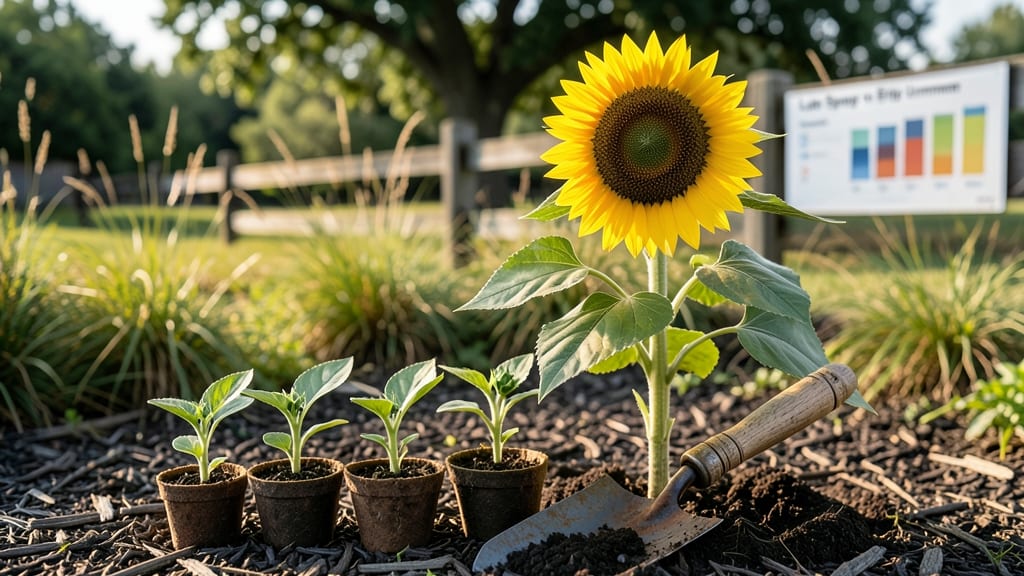
Plant sunflowers in Northern California between mid-April and early June — timing that avoids late frosts while ensuring blooms before fall chills set in.
Picture this: you’ve just planted your 🌻 seeds, only to watch them turn crispy overnight because a surprise frost rolled in. Or worse, your towering sunflowers bolt to seed before they even open.
Timing is the difference between a stunning summer display and a wasted effort, especially when coastal areas like San Francisco stay cooler longer than inland spots like Sacramento.
Most gardeners in zones 7b–10a assume "spring" means go ahead, but the reality is more nuanced. Soil needs to hit 50°F (10°C) before seeds germinate, and coastal zones like 9a often wait until May, while inland areas can start as early as April.
Get the window wrong, and you’re fighting the climate instead of enjoying those 10-foot giants.
Below, I’ll break down the exact frost-free deadlines by zone, the fastest-maturing varieties for your area, and pro tips to stretch your growing season—so you can finally grow sunflowers that thrive, not just survive.
🌻When to Plant Sunflower
Jan❄️
Feb❄️
Mar🌱
Apr🌱
May🌱
Jun🌻
Jul🌻
Aug🌱
Sep🍂
Oct🍂
Nov🍂
Dec❄️
Ideal Time
Also Good
Northern California sunflower planting zones: frost dates by region
Northern California's diverse climate means sunflower planting windows vary dramatically between coastal areas and inland valleys. Coastal zones like San Francisco (Zone 9a) enjoy mild winters with last frost dates in January, while inland cities like Sacramento (Zone 9b) face later frosts until mid-February.
These differences directly impact germination timing and maturity schedules for your sunflowers.
Sunflowers thrive with 120-150 frost-free days to mature, making late spring planting ideal. In Zone 7b (Chico), where frosts linger until March 15, aim for April 15 planting to ensure blooms before fall frosts in November.
Coastal areas can push planting to March 1 safely, but inland zones should wait until soil warms above 50°F.
Here's how microclimates affect your planting schedule:
Region
USDA Zone
Last Frost Date
First Frost Date
Optimal Planting Window
Maturity Timeline
Coastal (San Francisco)
9a
January 15
November 1
March 1 - April 15
July - September
Bay Area (Oakland)
9b
January 30
November 15
March 15 - April 30
July - September
Sacramento Valley
9b-10a
February 15
November 15
April 1 - May 15
July - October
Chico (Zone 7b)
7b
March 15
November 1
April 15 - May 15
August - September
Redding (Zone 8a)
8a
March 1
October 30
April 1 - May 10
July - September
Best sunflower varieties for Northern California’s short growing season
Northern California’s short growing season and varied frost dates demand smart sunflower variety choices. Fast-maturing types like 'Moulin Rouge' (50-60 days) or 'Autumn Beauty' (55-65 days) thrive in cooler coastal zones (9a-10a), while tall varieties like 'Russian Giant' (100-120 days) need inland heat (7b-9b) to reach their towering potential.
The key is matching bloom time to your local first frost—typically late October to November in most regions.
For USDA Zone 7b-8a (Sacramento, Fresno), prioritize mid-height varieties like 'Autumn Beauty' or 'Teddy Bear' (3-4 ft tall). These bloom in 70-80 days, giving you vibrant color before fall frosts arrive.
In cooler coastal areas (Zone 9a-10a), opt for dwarf or fast-blooming types like 'Moulin Rouge' (2-3 ft) or 'Sunspot' (2-3 ft) to avoid heat stress in summer.
Variety
Days to Bloom
Height
Best Zones
Notes
Moulin Rouge
50-60
2-3 ft
9a-10a
Fastest bloomer; great for containers
Autumn Beauty
55-65
3-5 ft
7b-9b
Color-changing blooms; heat-tolerant
Russian Giant
100-120
10-16 ft
7b-8a
Needs long season; stake required
Teddy Bear
60-70
3-4 ft
8a-10a
Compact; great for cut flowers
Sunspot
55-65
2-3 ft
9a-10a
Drought-tolerant; long vase life
If you’re in Zone 9a or higher (e.g., San Francisco Bay Area), focus on heat-tolerant dwarf varieties like 'Sunspot' or 'Little Becka' (1-2 ft tall). These handle coastal fog and summer heat better than tall types.
For inland areas (Zone 7b-8a), plant 'Russian Giant' or 'Mammoth' (12-14 ft) in late May to early June to ensure they mature before fall frosts hit.
Pro tip: Use staggered planting to extend your bloom season. Sow fast varieties (Moulin Rouge) in late April and taller types (Russian Giant) in mid-May. This creates a continuous display from July through September, maximizing your sunflower enjoyment before frost arrives.
Always plant in well-draining soil with full sun exposure—this is non-negotiable for sunflowers!
For coastal gardeners, consider black oil sunflower seeds like 'Autumn Beauty', which produce edible seeds and stunning multi-colored blooms. These varieties are disease-resistant and low-maintenance, perfect for Northern California’s unpredictable weather. Pair them with marigolds or basil to deter pests naturally.
Remember: Sunflowers need space! Dwarf varieties still need 12-18 inches apart, while tall types require 2-3 feet of clearance. In small gardens, opt for container-friendly dwarf varieties