
Flowers
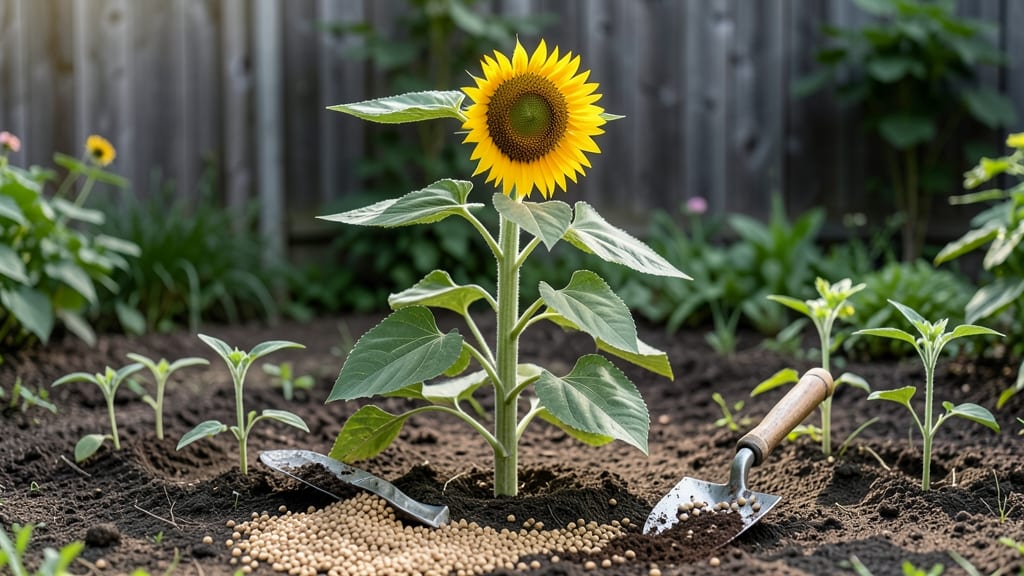
To fertilize sunflowers at the right time means giving them a nutrient boost when they need it most—starting just before planting and again during early growth to fuel those towering stems.
Sunflowers aren’t just beautiful—they’re hungry plants that need the right nutrients at the right time to reach their full towering potential. Get the timing wrong, and you’ll end up with weak stems or stunted blooms instead of sun-drenched giants.
In cooler regions like USDA Zone 6a, aim for your first feeding in early May, right when seedlings pop up. Warmer climates can start a little earlier, but the key is to avoid overdoing it once flowering begins.
Below, I’ll break down the best organic and synthetic fertilizers, how often to apply them, and the one mistake that turns lush foliage into floppy stems. Let’s grow those sunflower giants the right way!
Optimal fertilization timeline for sunflowers by growth stage
Sunflowers thrive when fed the right nutrients at the right time, but their needs change dramatically from seedling to towering bloom. Timing matters most—too early, and you’ll get leggy stems; too late, and your blooms will struggle to reach their full potential.
The key is understanding three critical stages: pre-planting, vegetative growth, and flowering.
Most gardeners make one of two mistakes: either they fertilize too early, which leads to weak stems that can’t support heavy blooms, or they wait too long, resulting in stunted growth. I’ve learned the hard way that sunflowers need a balanced approach—nitrogen for early growth, phosphorus for root development, and potassium for flowering.
Let’s break down the exact schedule you should follow.
| Growth Stage | Fertilizer Type | NPK Ratio | When to Apply | Notes |
|---|---|---|---|---|
| Pre-Planting (Soil Prep) | Compost or balanced organic | 2-3-2 or 5-5-5 | 2-4 weeks before planting | Enrich soil with organic matter |
| Early Growth (Seedling) | High-nitrogen (e.g., fish emulsion) | 10-5-5 or 12-2-4 | When plants reach 6-8 inches | Encourages strong stem development |
| Budding Stage | Balanced or phosphorus-heavy | 5-10-10 or 3-4-6 | 4-6 weeks after sprouting | Supports flower and seed formation |
| Flowering Stage | Potassium-rich (e.g., banana peel tea) | 2-5-10 or 0-0-50 | When buds appear (late summer) | Boosts bloom size and seed production |
| Post-Flowering | None (or compost only) | N/A | After seeds mature | Avoid late-season fertilization |
For Northern Hemisphere gardeners, this timeline typically aligns with late spring to early summer. Start with a light application of compost 2-4 weeks before planting to enrich the soil.
Once your sunflowers sprout and reach 6-8 inches tall, switch to a high-nitrogen fertilizer to encourage rapid, healthy stem growth. This is when most gardeners see the biggest difference in plant vigor.
As your sunflowers enter the budding stage (usually 4-6 weeks after sprouting), shift to a balanced or phosphorus-heavy fertilizer. This helps develop strong roots and prepares the plant for flowering. Phosphorus is crucial here—it’s what turns those lush green leaves into vibrant blooms.
I’ve seen sunflowers double in bloom size just by adding phosphorus at this stage.
When buds appear and the plant starts flowering, it’s time to focus on potassium-rich fertilizers. Potassium helps the plant transport nutrients and resist diseases, which is especially important as the plant puts energy into producing seeds.
A simple banana peel tea (steep banana peels in water for a week) works wonders for this stage. Apply it every 2-3 weeks until flowering completes.
One common mistake I see is over-fertilizing during the flowering stage. Too much nitrogen at this point can actually delay or reduce flowering. Stick to potassium-heavy feeds, and you’ll get larger, more vibrant blooms. After seeds mature, stop fertilizing entirely—your sunflowers are done growing for the season.
For Southern Hemisphere gardeners, adjust this timeline by 6 months. Your fertilization schedule should mirror the Northern Hemisphere’s, but shifted to late autumn to early winter instead. Sunflowers are warm-season plants, so they’ll follow your local growing season, not the calendar.
Pro tip: Always fertilize in the early morning to avoid burning the leaves. Water your plants thoroughly before and after applying fertilizer to help distribute nutrients evenly. If you’re using organic fertilizers, like compost or fish emulsion, they’ll release nutrients more slowly, reducing the risk of over-fertilization.
Finally, pay attention to your soil’s pH level. Sunflowers prefer a slightly acidic to neutral soil (pH 6.0-7.0). If your soil is too alkaline, nutrients like phosphorus and iron become less available, even if you’re fertilizing correctly. Test your soil before planting and amend it if needed.
Signs your sunflowers need fertilizer (and when to avoid it)
Your sunflowers might be whispering for help if their leaves start showing unusual colors or their growth stalls unexpectedly. Yellowing leaves on older growth often signal nitrogen deficiency, while purple stems can mean phosphorus starvation.
These visual cues help you decide whether it's time to feed your plants or adjust your care routine.
On the flip side, excessive leaf growth with few blooms or crispy brown edges on leaves are red flags for over-fertilization. Too much nitrogen pushes plants to grow foliage instead of flowers, while salt buildup from synthetic fertilizers can burn roots and stunt growth entirely.
Before reaching for fertilizer, check your soil's moisture level—dry soil can mimic nutrient deficiencies. Sunflowers are surprisingly drought-tolerant once established, so their thirst might be the real issue rather than a hunger for nutrients.
When to Fertilize Sunflowers
Balancing nutrients for strong stems and vibrant blooms
✅ Fertilize When...
- Leaves turn pale green/yellow (nitrogen deficiency)
- Stems show purple hues (phosphorus deficiency)
- Growth stalls at 6-8 inches (early-stage hunger)
- Flower buds appear weak (potassium support needed)
- Soil tests low in nutrients (organic matter <3%)
❌ Avoid Fertilizing When...
- Leaves have crispy brown edges (salt burn from overuse)
- Excessive foliage, few blooms (too much nitrogen)
- Plants wilt despite watering (root damage risk)
- Flowering stage begins (late-season feeding disrupts blooms)
- Soil is already rich in compost (avoid nutrient overload)
For organic options, try compost or worm castings mixed into the soil at planting time. These gentle amendments provide long-term nutrition without the risk of burning young roots. If you prefer synthetics, opt for a balanced 10-10-10 formula applied lightly—never exceeding 1 tablespoon per plant.
Timing matters too: Early spring is ideal for a light feeding when seedlings emerge, while mid-summer supports flowering. Skip fertilizing in fall or winter—your sunflowers will thank you with stronger stems and bigger blooms next season.
Remember, healthy soil is the foundation. Amend your garden bed with 2-3 inches of compost before planting to reduce the need for frequent fertilizing. Your sunflowers will reward you with towering stalks and vibrant blooms when you listen to their subtle signals.