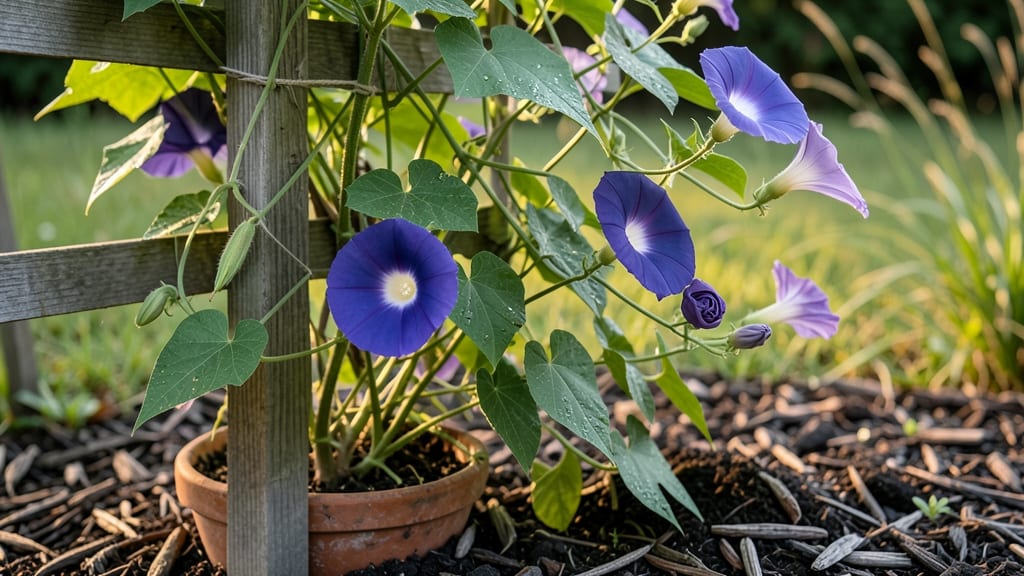
Morning glory flowers bloom in as little as 30 days after planting, turning your garden into a vertical explosion of color—but getting them to open on time depends on your zone, sunlight, and the right variety.
Picture this: You plant seeds in early May, and by early June, your trellis is draped in heavenly blue or fiery red blooms, opening one by one at dawn. That’s the magic of morning glory, but timing is everything.
Too little sun, the wrong variety, or planting too late can leave you staring at green vines instead of those dreamy 🌸 displays.
In Zone 6a, where most gardeners live, blooms typically kick off in June and peak through September—unless you choose a fast variety like ‘Heavenly Blue’ or ‘Scarlet O’Hara,’ which can start as early as late May.
The key? Plant after your last frost (around April 15 in Zone 6a), give them full sun, and avoid over-fertilizing, which delays flowers.
Below, I’ll break down the fastest bloomers by zone, how to trigger earlier flowers, and the best companion plants to keep them blooming all summer long—so you’re not left waiting for color.
Fastest morning glory varieties that bloom in 30-60 days
If you're dreaming of a quick-blooming vertical garden, morning glories deliver—some varieties unfurl their first flowers in just 30 days after planting. The secret lies in selecting the right cultivar and timing your sowing for your USDA hardiness zone.
Whether you want heavenly blue cascades or deep scarlet red bursts, these fast-growing vines will transform your trellis into a living work of art.
Most morning glories are annual climbers, meaning they complete their life cycle in one season, but their speed is unmatched. Perennial types (like Ipomoea purpurea) can return year after year in warmer zones, though their bloom times may vary.
For the fastest results, focus on annual varieties that thrive in full sun and well-draining soil.
Here’s what you need to know about the top 5 fastest morning glories, including their bloom windows, mature heights, and ideal planting months to maximize speed. These varieties are perfect for container gardens, trellises, or even arbors—just give them something to climb!
Variety
Bloom Time
Height
Ideal Planting Months
Unique Trait
Heavenly Blue
30-45 days
10-15 ft
April-May (Zones 3-10)
Self-cleaning; no deadheading needed
Scarlet O'Hara
40-50 days
12-15 ft
March-April (Zones 5-10)
Deep red blooms; heat-tolerant
Black Night
45-60 days
8-12 ft
April-May (Zones 4-9)
Velvety purple-black flowers
Flying Saucer
35-45 days
6-10 ft
March-April (Zones 6-10)
Large, saucer-shaped blooms
Star of Bethlehem
50-60 days
5-8 ft
April-May (Zones 5-10)
Morning glory bloom times by USDA hardiness Zones & sunlight needs
Morning glories thrive in warm climates but adapt beautifully to cooler zones with the right timing. In USDA Zones 8-10, these vines often bloom as early as 60 days after planting, while gardeners in Zones 3-5 may see flowers appear 2-3 weeks later due to shorter growing seasons.
Sunlight plays a critical role—full sun accelerates blooming, while partial shade can delay it by up to 10 days.
Your hardiness zone determines the best planting window. In Zones 3-5, start seeds indoors 6-8 weeks before last frost (typically mid-April) and transplant after soil warms. For Zones 6-7, direct sow seeds in late April to early May when nighttime temperatures stay above 50°F.
Meanwhile, gardeners in Zones 8-10 can plant seeds anytime from February to April for continuous blooms.
Sunlight needs dramatically impact bloom timing. Morning glories in full sun (6+ hours daily) typically bloom 1-2 weeks earlier than those in partial shade.
For example, 'Heavenly Blue' in Zone 5 with full sun may flower by mid-July, while the same variety in partial shade might not bloom until early August. Always choose a south-facing trellis for maximum light exposure.
Morning Glory Bloom Timing by Zone & Sunlight
USDA Zone
Sunlight Needs
Planting Window
Bloom Time
Season Length
3-5
Full Sun
Mid-April (Indoors) Late May (Outdoors)
Late July to September
8-10 weeks
6-7
Full Sun
Late April to Early May
Mid-June to October
12-14 weeks
8-10
Full Sun
February to April
April to November
20-24 weeks
3-5
Partial Shade
Late April (Indoors) June (Outdoors)
Early August to September
6-8 weeks
6-7
Partial Shade
Early May
Late June to September
10-12 weeks
To extend the blooming season in cooler climates, try these proven strategies. Start with early sowing in Zone 3-5—plant seeds indoors in March and transplant after last frost.
Use black plastic mulch to warm soil and encourage faster growth. For Zones 6-7, succession plant seeds every 2 weeks from May to July to ensure continuous blooms.
If you live in a shady garden, opt for dwarf varieties like 'Star of Bethlehem' that tolerate partial shade better than tall types. Pair morning glories with sun-loving companions like marigolds or nasturtiums to create a sunny microclimate that boosts their performance.
Always deadhead spent blooms to encourage new flower production throughout the season.
Remember, morning glories are annuals in most zones, so plan ahead for next year's display. Take notes on which