
Planting
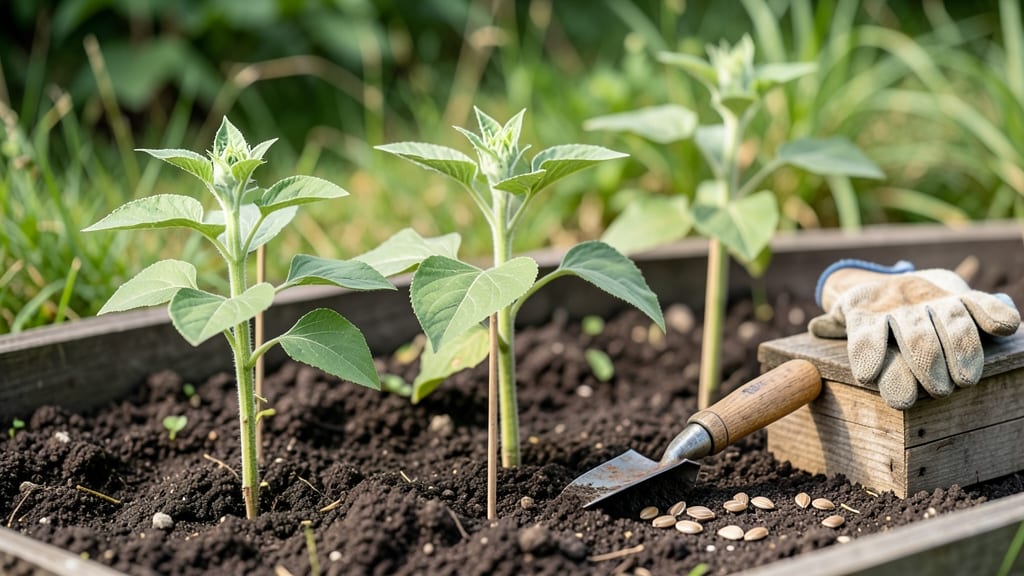
Spacing sunflower seeds correctly is the key to growing towering plants with bold blooms—because too close, and you’ll end up with weak stems and fewer flowers.
Picture this: You’ve waited all spring for those 🌻 to shoot up, only to watch them lean, struggle, and produce tiny blooms instead of the giants you dreamed of. The fix? It’s all in the spacing—whether you’re planting in open ground or containers.
Sunflowers aren’t one-size-fits-all; dwarf varieties need 6 inches apart, while giant types thrive with 18 inches or more. Soil type, wind exposure, and even your local climate can tweak those numbers. Get it right, and you’ll harvest sunflowers that reach sky-high while producing an abundance of cheerful blooms.
In this guide, I’ll break down the exact spacing you need by variety, how to adjust for crowded plots or containers, and the common mistakes that stunt growth—so you can finally grow sunflowers that steal the show.
Optimal sunflower seed spacing by variety for tallest stems and biggest blooms
Sunflower seed spacing isn’t one-size-fits-all—it depends entirely on the variety you’re growing. Dwarf sunflowers need 6 inches apart, while giant varieties like 'Mammoth' or 'Russian Giant' require 24+ inches to develop their full height and massive blooms.
Getting this right ensures strong stems and abundant flowers, not weak, leggy plants competing for resources.
Spacing affects more than just height—it determines bloom production, disease resistance, and even seed yield. Crowded sunflowers bend under their own weight, attract pests, and produce smaller flowers.
Proper spacing lets each plant thrive, maximizing your garden’s visual impact and harvest potential. Let’s break down the best practices for dwarf, mid-height, and giant varieties.
Single-stem vs. multi-stem varieties also play a role. Single-stem types (like 'Autumn Beauty') need wider spacing to avoid competition, while multi-stem varieties (like 'Teddy Bear') can handle slightly closer plantings since they produce multiple blooms per plant.
For dwarf varieties, like 'Teddy Bear', you can plant seeds as close as 6 inches apart in rows spaced 1.5 feet apart. These compact plants produce multiple stems, so they’re perfect for containers or small gardens.
Just be prepared for slightly smaller blooms compared to their taller cousins.
Mid-height sunflowers, such as 'Autumn Beauty', strike a balance. Space seeds 12–18 inches apart in rows 1.5–2 feet apart. This spacing gives them room to develop strong stems while still producing large, vibrant blooms—ideal for cut flower arrangements or backyard displays.
When it comes to giant sunflowers, like 'Russian Giant', spacing is critical. Plant seeds 24–36 inches apart in rows 3–4 feet apart.
These sunflowers can grow 10–14 feet tall and produce 20-inch blooms, but they need the space to avoid stem weakness or toppling over. Consider staking or trellising for extra support.
If you’re growing multiple varieties together, prioritize spacing based on the tallest plants. Place dwarf sunflowers in the front of your garden bed, mid-height varieties in the middle, and giants in the back.
This creates a stunning height gradient while ensuring each plant gets the light and airflow it needs to thrive.
Proper spacing also reduces pest and disease pressure. Sunflowers crowded together create humid microclimates that attract powdery mildew or aphids. By giving each plant room to breathe, you’ll minimize fungal issues and maximize flower health. Plus, well-spaced sunflowers are easier to harvest and maintain.
For container growing, adjust spacing based on pot size. A 5-gallon container can fit 1–2 dwarf sunflowers (6 inches apart), while a 15-gallon container might accommodate 1 mid-height variety with 12-inch spacing. Giant sunflowers rarely thrive in containers due to their size and root depth.
Remember, soil quality
How to adjust sunflower spacing for different growing conditions
Your sunflowers might love the sun, but they also need room to thrive—especially when conditions aren’t ideal. Poor spacing in windy areas or crowded gardens can lead to weak stems and stunted blooms. The good news?
With a few adjustments, you can optimize growth whether you're planting in containers, raised beds, or tight garden spaces. Let’s break down how to adapt spacing for your unique setup.
First, consider your soil quality. In nutrient-rich soil, sunflowers grow faster and may need slightly wider spacing—12-18 inches apart—to avoid competition. But in poor soil, closer spacing (6-12 inches) can actually help roots share nutrients more efficiently.
Always test your soil first to avoid guesswork!
Next, think about your climate zone. In windy regions, wider spacing (18-24 inches) gives stems room to sway without snapping. Meanwhile, in humid climates, tighter spacing (6-12 inches) reduces airflow and lowers the risk of fungal diseases like powdery mildew.
Your local weather plays a bigger role than you might think!
🌱 Key Spacing Adjustments
| Condition | Spacing (inches) | Notes |
|---|---|---|
| Standard Garden Soil | 12-18 | Balanced growth for most varieties |
| Poor/Nutrient-Low Soil | 6-12 | Encourages root sharing |
| Windy Areas | 18-24 | Prevents stem breakage |
| Humid Climates | 6-12 | Reduces fungal risks |
| Containers/Raised Beds | 8-12 | Maximizes root space |
For container growing, prioritize root depth over width. A 5-gallon pot can comfortably hold 1-2 sunflowers spaced 8-12 inches apart, while larger containers (10+ gallons) allow for 3-4 plants. Use lightweight potting mix to prevent root-bound stress, and always include drainage holes to avoid soggy soil.
If you’re working with raised beds, aim for 12-18 inches between plants to mimic in-ground spacing. This setup lets you interplant with companion plants like borage or marigolds, which deter pests and improve soil health.
Just avoid overcrowding—sunflowers need elbow room to reach their full potential, even in raised beds!
Finally, don’t forget about companion planting. Pairing sunflowers with shallow-rooted herbs (like basil or dill) or legumes (such as beans) creates a symbiotic relationship. The sunflowers provide shade, while their companions improve soil fertility.
Just keep spacing in mind—6-12 inches apart for companions ensures everyone gets enough sunlight and nutrients.
With these adjustments, your sunflowers will stand tall, bloom bright, and thrive in any growing condition—whether you're battling wind, working with limited space, or experimenting with containers. Happy planting! 🌻