
Flowers
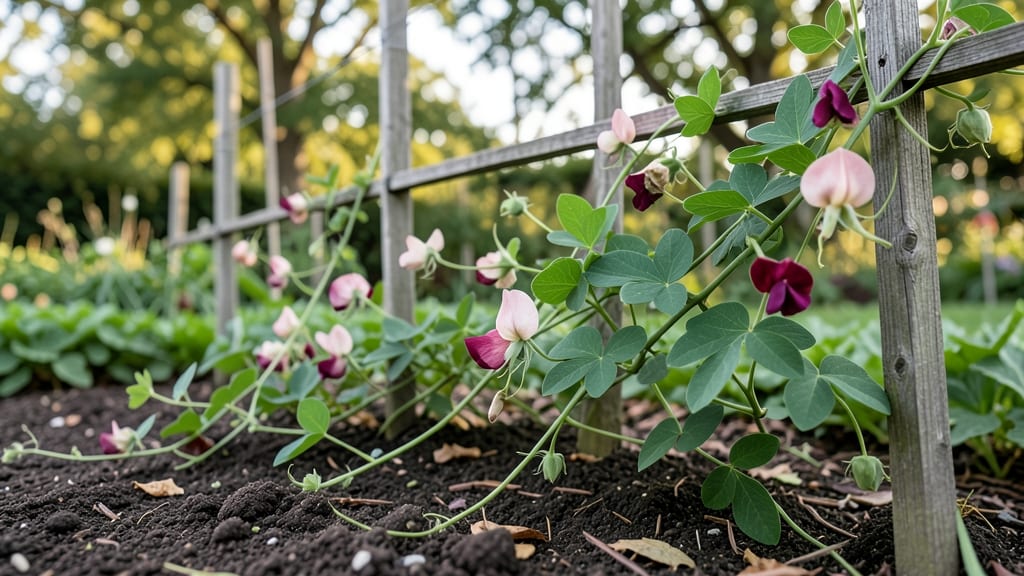
Sweet pea flowers grow anywhere from 2 feet to over 10 feet tall, depending on the variety and the support you provide.
If you’ve ever dreamed of a vertical garden bursting with color and fragrance, sweet peas 🌸 are the answer—but their height can change everything from trellis choices to garden bed spacing. Some varieties stay compact, while others climb like vines, turning a small patch into a lush, fragrant wall.
Dwarf types like 'Cupani' max out around 3 feet, making them perfect for containers or small gardens, while standard climbers like 'Blue Moon' can easily reach 8 feet or more with the right support. Without proper trellising, even the tallest varieties can sprawl, wasting space and reducing blooms.
In this guide, I’ll break down the height ranges by variety, explain how support affects growth, and share spacing tips to keep your sweet peas thriving—whether you’re working with a balcony planter or a full garden bed.

Sweet pea flower height ranges by variety: from compact bushes to towering climbers
Sweet peas (Lathyrus odoratus) are one of the most versatile flowering plants in any garden, offering everything from delicate dwarf varieties to towering climbers.
Their height can vary dramatically—some stay compact enough for container gardens, while others need tall trellises or fences to reach their full potential. Understanding these differences helps you plan your garden layout, choose the right support structures, and maximize both space efficiency and visual impact.
Most gardeners assume all sweet peas are climbers, but the truth is far more diverse. Some varieties grow as bushy, semi-compact plants with minimal vining, while others send out long, twisting tendrils that can reach 10 feet or taller when given proper support.
Even within the same family, spacing needs can differ by 3 feet or more, so knowing your variety’s growth habit is key to avoiding overcrowding or wasted space.
| Variety | Height Range | Growth Habit | Ideal Spacing | Support Needs |
|---|---|---|---|---|
| 'Cupani' | 2–3 ft | Compact bush | 12–18 inches apart | Minimal (small stake) |
| 'Tom Thumb' | 2–4 ft | Semi-bushy | 18–24 inches apart | Light trellis |
| 'Blue Moon' | 6–10 ft | Tall climber | 3–4 ft apart | Strong trellis/fence |
| 'Spencer' | 4–6 ft | Medium climber | 2–3 ft apart | Medium trellis |
| 'Matucana' | 3–5 ft | Semi-climbing | 24 inches apart | Obelisk or cage |
| 'Carlton' | 8–12 ft | Tall climber | 4–5 ft apart | Strong fence/arbor |
If you’re working with dwarf varieties like 'Cupani', you’ll love their space-saving nature. These plants thrive in containers or small garden beds, making them perfect for balconies, window boxes, or mixed borders.
Their compact size also means they require minimal support, though a small stake can help keep stems upright during heavy rain or wind. For these types, 12–18 inches of spacing between plants is ideal to prevent competition for nutrients.
On the opposite end of the spectrum, tall climbers like 'Blue Moon' are statement-makers in any garden. These varieties can easily outgrow standard trellises, so plan for 8–10 feet of vertical space or more if you’re using them to cover a pergola or arbor.
Their long, vigorous vines need 3–4 feet of horizontal spacing to avoid overcrowding, and a robust support structure is non-negotiable. Without proper support, these plants can become top-heavy and flop, leading to broken stems or poor airflow.
For medium-height varieties like 'Spencer', you’ll find a happy medium—tall enough to need moderate support but not so aggressive that they dominate the garden. These are excellent choices for trellises, obelisks, or small fences, adding vertical interest without overwhelming smaller spaces.
Spacing them 2–3 feet apart ensures they have room to branch out and climb without competing with
Do sweet peas need support? How height affects trellis and staking requirements
Sweet peas are naturally climbing vines, and even their dwarf varieties benefit from some form of vertical support. Without proper trellising or staking, their vines sprawl across the ground, leading to fewer blooms, increased disease risk, and weaker stems.
Most sweet peas—even the compact types—will grow taller and produce more flowers when given a structure to climb.
Your choice of support structure depends entirely on the variety’s mature height and your garden’s available space. Tall varieties like 'Blue Moon' can reach 8+ feet, while dwarf types like 'Cupani' max out at 2–3 feet.
Even these shorter varieties appreciate light trellising to keep stems upright and flowers accessible for cutting.
Sweet Pea Support Options by Height
Trellis Types
- Obelisks (6–10 ft)
- Cages (4–6 ft)
- Fences (3–8 ft)
Best For
- Tall climbers (8+ ft)
- Medium-height varieties (4–6 ft)
- Dwarf or bush types (2–4 ft)
Pros
- ✅ Increases bloom production by keeping vines upright
- ✅ Reduces disease risk by improving airflow
- ✅ Saves space in small gardens
Cons
- ❌ Requires regular tying (every 3–5 days)
- ❌ Can block sunlight if overcrowded
- ❌ Tall structures need staking in windy areas
For tall varieties, obelisks or freestanding trellises are ideal—they provide 360-degree climbing space and can support 8+ foot vines without toppling.
Place them in full sun and secure the base with stakes if your garden is windy. Medium-height sweet peas (4–6 feet) thrive on cage-like structures or A-frame trellises, which offer side support while keeping flowers at eye level.
Even dwarf sweet peas (2–4 feet) benefit from light trellising—a simple wire cage or small obelisk prevents sprawling and makes harvesting easier. If space is tight, bush varieties can grow without support, but they’ll produce fewer flowers and may struggle with stem rot if left flat on the ground.
My top tip for sweet peas: Tie stems gently with soft twine or plant clips every 3–5 days as they grow. This prevents stem damage and encourages stronger climbing. Avoid metal ties—they can cut into delicate vines as they thicken.
With the right support system, your sweet peas will reach their full height potential, producing abundant blooms all season long. Whether you choose a towering obelisk or a compact cage, proper support is the secret to healthier, happier vines—and more cut flowers for your vase!