
Flowers
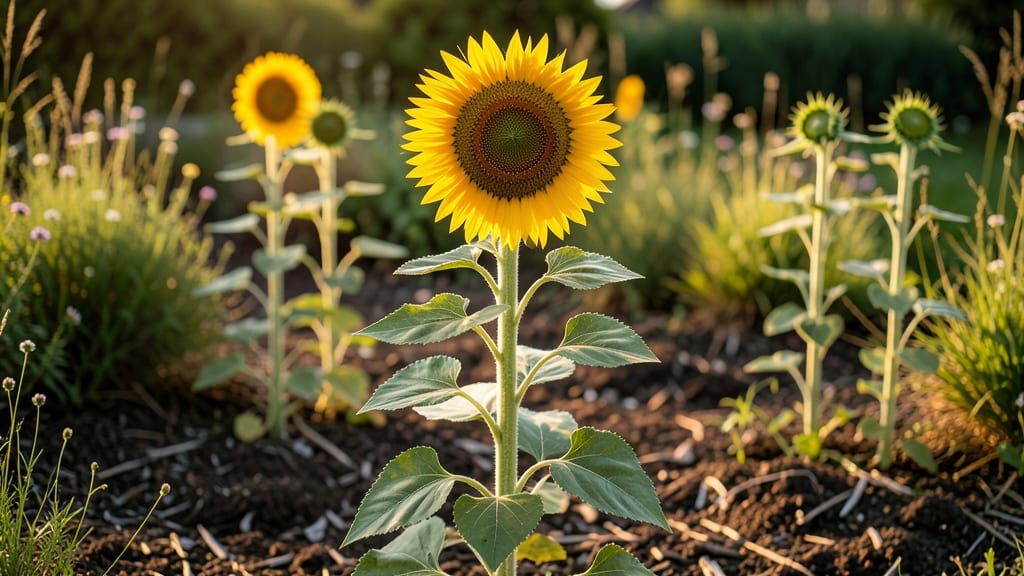
Sunflowers can grow anywhere from 2 feet to over 16 feet tall, depending on the variety you choose — and that difference changes everything about how you plan your garden.
Imagine a 12-foot tower of golden blooms reaching over your fence, or a 3-foot dwarf variety tucked into a container on your patio. The right height makes all the difference in creating focal points, filling gaps, or even providing shade for smaller plants.
Below, I break down the height ranges for popular sunflower varieties, from the towering 'Mammoth' to the cute 'Teddy Bear' dwarfs, plus the spacing and sunlight tricks that help them reach their full potential.
You’ll also discover how height affects your garden design — whether you’re using sunflowers as a privacy screen, a pollinator magnet, or just a cheerful accent. Ready to pick the perfect size for your space?

Sunflower height chart: tallest varieties vs. compact options for gardeners
Sunflowers are one of the most dramatic plants in any garden, with some varieties reaching heights that rival small trees. Whether you're dreaming of a 12-foot-tall focal point or need compact sunflowers for containers, choosing the right variety makes all the difference.
The height of your sunflowers directly impacts your garden design, spacing needs, and even how you support them during storms.
From giant sunflowers that can dwarf your fence line to dwarf varieties perfect for window boxes, sunflowers offer a stunning range of sizes. Understanding these differences helps you create vertical interest, provide wildlife habitat, or simply save space in small gardens.
Let’s break down the most popular sunflower heights and their ideal growing conditions.
🌻 Giant Sunflowers (10+ feet) are perfect for creating bold statements in your landscape. These towering varieties need ample space, strong support, and deep, fertile soil to reach their full potential. Some can even grow 14-16 feet tall, making them ideal for large gardens or agricultural settings where you want to maximize vertical space.
🌻 Standard Sunflowers (5-9 feet) strike a balance between drama and manageability. These are the classic sunflowers you’ll find in many gardens, offering a mix of height and ease of care. They’re great for adding height to flower arrangements or serving as a natural screen without overwhelming your space.
🌻 Dwarf Sunflowers (1-3 feet) are the unsung heroes of small gardens and containers. These compact varieties bring all the cheerful colors and pollinator benefits of sunflowers without taking up much room. They’re perfect for balconies, patios, and even indoor growing with sufficient light.
| Variety | Height Range | Growth Habit | Ideal Spacing | Best For |
|---|---|---|---|---|
| Mammoth Russian | 12-16 ft | Single-stem | 24-36 in apart | Dramatic focal points |
| Russian Giant | 10-14 ft | Single-stem | 24 in apart | Large gardens, privacy screens |
| Autumn Beauty | 5-9 ft | Branching | 12-18 in apart | Cut flowers, pollinator gardens |
| Teddy Bear | 1-3 ft | Branching | 6-12 in apart | Containers, small gardens |
| Sunspot | 2-4 ft | Branching | 6-12 in apart | Balconies, window boxes |
| ProCut | 4-6 ft | Single-stem | 12-18 in apart | Cut flower production |
If you're growing giant sunflowers like Mammoth Russian, plan for at least 2 feet of space around each plant. These varieties often need staking or even trellising to prevent them from toppling in wind or rain.
I’ve found that planting them near a sturdy fence or using bamboo stakes tied with soft twine works beautifully.
For standard sunflowers, like Autumn Beauty, spacing them 12-18 inches apart gives them room to branch out while still creating a lush, full look. These varieties are perfect for adding height to flower beds or lining pathways.
Their branching habit also makes them great for cutting flowers, as you’ll get multiple stems per plant.
When it comes to dwarf sunflowers, like Teddy Bear or Sunspot, you can get creative with your planting. These varieties thrive in containers, hanging baskets, or even indoors near sunny windows.
Plant them 6-12 inches apart to encourage bushiness, and don’t be surprised if they produce multiple blooms per stem.
Choosing the right sunflower height isn’t just about aesthetics—it’s also about pollinator support and garden functionality. Taller varieties attract birds and bees from a distance, while dwarf sunflowers provide easy access for smaller pollinators like butterflies.
Plus, mixing heights creates a dynamic, layered look that draws the eye through your garden.
Pro tip: If you’re growing sunflowers in windy areas, opt for shorter varieties or provide extra support. I’ve seen 12-foot sunflowers snap in strong gusts, so always stake them early in the season.
For added stability, bury stakes 6-8 inches deep and tie the stems loosely with soft material to avoid damaging the plant as it grows.
Ready to plan your sunflower garden? Start by sketching your space and noting where you’d like to place tall, medium
How sunflower height affects your garden design and spacing needs
Sunflowers aren't just about their bright yellow blooms—their height varies dramatically between varieties, and this affects everything from garden layout to plant companions. A 12-foot 'Mammoth' sunflower needs completely different spacing than a 2-foot 'Teddy Bear' variety.
Understanding these differences lets you create stunning vertical gardens, privacy screens, or even dramatic focal points.
Tall sunflowers like 'Russian Giant' can reach 14-16 feet, making them perfect for background planting or pairing with climbing vines like morning glories. Medium-height varieties (5-9 feet) work beautifully as privacy screens or windbreaks, while dwarf types (1-3 feet) thrive in containers or small spaces.
The key is matching each variety's mature height to your garden's design goals.
Best for: Focal points, background planting, pairing with climbers
Best for: Privacy screens, windbreaks, mixed borders
Best for: Containers, small gardens, pollinator borders
Tall: 18-24 inches apart | Medium: 12-18 inches | Dwarf: 6-12 inches
When designing your garden, consider placing tall sunflowers at the back of borders to avoid shading shorter plants. For example, 'Autumn Beauty' (8-10 feet) pairs beautifully with clematis or morning glories that climb its sturdy stems.
Medium-height varieties like 'ProCut' (6-8 feet) create natural living screens when planted in a tight row, while dwarf types like 'Moulin Rouge' (2-3 feet) add color to patios or window boxes.
Proper spacing is critical to prevent overcrowding, which can stunt growth and reduce bloom quality. Giant varieties need 18-24 inches between plants to support their height, while dwarf types can thrive just 6-12 inches apart.
Always plant taller sunflowers on the north side of shorter plants to avoid shading issues. In small gardens, use containers or raised beds to control height and keep sunflowers contained.
Don't forget that sunflowers also provide vertical habitat for pollinators like bees and butterflies. Tall varieties attract birds too, adding another layer of ecological diversity to your garden.
By thoughtfully arranging sunflowers by height, you create a multi-level garden that's both beautiful and functional, whether you're aiming for a rustic cottage look or a modern minimalist design.
For urban gardeners with limited space, dwarf sunflowers are a game-changer. Varieties like 'Sunspot' (2-3 feet) grow perfectly in 5-gallon containers and can be placed on balconies or rooftops.
Even in ground planting, their compact size allows for closer spacing with other plants, like marigolds or basil, creating a pollinator-friendly micro-habitat.
🌻