
Flowers
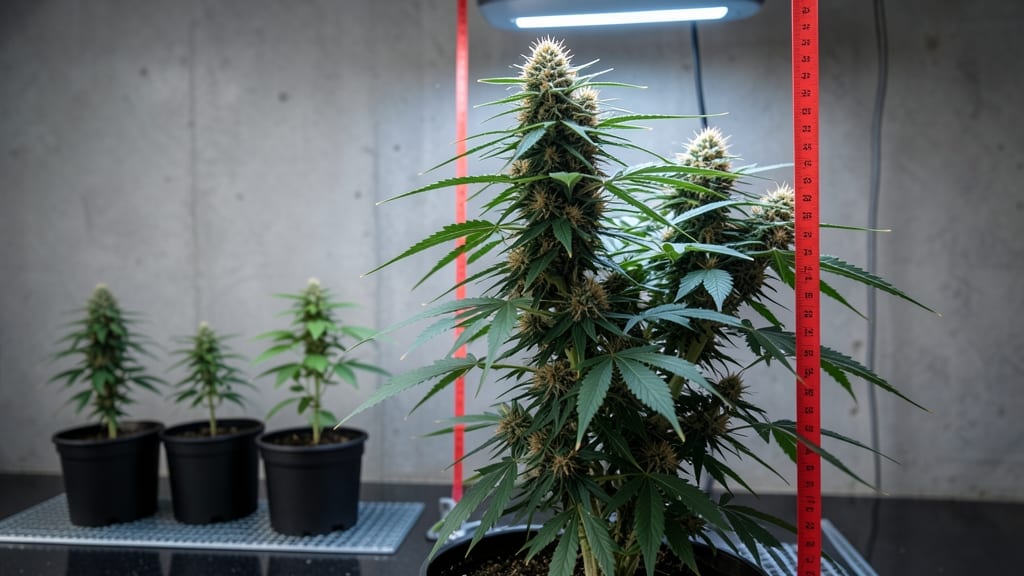
Autoflowering cannabis plants grow between 1 and 5 feet tall, depending on genetics and growing conditions—but most stay in the 2- to 3-foot range.
If you’ve ever squeezed a 5-foot-tall plant into a closet-sized grow tent, you know why height matters. Unlike photoperiod strains, autoflowers don’t respond to light cycles, so their final size is set from seed. That means space planning is non-negotiable.
Here’s the breakdown: dwarf varieties like Auto Blueberry max out around 1-2 feet, while powerhouse autos like Gorilla Glue Auto can stretch to 4-5 feet. Even within the same strain, pruning, training, and nutrient levels can tweak height by 12 inches or more.
Below, I’ll cover how to pick the right strain for your space, the 3 biggest height myths, and how to train autos for maximum yield without sacrificing stability.

Autoflower height ranges by strain type: dwarf vs. standard vs. tall varieties
Autoflowering plants come in a surprising range of heights, from compact desk-sized varieties to tall, room-filling giants. Unlike photoperiod strains, their final height is determined almost entirely by genetics, making strain selection your most critical decision.
If you're working with limited space or need discreet growth, understanding these height categories will help you choose the perfect variety for your setup.
Most autoflowering strains fall into one of three distinct height categories: dwarf (1-2 feet), standard (3-5 feet), or tall (5-7+ feet). Each category has unique growth habits, yield potential, and cultivation requirements that directly impact your gardening strategy.
Let’s break down the key differences so you can plan your grow space with confidence.
Pro Tip: Always check a strain’s breeder specifications—even within categories, individual varieties can vary by 6-12 inches. For example, Auto Blueberry stays under 2 feet, while its cousin Blueberry Auto might reach 3 feet. These nuances matter when planning trellises or indoor grow tents.
Dwarf autoflowers are the stealth grower’s dream, perfect for indoor setups under 2 feet tall or outdoor grows hidden in planters. Varieties like Auto Blueberry produce dense, resinous buds despite their small stature, making them ideal for beginners or those with limited space.
Their shorter stature also means faster recovery from training techniques like topping or LST, though over-pruning can stress these delicate plants.
Standard-height autos strike the best balance between yield and manageability. These varieties, such as Northern Lights Auto, typically reach 3–5 feet and deliver 2–5 ounces per plant—enough for personal use without requiring a dedicated grow room.
They thrive in 4×4-foot grow tents or outdoor gardens with privacy screens, making them versatile for both beginners and experienced growers.
Tall autoflowers like Gorilla Glue Auto can dwarf even the largest indoor setups, often exceeding 6 feet without training. While they offer the highest yields (5–10+ ounces), they demand more vertical space, stronger supports, and careful light management to prevent light burn.
If you’re growing outdoors, these varieties need secure trellises or cages to handle their weight and prevent toppling in wind.
Outdoor Growers: Tall autos are best suited for hidden gardens or large plots where height isn’t an issue. In urban settings, consider dwarf or standard strains planted in large pots or raised beds to control height and maintain discretion. Always check local laws—some areas restrict plant height to avoid detection.
One common misconception is that all autoflowers stay short. In reality, some sativa-dominant autos can grow as tall as 7 feet or more, mimicking the height of photoperiod sativas. If you’re working with limited space, stick to indica-dominant or hybrid strains labeled as "compact" or "dwarf."
Always verify the breeder’s height claims, as even "standard" strains can exceed expectations in ideal conditions.
For indoor growers, height directly impacts your light setup. Tall varieties may require adjustable LED panels or multiple light fixtures to ensure even coverage. Dwarf strains, on the other hand, can thrive under smaller grow lights or even high-quality CFLs, making them cost-effective for beginners.
Always leave 12–18 inches of space between the light and plant canopy to prevent heat stress.
🌱
Factors that influence autoflower height: genetics, training, and grow conditions
Autoflowering plants are famous for their predictable growth timelines, but their final height can vary dramatically based on genetics and cultivation choices. Even two plants from the same strain may end up 1-2 feet apart in height if grown differently.
Understanding these factors helps you control growth and optimize space for your garden.
Genetics play the biggest role in determining autoflower height ranges. Indica-dominant strains like Auto Blueberry typically stay under 3 feet, while sativa-leaning autos like Gorilla Glue Auto can reach 5+ feet.
However, even within the same strain, lighting, training, and nutrients can push plants outside their expected height range.
⚠️ Warning: Over-Training Dwarf Autos
Dwarf autoflowering strains like Auto Amnesia Haze or Blueberry Auto are bred to stay compact (1-2 feet). Aggressive training techniques like topping or heavy LST can stress these plants, leading to stunted growth or even failed harvests. Limit training to mild pruning and low-stress techniques to preserve their natural height.
Lighting is another critical factor. LED grow lights with full-spectrum coverage encourage vertical growth, often making plants 10-20% taller than under HPS lights. If you're growing indoors, using a 12/12 light cycle (common for autos) with a high-quality LED can push plants toward their genetic height ceiling.
For outdoor grows, natural sunlight intensity also influences height—shadier spots may result in shorter, bushier plants.
Training techniques like topping, LST (low-stress training), and defoliation can dramatically alter height. Topping a plant early forces it to grow wider, reducing final height by 20-30%, while LST spreads growth horizontally without sacrificing yield.
However, over-training can delay flowering and reduce bud quality. For autos, I recommend gentle LST or screen of green (SCROG) to maximize yield without excessive height.
Nutrient levels also impact height. High nitrogen (N) during veg promotes rapid vertical growth, while balanced NPK (5-5-5 or 7-7-7) keeps plants compact. Overfeeding phosphorus (P) or potassium (K) can lead to stretched, leggy growth, especially in sativa-dominant autos.
Always follow a calibrated feeding schedule and flush nutrients 1-2 weeks before harvest to avoid height spikes from nutrient burn.
Environmental stress, like temperature swings or poor airflow, can stunt growth or cause plants to stretch excessively. Keep temps between 68-78°F and maintain humidity at 40-60% during veg. For outdoor grows, windbreaks and shade cloth can prevent plants from growing too tall in response to stress.
By mastering these factors, you can fine-tune your autoflowers' height while maximizing yield—whether you're growing in a closet or a greenhouse.