
Watering
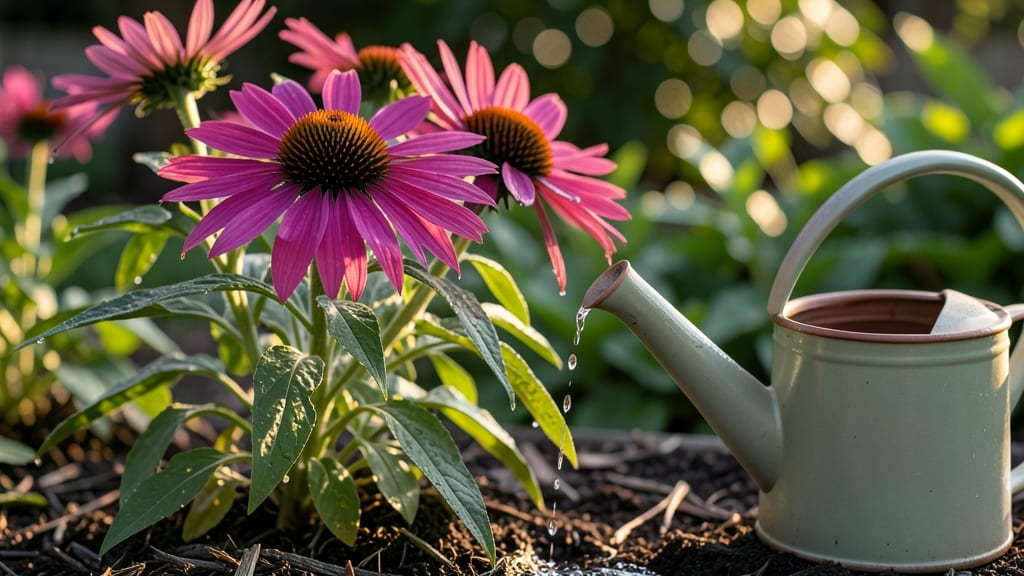
To water coneflowers properly, aim for deep soakings every 7 to 14 days once they’re established — the key is keeping the soil evenly moist without drowning the roots.
Struggling to keep your coneflowers vibrant and blooming? The secret lies in mastering their watering schedule — too much or too little, and you’ll miss out on those stunning purple blooms all season long.
Coneflowers 🌸 thrive in well-draining soil, so they hate soggy roots but also can’t handle drought. The trick is checking soil moisture before watering, especially in Zone 6a where summers can swing from dry to sudden downpours.
Below, I’ll break down the perfect watering routine by season, how to tell if you’re over- or underwatering, and the simple tools (like mulch or a moisture meter) that make it effortless.
Ideal watering schedule for coneflowers by season and soil type
Coneflowers (Echinacea) are drought-tolerant powerhouses once established, but their watering needs shift dramatically by season and soil type. Overwatering smothers roots, while underwatering stresses blooms—both sabotage those iconic purple cones. Let’s break down the perfect watering rhythm to keep your plants thriving year-round.
Your coneflower’s watering schedule hinges on two critical factors: seasonal heat and soil drainage. In well-draining soil, roots stay aerated and avoid rot, while clay-heavy soil demands more caution to prevent soggy roots.
Meanwhile, summer’s intense heat (especially in arid climates) forces frequent watering, while winter’s dormancy calls for near-zero moisture.
Below, I’ve mapped out a season-by-season, soil-by-soil watering guide, plus pro tips to adjust for your local climate zone. Use this as your blueprint to water confidently—no more guesswork!
For newly planted coneflowers, consistency is key. Water deeply every 5-7 days during the first 6-8 weeks to encourage root growth. Use a soaker hose or drip irrigation to deliver moisture directly to the soil, avoiding wetting leaves (which promotes fungal diseases).
In containers, check soil moisture daily—pots dry out 3x faster than ground soil.
In hot, dry climates (USDA Zones 7-10), coneflowers may need daily watering in peak summer if soil feels bone-dry by mid-morning. A quick test: Stick your finger 2 inches deep—if it’s dry, water!
In humid zones (like the Southeast), reduce frequency to every 10-14 days and watch for yellowing leaves,
How to test soil moisture like a pro: the 3-Finger method
Mastering the 3-finger method for testing soil moisture is my go-to trick for keeping coneflowers thriving. This simple technique helps you avoid both overwatering and underwatering, which can stunt growth or lead to root rot.
Unlike guesswork, this method gives you real-time data on your plant’s needs—no fancy tools required!
Start by choosing a representative spot near your coneflowers, away from the plant’s base where moisture might pool. Use your index, middle, and ring fingers to gauge moisture levels.
The key is consistency—always test at the same depth and time of day for accurate results. This method works best in the morning when soil conditions are stable.
- Dry (no moisture): Water immediately.
- Damp (slightly moist): Water in 2-3 days.
- Wet (clinging moisture): Hold off on watering.
Watch for visual cues that confirm your finger test. Yellowing leaves or wilted foliage often signal underwatering, while mushy stems or foul odors from the soil mean you’re overdoing it.
I’ve learned the hard way—overwatering is just as deadly as neglect! Pair this method with mulching (2-3 inches of organic mulch) to retain moisture and regulate soil temperature.
Pro tip: Keep a watering journal to track your coneflowers’ response. Note when you water, how the soil felt, and any changes in plant health. Over time, you’ll develop an intuition for their needs.
Remember, coneflowers are resilient, but consistency is key—especially during their first growing season when roots are still developing.
Once you’ve nailed the 3-finger method, you’ll never second-guess your watering routine again. Your coneflowers will reward you with bold blooms and vibrant foliage all season long—no more brown stems or missed flowers! 🌸