
Light Requirements
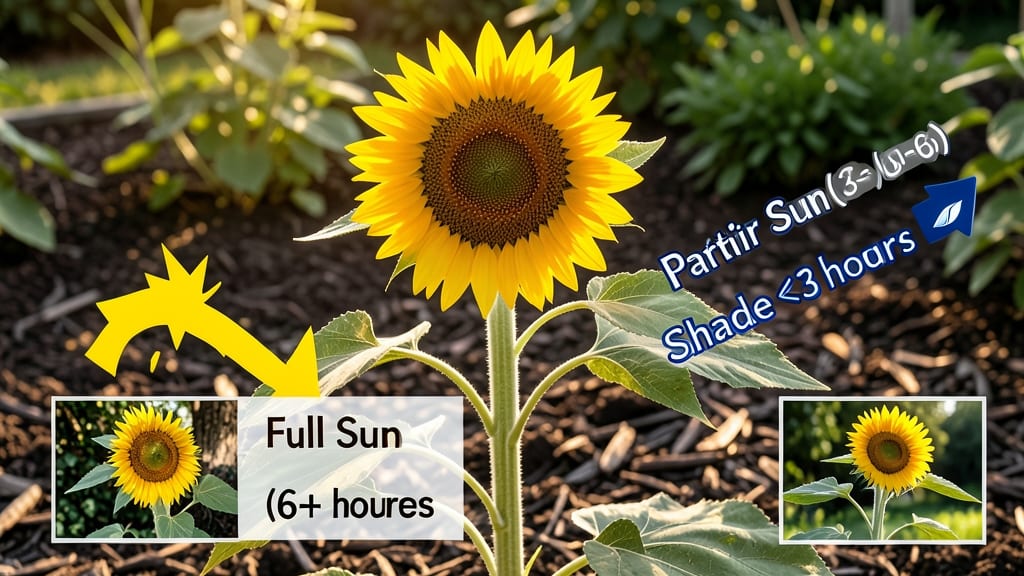
A sunflower needs 6 to 8 hours of direct sunlight daily to reach its towering potential, but too little light can leave your plants struggling to grow.
Picture this: a 10-foot giant bending toward the sun, its petals barely opening because it’s been tucked in the shade of a neighbor’s fence. That’s the difference between a thriving sunflower and one that’s barely standing.
If you’re dreaming of a sunflower field that reaches for the sky, you’ll want to know exactly how much light these plants crave—and how to give it to them, even in less-than-ideal spots.
Most gardeners assume sunflowers are simple to grow, but light is the most important factor in determining their height, bloom size, and even seed production. Without enough sunlight, you might end up with leggy stems, sparse flowers, or plants that never even bother to flower.
The good news? With the right placement and a few smart adjustments, you can coax even the tallest varieties to shine—whether you’re in a sunny backyard or a city balcony.
In this guide, I’ll break down the exact light requirements for every stage of growth, how to spot when your sunflowers are light-deprived, and the best ways to maximize their exposure—even if your space isn’t exactly basking in full sun. Ready to grow sunflowers that reach for the clouds?

Sunflower light requirements: how many hours of sun for optimal growth
Sunflowers are sun worshippers—they crave sunlight like a desert plant craves water. Without enough light, they’ll grow leggy, weak, and produce tiny, sad blooms instead of the towering giants you envision.
The good news? Sunflowers are one of the easiest plants to satisfy when it comes to sunlight, but getting the details right makes all the difference in their height and bloom size.
Most gardeners know sunflowers need full sun, but what does that really mean? Is 6 hours enough, or do they need 8+? The answer changes depending on the growth stage—seedlings, flowering plants, and mature stalks all have slightly different needs.
Let’s break it down so you can give your sunflowers exactly what they crave to reach their full potential.
| Growth Stage | Minimum Sunlight Hours | Ideal Sunlight Hours | Key Notes |
|---|---|---|---|
| Seedlings (0-4 weeks) | 4-6 hours | 6-8 hours | Use shade cloth if direct sun is intense; prevent overheating. |
| Vegetative Growth (4-8 weeks) | 6 hours | 8+ hours | Critical for stem strength; minimum 6 hours or stems will weaken. |
| Flowering Stage (8-12 weeks) | 8 hours | 10+ hours | Maximum bloom size requires full sun; buds may abort with <6 hours. |
| Maturity (12+ weeks) | 6 hours | 8+ hours | Seed development slows with <6 hours; reduce watering as stalks dry. |
First, let’s clarify what full sun and partial shade mean for sunflowers. Most gardeners define full sun as 6+ hours of direct sunlight, but sunflowers are not your average plant.
They perform best with 8+ hours daily, especially during their flowering stage, when they’re building energy for those massive blooms.
If you’re measuring sunlight in your garden, use a sunlight tracker for a week to see how many hours each spot gets. Place a white board or reflective surface where you plan to plant—if it’s hot to the touch by midday, that’s a full-sun spot.
Sunflowers will lean toward light, so rotate containers or thin seedlings to keep them straight.
For partial shade (3-6 hours of sun), only dwarf varieties like 'Teddy Bear' or 'Moulin Rouge' will thrive. Standard sunflowers grown in shade will produce tiny flowers on weak stems that flop over.
If your garden only gets 4-5 hours of sun, consider reflective surfaces (like white walls or mirrors) to bounce extra light onto your plants.
One common mistake is assuming morning sun alone is enough. Sunflowers need afternoon sun too—those golden hours (2 PM–5 PM) are when they soak up the most energy.
If your sunflowers are only getting morning light, their stems will stretch toward the sky in a desperate bid for more, creating weak, top-heavy plants that snap in wind or rain.
In urban gardens or small spaces, maximize light with south-facing containers. Black pots absorb heat and can scorch seedlings, so opt for light-colored containers or raised beds with good airflow.
If you’re growing sunflowers indoors near a window, a south-facing window is ideal—place them within 1 foot of the glass for best results.
Pro tip: If you notice your sunflowers leaning dramatically or have small, pale leaves, they’re begging for more light. Move them to a sunnier spot immediately—sunflowers can recover quickly if given proper light, but prolonged deficiency stunts growth permanently.
Remember, sunflowers aren’t just about height—they’re about vibrant blooms and structural beauty. Give them the sunlight they crave, and they’ll reward you with 10-foot-tall masterpieces that turn every garden into a sun-drenched paradise. 🌻
Signs your sunflowers aren’t getting enough light (and how to fix it)
Sunflowers are sun worshippers, and when they don’t get enough light, they’ll show you in dramatic ways. Pale, leggy stems and small, sparse leaves are classic red flags. Even worse, your once-promising seedlings might stretch unnaturally toward any available light source—a condition called etiolation.
This isn’t just cosmetic; it weakens the plant’s structure, making it more prone to falling over or snapping in wind.
Another dead giveaway? Flower buds that refuse to open or produce tiny, underdeveloped blooms. Sunflowers need 6-8 hours of direct sunlight daily to reach their full potential, and anything less will leave them stunted and frustrated.
If your sunflowers look like they’re reaching for the sky but never quite get there, it’s time to diagnose their light situation.
Sunflowers are full-sun plants, requiring at least 6-8 hours of direct sunlight daily for optimal growth. Less than 4 hours of sunlight will result in weak stems, poor flowering, and stunted growth. Even partial shade (3-6 hours of sun) can reduce their height and seed production by up to 50%.
💡 Pro Tip: Use a sunlight tracker or observe your garden’s light patterns for a full week to accurately measure exposure.
If your sunflowers are already showing light deficiency symptoms, don’t panic—there are ways to revive their growth. First, relocate them immediately to a sunnier spot in your garden.
If you’re growing them in containers, move them to a south-facing balcony or patio where they can soak up more rays. Even a 1-2 hour shift in their daily sunlight exposure can make a noticeable difference within a week.
For gardeners with limited outdoor space, consider supplementing natural light with grow lights. A LED grow light placed 12-18 inches above your sunflowers for 12-14 hours daily can mimic full sun conditions.
Look for lights with a full-spectrum range (400-700nm) to support both leafy growth and flowering. Just be sure to keep the light close—sunflowers need intensity, not just duration.
If your sunflowers are already too tall and weak to transplant, focus on supporting their stems with stakes or cages to prevent them from toppling. You can also prune lower leaves to encourage airflow and light penetration to the upper canopy.
While this won’t fix the underlying light issue, it’ll help your sunflowers maximize the light they do receive and reduce stress.
For future plantings, consider dwarf or low-light sunflower varieties like 'Teddy Bear' or 'Moulin Rouge', which tolerate partial shade better than standard varieties. These shorter, bushier types are perfect for urban gardens or indoor growing and still produce stunning blooms—just with less dramatic height.
Pair them with a reflective surface (like white walls or mirrors) to bounce extra light onto their leaves.
Remember, sunflowers are resilient plants, and with the right adjustments, they can bounce back from light deprivation. Start by assessing their current conditions, then take corrective action—whether it’s relocating, supplementing light, or choosing better-suited varieties.
Your sunflowers will thank you with stronger stems, bigger blooms, and that classic sunflower joy we all love. 🌻