
Trees
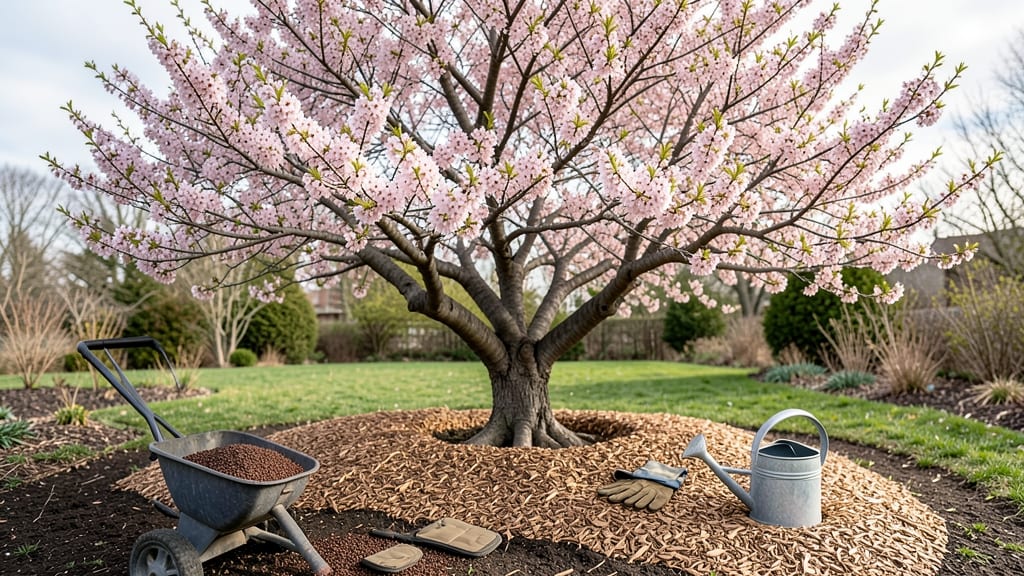
To keep your flowering cherry tree 🌸 blooming spectacularly, the right fertilizer and timing are the key to vibrant, long-lasting flowers.
Picture this: You’ve waited years for your tree to reach its full glory, only to be met with sparse blooms or leaves instead of blossoms. The issue isn’t always sunlight or water—it’s often what’s missing (or overdone) in the soil.
Flowering cherry trees thrive when fed with a balanced approach, but timing matters just as much as the type. Too much fertilizer at the wrong time can actually stunt those dreamy spring blooms, while the right schedule keeps your tree healthy and bursting with color.
In this guide, I’ll walk you through the best fertilizers for your tree, the perfect seasonal schedule, and how to avoid common mistakes that could leave your cherry tree underwhelming.
Best fertilizers for flowering cherry trees by type and nutrient needs
Flowering cherry trees (Prunus serrulata) thrive when given the right nutrients, but choosing the wrong fertilizer can stunt blooms or harm roots. These trees need a balanced approach with moderate nitrogen, phosphorus for blooms, and potassium for root strength.
Organic options build soil health over time, while synthetics provide quick results—but both have trade-offs for your tree’s delicate balance.
One common mistake is using high-nitrogen fertilizers designed for leafy growth, like lawn fertilizers. These can produce lush foliage at the expense of flower production. Instead, aim for a 10-10-10 or 8-8-8 NPK ratio to support both blooms and overall health.
Micronutrients like iron, magnesium, and zinc also play critical roles in preventing yellowing leaves or poor bud formation.
The best time to fertilize is early spring, just as buds begin to swell. This timing ensures nutrients are available when the tree needs them most for flowering and new growth.
Avoid fertilizing in late summer or fall, as this can encourage tender new growth that won’t harden off before winter, making your tree vulnerable to cold damage.
Young trees (under 3 years old) need gentler feeding—half the recommended dose—to avoid root burn. Mature trees can handle more, but never exceed 1 pound of nitrogen per 100 square feet annually. Over-fertilizing leads to salt buildup in the soil, which can burn roots and reduce flowering.
Now, let’s compare your options: organic fertilizers like compost, fish emulsion, or bone meal release nutrients slowly, improving soil structure. Synthetic fertilizers like slow-release granules or liquid blooming formulas provide immediate results but require precise dosing. Below, see how they stack up for your flowering cherry’s needs.
For organic options, compost is my top recommendation—it mimics natural forest floor conditions and improves soil aeration. Mix 2-3 inches into the top 6 inches of soil in early spring. If you notice yellowing leaves, a foliar spray of chelated iron can correct deficiencies without overloading the soil.
Synthetic fertilizers like 10-10-10 granules are ideal for quick results, especially if your tree has poor blooms or sparse foliage. Apply them in early spring and again after flowering, but always water deeply afterward to prevent root burn.
Avoid "weed-and-feed" products—they’re designed for lawns and can harm your tree’s delicate root system.
Micronutrients are often overlooked but critical. A Epsom salt spray (1 tbsp per gallon) in late spring can boost magnesium, while kelp meal provides trace minerals for stress resistance. Always follow package instructions—overapplying even micronutrients can cause toxicity.
Pro tip: Test your soil’s pH (6.0-7.0 ideal) before fertilizing. Acidic soil (below 6.0) can lock out nutrients like iron and zinc, even if you’re applying fertilizer. Adjust with lime (to raise pH) or sulfur (to lower pH) as needed, and retest in 2-3 months.
Remember, your flowering cherry’s root system is shallow, so focus on slow-release nutrients and organic matter to prevent nutrient spikes. A little planning now means vibrant blooms for decades—not just this spring.
Seasonal fertilizing schedule: when and how to feed for maximum blooms
Flowering cherry trees demand a precise fertilizing schedule to produce their iconic spring blooms. Unlike fast-growing plants, these trees need nutrient timing that aligns with their natural growth cycles.
Over-fertilizing in summer can lead to weak wood and fewer flowers next year, while skipping spring feedings starves the tree of the phosphorus and potassium needed for blooms. Let’s map out the perfect seasonal plan.
The key is feeding before blooms appear and after flowering—never during summer dormancy. Young trees (under 5 years) need more frequent feeding, while mature trees benefit from light applications spaced further apart. Below is your month-by-month guide, tailored to both age groups.
🌱 Seasonal Fertilizing Schedule
- Early Spring (March-April): Apply a balanced 10-10-10 fertilizer when buds swell. Young trees: ½ cup per 10 sqft; Mature trees: 1 cup per 10 sqft.
- Late Spring (May-June): Feed again after blooms fade with a low-nitrogen fertilizer (5-10-10) to encourage root growth. Young trees: ¼ cup per 10 sqft; Mature trees: skip or use half-strength.
- Summer (July-August): No fertilization. Trees enter dormancy; feeding now promotes leafy growth at the expense of future blooms.
- Fall (September-October): Apply compost or slow-release granules (organic option) to replenish soil. Young trees: 1 cup per 10 sqft; Mature trees: 2 cups per 10 sqft.
- Winter (November-February): No feeding. Trees are dormant; any fertilizer applied now will leach into groundwater.
For young trees, split the spring dose into two applications—once in March and again in April—to support rapid growth without overwhelming their roots. Mature trees, on the other hand, thrive on minimal feeding—overdoing it can lead to excessive leaf growth and fewer blooms.
Always water deeply after applying fertilizer to help nutrients reach the roots.
Pro tip: Mix a handful of bone meal into the soil in early spring to boost phosphorus, which is critical for flower development. This works especially well for trees that struggle to bloom.
Pair it with a light mulch layer (2-3 inches) of compost to retain moisture and improve soil structure.
Watch your tree’s response closely. If new growth appears too fast after feeding, you’ve overdone it—cut back on future applications. Conversely, if blooms are sparse or leaves yellow, your tree may need a micronutrient boost like iron or magnesium. Adjust accordingly for next season.
With this schedule, your flowering cherry tree will reward you with vibrant, abundant blooms year after year—no guesswork required. 🌸