
Fertilization
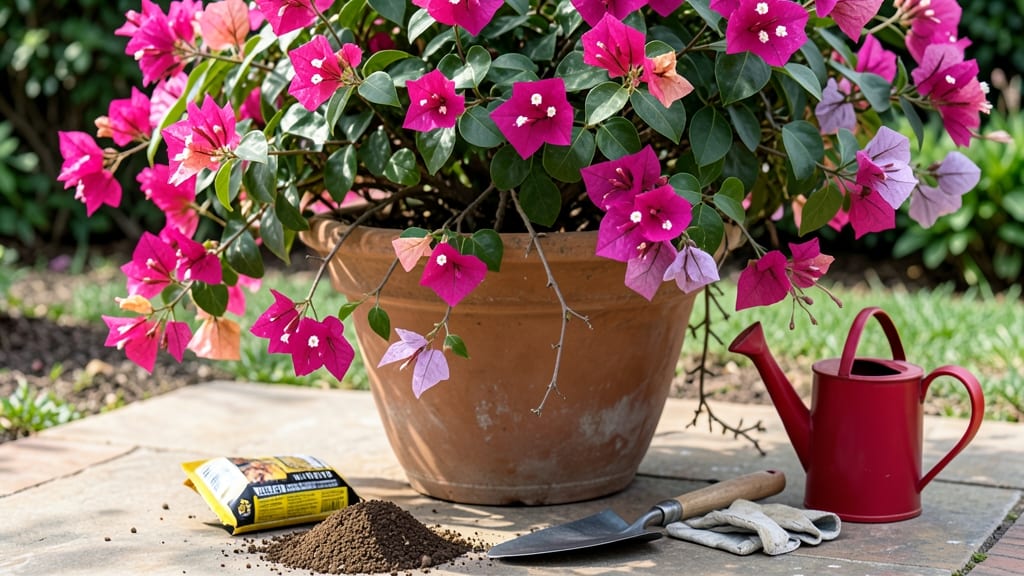
To get bougainvillea flowering, you need the right fertilizer balance—specifically a low-nitrogen, high-phosphorus formula that triggers blooms without feeding the leaves.
Picture this: your 🌸 bougainvillea sits in full sun, but instead of vibrant blooms, it just grows lush green vines. That’s a classic sign of over-fertilizing with nitrogen-heavy mixes, which pushes foliage at the expense of flowers.
The fix? A targeted approach to nutrients that puts phosphorus and potassium front and center.
Bougainvillea thrives in USDA Zones 9b-11, where it can flower year-round with the right care. The key is feeding it a balanced but phosphorus-rich fertilizer—like a 7-9-5 or 10-10-10 blend—every 6-8 weeks during active growth.
Too much nitrogen, and you’ll end up with a leafy monster; too little phosphorus, and those showstopping blooms won’t appear.
In this guide, I’ll break down the best organic and synthetic fertilizers for bougainvillea, how to adjust ratios for peak flowering, and the 3 biggest mistakes that kill blooms—so you can finally get the nonstop color you’re dreaming of.
The ideal NPK ratio for bougainvillea flowering: science-backed fertilizer breakdown
If you've ever stared at your bougainvillea with sparse blooms and lush green leaves instead of vibrant flowers, the culprit is likely your NPK ratio. Bougainvilleas thrive on a low-nitrogen, high-phosphorus diet—exactly the opposite of what most gardeners instinctively reach for.
The key is understanding how each nutrient influences growth and flowering, then adjusting your fertilizer to match your plant's needs at every stage.
Nitrogen (N) fuels leafy growth, while phosphorus (P) and potassium (K) are the power duo behind flower production and root strength.
For bougainvilleas, a 5-10-10 or 7-9-5 ratio is ideal during flowering, but many gardeners accidentally use high-nitrogen lawn fertilizers, which send their plants into overdrive with foliage while starving the blooms. Let's break down the science and how to apply it to your garden.
Bougainvilleas are finicky about their nutrient balance. Too much nitrogen results in leafy monsters with few flowers, while too little phosphorus means weak stems and stunted blooms. The trick is feeding them just enough phosphorus to encourage flowering without overdoing potassium, which can cause salt buildup in containers. Here’s the science-backed breakdown you need to transform your bougainvillea into a nonstop blooming powerhouse.
| Growth Stage | Recommended NPK Ratio | Phosphorus Focus | Application Frequency | Key Notes |
|---|---|---|---|---|
| Vegetative Growth (Spring) | 5-10-10 or 6-12-12 | Moderate phosphorus | Every 4-6 weeks | Encourages root and leaf development |
| Flowering Stage (Summer-Fall) | 7-9-5 or 10-10-10 | High phosphorus | Every 3-4 weeks | Triggers abundant blooms; reduce nitrogen |
| Dormancy (Winter) | 0-0-0 (No fertilizer) | None | N/A | Allow natural rest in cooler zones |
| Post-Pruning (Late Winter) | 5-10-10 | Moderate phosphorus | Once after pruning | Stimulates new growth |
When shopping for fertilizers, look for labels with low first numbers (nitrogen) and higher second numbers (phosphorus). A 7-9-5 ratio is perfect for flowering bougainvilleas, but if you only find a 10-10-10 or 20-20-20 fertilizer, dilute it to half strength.
For example, use only 1/2 teaspoon per gallon of water instead of the full dose. This prevents nutrient burn while still providing enough phosphorus to encourage blooms.
Organic options like bone meal (3-15-0) or fish emulsion (5-1-1) are excellent for bougainvilleas because they release phosphorus slowly. Mix 1 tablespoon of bone meal into the soil every 6-8 weeks during the flowering season.
For container plants, blend bone meal into the top inch of soil or use a liquid bloom booster every 4 weeks. The key is consistency—bougainvilleas respond best to steady, moderate feeding rather than occasional heavy doses.
Adjusting your fertilizer approach based on the season is critical. In spring, when bougainvilleas are recovering from winter dormancy, a 5-10-10 ratio supports new growth. By summer, switch to a 7-9-5 ratio to push flowering.
In fall, reduce feeding entirely in cooler climates or use a light 5-10-10 to prepare for winter. This seasonal shift ensures your bougainvillea never wastes energy on leaves when it should be producing those showstopping blooms.
One common mistake is assuming that more fertilizer equals more flowers. In reality, over-fertilizing with phosphorus can lead to salt buildup in containers, which damages roots. Always water thoroughly after applying fertilizer to help nutrients penetrate the soil and rinse away excess salts.
For container plants, flush the soil with water every 3-
Best organic and synthetic fertilizers for bougainvillea blooms: top 5 picks
Choosing the right bougainvillea fertilizer can transform your plant from a leafy green shrub into a nonstop flowering powerhouse. The key lies in phosphorus-rich fertilizers that encourage blooms without promoting excessive foliage.
Whether you prefer organic options or synthetic blends, understanding their unique benefits will help you make the best choice for your sun-loving bougainvillea.
Bougainvilleas thrive on a low-nitrogen, high-phosphorus diet, especially during their flowering season. Organic options like bone meal and fish emulsion provide slow-release nutrients, while synthetic fertilizers like 7-9-5 bloom boosters deliver immediate results.
Each has its own cost, application method, and long-term benefits for your plant's health and bloom production.
Organic vs. Synthetic Fertilizers for Bougainvillea Blooms
Organic Fertilizers
- ✅ Pros: Improves soil health, slow-release nutrients, eco-friendly
- ✅ Best for: Long-term soil fertility, sustainable gardening
- ❌ Cons: Slower results, may require more frequent applications
- ❌ Watch for: Over-application can cause nutrient imbalances
Synthetic Fertilizers
- ✅ Pros: Fast-acting, precise nutrient ratios, cost-effective
- ✅ Best for: Immediate bloom boosts, controlled feeding schedules
- ❌ Cons: Can harm soil structure, risk of over-fertilization
- ❌ Watch for: Salt buildup in soil over time
For organic options, bone meal is my top pick—it's packed with 3-4-0 NPK and triggers root growth while promoting abundant flowering. Apply 1-2 tablespoons per plant every 6-8 weeks during the growing season.
Another favorite is fish emulsion, which provides a balanced nutrient profile (5-1-1 NPK) and improves soil structure over time.
If you prefer synthetic fertilizers, a 7-9-5 bloom booster is ideal for bougainvilleas. The high phosphorus content (9%) encourages vibrant blooms, while the moderate potassium supports overall plant health.
Use it every 4-6 weeks during the growing season, following the package instructions for dosage. For container-grown bougainvilleas, a water-soluble fertilizer like 10-30-20 makes application easier and ensures quick uptake.
To maximize blooms, I recommend alternating between organic and synthetic fertilizers throughout the year. Start with a phosphorus-rich synthetic in early spring to kickstart flowering, then switch to organic options in late summer to prepare for the next blooming cycle.
Always water thoroughly after applying fertilizer to prevent root burn and ensure nutrients reach the roots.
Remember, the best fertilizer for your bougainvillea depends on your gardening goals. If you prioritize soil health and sustainability, organic options are the way to go. For immediate, dramatic blooms, synthetic fertilizers deliver faster results.
Whichever you choose, consistency is key—stick to a regular feeding schedule, and your bougainvillea will reward you with season-long color.