
Vegetables
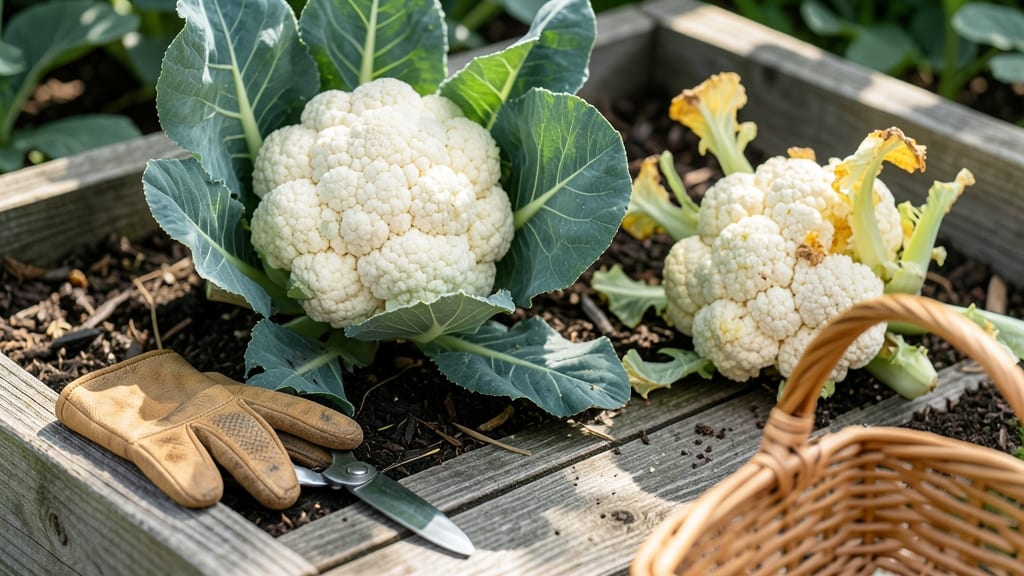
You’ll know when to pick cauliflower by watching for firm heads that are 6-8 inches wide and still tightly closed 🥬—wait too long, and you’ll end up with bitter, open curds instead of that perfect snow-white center.
Harvesting cauliflower at the right time can mean the difference between a crisp, flavorful head and a bitter, overgrown mess—so how do you know when those curds are ready?
Most varieties mature in 70-100 days, but heat, drought, or pests can speed up bolting, so check your plants daily in late spring and summer. Look for a head that’s fully formed but still firm to the touch—if it starts splitting or yellowing, you’ve missed the window.
Below, I’ll break down the exact visual cues (size, color, leaf health) and environmental factors (temperature, frost risk) to help you time your harvest perfectly—plus how to avoid common mistakes that ruin your crop.
How to identify perfectly ripe cauliflower by size, color, and curd formation
Harvesting cauliflower at the right moment transforms your garden into a flavor powerhouse. The ideal harvest window occurs when the curds are firm and tightly packed, but before they start opening.
Timing is everything—wait too long, and you’ll end up with yellowing, bitter heads that fall apart at the touch. Pay attention to these three key indicators to ensure peak flavor and texture.
First, check the head size, which should measure between 6-8 inches in diameter for most varieties. Smaller heads (under 5 inches) are typically underdeveloped, while larger ones (over 10 inches) often signal overmaturity.
The diameter rule applies to both standard white cauliflower and colorful varieties like purple or orange. Use a tape measure for precision, especially if growing multiple plants.
Next, examine the color consistency of the curds. A perfectly ripe head will display uniform color throughout—whether that’s creamy white, deep purple, or golden orange. Look for no green streaks or yellowing patches, which indicate either immature growth or stress from heat.
Even in heirloom varieties, inconsistent coloring is a red flag that the head isn’t ready.
| Cue | Ready Indicator | Not Ready Sign | Action |
|---|---|---|---|
| Head Size | 6-8 inches diameter | Under 5" or over 10" | Harvest immediately |
| Color | Uniform, vibrant hue | Green streaks or yellowing | Wait 2-3 days |
| Curd Formation | Tight, firm curds | Loose, opening florets | Harvest now or lose quality |
| Leaf Condition | Green, healthy leaves | Yellowing or wilting | Check for pests/disease |
| Head Firmness | Solid to touch | Squishy or spongy | Harvest immediately |
The curd formation is your final checkpoint. Run your fingers gently over the head—ready curds should feel firm and tightly packed, almost like a solid mass. If the florets feel loose or crumbly, the head has already started opening, which means it’s past its prime.
This is especially critical for white varieties, which turn bitter faster than colored types once they begin to open.
Don’t overlook the outer leaves, which should remain green and healthy. Yellowing or crispy edges signal nutrient stress or drought conditions, both of which can affect head quality.
If the leaves look unthrifty, address the issue (like increasing water or adding fertilizer) before harvesting. Healthy leaves mean the head is still actively growing and hasn’t been compromised.
Regional growing conditions play a role in timing. In cooler climates (USDA Zones 3-5), cauliflower often matures slower due to shorter growing seasons, so monitor heads closely in late summer.
In warmer zones (Zones 7-10), heat stress can accelerate ripening—watch for premature bolting (flower stalk formation) and harvest earlier than expected. Always adjust your timing based
Common mistakes that cause cauliflower to bolt or overmature (and how to avoid them)
Even with perfect growing conditions, cauliflower can still turn bitter, split heads, or bolt prematurely if you miss key environmental cues. Heat stress, inconsistent watering, and nutrient imbalances are the top culprits behind these issues. Understanding these triggers helps you intervene before your crop becomes unusable.
One of the most frustrating signs is yellowing leaves paired with a loose, open head—this signals your plant is bolting due to temperature swings or drought stress.
I’ve seen this happen even in well-watered gardens when afternoon temps spike above 85°F (29°C). The plant prioritizes seed production over head formation when stressed.
Another red flag is split heads, often caused by uneven moisture or rapid growth spurts. This happens when roots struggle to supply enough water to the expanding head, leading to cracks. Even organic gardeners sometimes overlook this until it’s too late—don’t let that happen to you!
⚠️ Critical Warning: When to Harvest Before Bolting Strikes
If your cauliflower shows any of these signs, harvest immediately or it’s game over:
- 🌡️ Temperatures consistently above 80°F (27°C) for 3+ days
- 🌱 Flower stalks beginning to emerge from the center
- 💧 Leaves curling or wilting despite regular watering
- 🟡 Head color shifting from pure white/purple to yellow or brown
Pro Tip:
Use shade cloth (30-50%) during heatwaves to buy time for harvest. Even a few extra days can mean the difference between a perfect head and a bitter disappointment.
Pests like cabbage worms and aphids also accelerate bolting by weakening plants. I’ve lost entire rows to these critters when I delayed intervention. Start monitoring leaves at the 4-6 week mark—that’s when they’re most vulnerable. Use row covers or neem oil sprays as a preventive measure.
Don’t forget about soil fertility. Too much nitrogen early in the season leads to lush foliage but stunted heads. Instead, focus on a balanced 5-10-10 fertilizer applied 4-6 weeks after transplanting. Over-fertilizing later in the season can also trigger premature bolting by encouraging rapid growth.
For container growers, root-bound plants are another common issue. Cauliflower needs 12+ inches of depth—any less and roots compete for space, stressing the plant. Always choose 5-gallon pots minimum and use well-draining mix to prevent waterlogging.
By addressing these 5 key triggers—heat, pests, water fluctuations, nutrient imbalances, and container constraints—you’ll dramatically reduce your risk of bolting. The payoff? Firm, flavorful heads that stay crisp for weeks in storage. Happy harvesting!