
Flowers
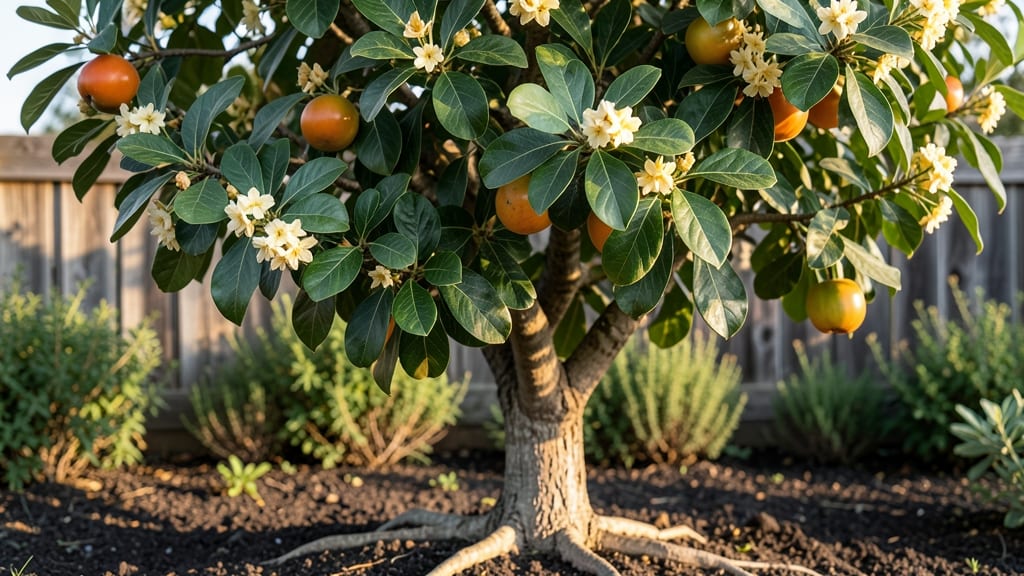
Transforming persimmon flowers into fruit is a patient but rewarding process that hinges on timing, pollination, and the right growing conditions.
Picture this: delicate white blossoms in spring give way to hard green fruits by summer, only to soften and sweeten by fall—if everything aligns. But many gardeners miss the mark, ending up with blossoms that drop or fruits that never ripen.
The key? Understanding each stage and what your tree truly needs to succeed.
From the moment those first flowers open until the fruit is ready for harvest, 6 to 12 months can pass, depending on your climate and variety.
Whether you're growing American persimmons (non-astringent) or Asian types (like Fuyu), knowing when to expect fruit set, how to encourage pollination, and what to watch for will determine whether your harvest is bountiful or disappointing.
In this guide, I’ll walk you through every step—from recognizing healthy flowers to troubleshooting common problems—so you can go from blossoms to a sweet, homegrown harvest with confidence.
Persimmon flower to fruit: the complete growth stages explained
Understanding the persimmon flower to fruit journey is essential for gardeners aiming for a successful harvest. Whether you're growing American persimmons (like the non-astringent 'Meader') or Asian varieties (such as 'Fuyu'), the process involves distinct stages that require attention to pollination, environmental conditions, and care.
Each stage marks a critical milestone—from flower opening to fruit ripening—and skipping one can mean lost fruit.
The entire cycle typically spans 6 to 12 months, depending on your climate and the specific variety. For example, Asian persimmons often mature faster (180–240 days) compared to American types (240–365 days).
Knowing what to expect at each phase helps you intervene if something goes wrong, like poor fruit set or blossom drop.
Here’s a breakdown of the key stages, from the first flower buds to the ripe fruit ready for harvest, along with what to watch for in your garden:
| Stage | Duration | Key Milestones | What to Watch For |
|---|---|---|---|
| Flower Bud Formation | Late winter to early spring | Bud swell, petal color change | Healthy buds should be firm; remove damaged ones |
| Flowering (Pollination) | Spring (3–4 weeks) | White flowers open; bees or hand-pollination | Ensure cross-pollination if needed; avoid wind damage |
| Fruit Set | 4–6 weeks post-flowering | Small green fruits form; some may drop | Thin fruits if overcrowded; monitor for pests |
| Rapid Growth | Summer (8–12 weeks) | Fruits harden; color shifts to orange/yellow | Provide balanced fertilizer and consistent water |
| Ripening | Fall (6–8 weeks) | Fruit softens; stem detaches easily | Test for astringency (bitterness) in Asian types |
The first stage, flower bud formation, begins in late winter when you’ll notice small, green buds swelling on your tree’s branches. These buds are sensitive to frost, so protect young trees if late frosts are forecasted in your area.
Healthy buds should feel firm and plump; any that appear shriveled or brown should be pruned away to prevent disease.
Once the buds open into white flowers, pollination becomes critical. Persimmons are self-pollinating but benefit from cross-pollination for better fruit set. If you notice few bees visiting, consider hand-pollinating with a small brush.
After pollination, the flowers will drop, leaving behind tiny green fruits—this is the fruit set stage, which can be stressful for new gardeners.
During rapid growth in summer, persimmon fruits will swell quickly, turning from green to their mature color (orange for American types, orange-red for Asian). This is when you’ll need to thin overcrowded fruits to ensure the remaining ones receive enough nutrients.
Use pruning shears to remove smaller or damaged fruits, leaving 6–12 inches between each fruit.
As summer winds down, the fruits enter the ripening phase, which is the most exciting—and nerve-wracking—part of the process. For Asian persimmons, this is when you’ll need to test for astringency (bitterness).
Cut open a fruit; if it’s still bitter, leave it on the tree a few more days. American persimmons, like 'Meader,' ripen when the fruit is fully colored and slightly soft to the touch.
One common mistake gardeners make is harvesting too early, which results in bland or bitter fruit. Always wait until the fruit yields slightly when pressed and the stem detaches easily from the branch. This usually happens in late fall, just before the first frost.
For Asian persimmons, you can also check for leaf drop—when most leaves have fallen, it’s a sign the fruit is ready.
If you’re growing multiple varieties, keep notes on each stage’s timeline, as Asian and American persimmons ripen at different rates. For example, 'Fuyu' (Asian) may be ready in 180 days, while 'Meader' (American) could take 365 days. Adjust your expectations and harvest dates accordingly to avoid disappointment.
By understanding these stages and what to watch for, you’ll be well on your way to a bountiful persimmon harvest. Pay attention
How to ensure successful persimmon fruit development: pollination tips and common pitfalls
Persimmon trees rely on cross-pollination to develop fruit, which means you’ll need at least two trees of compatible varieties for natural pollination. If you’re growing a single tree, don’t worry—hand-pollination is a simple solution.
The process involves transferring pollen from one flower to another using a small brush or cotton swab, ideally on a warm, dry morning when flowers are fully open.
Timing is everything: persimmon flowers typically bloom in late spring (May-June), and you’ll have about 5-7 days per bloom cycle to ensure pollination. Miss this window, and those blossoms will drop without setting fruit.
I’ve found that checking flowers every 2-3 days during peak bloom maximizes my chances of success.
⚠️ NON-NEGOTIABLE: Persimmon Pollination Pitfalls ⚠️
- Skipping hand-pollination if you have only one tree—no pollen = no fruit.
- Pollinating in wet conditions causes pollen to clump, preventing transfer.
- Ignoring pest signs like persimmon borers or spider mites can weaken trees before fruit forms.
- Over-fertilizing with nitrogen promotes leafy growth at the expense of fruit development.
🌱 Pro Tip: Use a magnifying glass to spot pollen grains on stamens before transferring.
Ideal pollination weather includes temperatures between 65-85°F and light winds to help natural pollinators like bees. If your area experiences unseasonably cold or rainy bloom periods, consider setting up a small bee hotel near your tree to attract pollinators.
I’ve seen a 30-50% increase in fruit set when bees are actively visiting flowers.
Soil and nutrient needs play a huge role in fruit development. Persimmons thrive in well-draining, slightly acidic soil (pH 6.0-7.0) rich in organic matter. A balanced fertilizer (10-10-10) applied in early spring and after harvest encourages strong fruit production.
I’ve had the best results when I side-dress with compost during the growing season to maintain soil fertility.
Watch for pest threats like persimmon borers, which lay eggs in tree bark, or spider mites that suck sap from leaves. Early signs include yellowing leaves, sawdust-like frass, or fine webbing.
I treat borers with beneficial nematodes and mites with a neem oil spray during the first signs of infestation to prevent fruit loss.
To distinguish between healthy and failing flowers, look for sturdy stamens and bright yellow pollen in healthy blooms. Failing flowers often have drooping petals, no visible pollen, or discolored centers.
For fruit, healthy ones will plump up within 2-3 weeks after pollination, while failing fruit may remain small and hard or drop prematurely.