
Planting
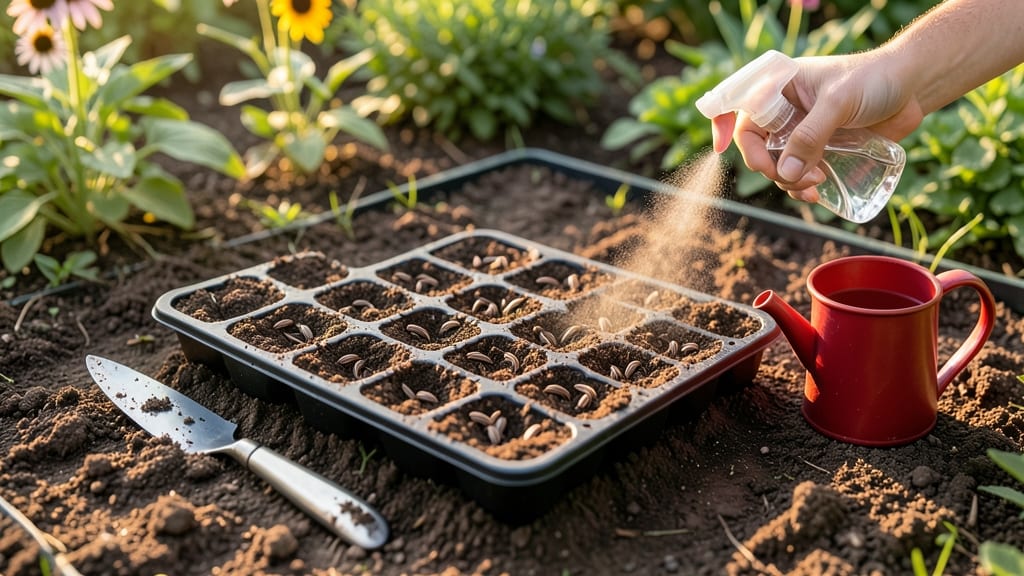
To plant coneflower seeds at the right depth is the first step toward those bold 🌼 blooms you’ve been dreaming of—too shallow, and they’ll dry out; too deep, and they’ll rot before sprouting.
Struggling to coax vibrant coneflowers from tiny seeds? The secret to success lies beneath the soil—planting depth makes all the difference between weak seedlings and thriving blooms.
Most gardeners overcomplicate it, but the truth is simple: a ¼-inch depth works for Zone 6a spring plantings, whether you’re sowing directly or starting indoors. That’s just enough to protect the seed while letting moisture and light reach it.
Below, I’ll walk you through the exact soil prep, spacing tricks, and post-planting care to turn those seeds into 3-foot-tall pollinator magnets by summer.
Optimal coneflower seed planting depth by seed type
Getting your coneflower seeds (Echinacea) to sprout reliably starts with one critical detail: planting depth. Unlike larger seeds, these tiny wildflower seeds need precise placement to avoid rotting or drying out before germination.
The right depth ensures consistent moisture while preventing soil compaction that stunts root growth. For most gardeners, this means ¼-inch depth—but there are exceptions depending on your seed type and soil conditions.
Not all coneflower seeds are created equal. Tiny seeds from packets require gentle handling, while pre-sprouted seeds or transplants demand different approaches. Even the texture of your soil—whether it's sandy, loamy, or clay-heavy—can alter the ideal depth by up to ⅛ inch.
Let’s break down the science behind each scenario so you can plant with confidence and watch those purple blooms thrive from day one.
🌱 Key Insight: Over-planting seeds too deep (beyond ½ inch) can suffocate them, while planting too shallowly (⅛ inch) risks drying out or washing away. The goal is a moisture balance that mimics their natural habitat.
| Seed Type | Optimal Depth | Soil Adjustments | Notes |
|---|---|---|---|
| Tiny Seeds (Packet) | ¼ inch (6mm) | Loamy soil: standard Sandy soil: ⅛ inch deeper Clay soil: ⅛ inch shallower |
Lightly press soil; don’t cover with mulch. |
| Pre-Sprouted Seeds | ⅛ inch (3mm) | Use fine, sterile soil mix | Keep moist with misting; avoid compacting. |
| Transplant Seedlings | Same as container depth | Amend soil with compost | Water deeply after transplanting. |
| Stratified Seeds | ⅛ inch (3mm) | Cold-stratify first for 4-6 weeks | Plant in early spring for best results. |
For tiny coneflower seeds straight from a packet, the ¼-inch rule is your golden standard. Use a seed spacing tool or your finger to create shallow furrows, then sprinkle seeds lightly. Press the soil gently—just enough to ensure contact without compacting.
In sandy soil, which drains too quickly, increase depth by ⅛ inch to retain moisture longer. Conversely, clay soil holds moisture so well you can plant ⅛ inch shallower to prevent rot.
When working with pre-sprouted seeds or those that have undergone cold stratification, reduce depth to just ⅛ inch. These seeds are more delicate and need minimal soil coverage to avoid suffocation.
Use a fine seed-starting mix and keep it consistently moist with a spray bottle—never a watering can—to avoid disturbing the fragile sprouts.
Transplanting seedling coneflowers requires a different approach entirely. The goal here is to minimize root disturbance while ensuring the soil level matches what the seedling experienced in its container.
If the container was 2 inches deep, plant the seedling so the top of its root ball sits ½ inch below soil level. This prevents stem rot while allowing roots to establish quickly in their new home.
Pro Tip: Mark your planting rows with toothpicks or a gardening twine to avoid over-planting. Coneflowers need 12-18 inches of space at maturity, so thin seedlings early to prevent competition. Overcrowding leads to weak stems and fewer blooms—something no gardener wants!
One common mistake is over-watering after planting, which can bury seeds deeper than intended. Instead, use a fine mist to settle soil around seeds without displacing them. For outdoor plantings, water in the early morning to reduce evaporation and fungal risks.
If you’re sowing in containers, ensure drainage holes are present—coneflowers hate soggy roots.
Remember, soil temperature plays a hidden role in depth success. Coneflower seeds germinate best in soil that’s 60-70°F. If your spring soil is cooler, plant seeds ⅛ inch shallower to speed up warmth absorption.
Conversely, in hot climates, a slightly deeper planting (⅜ inch) helps retain moisture during germination.
By mastering these planting depth secrets, you’ll transform your coneflower seeds from fragile specks into hardy perennials that return year after year. Start with the right depth, and your garden will thank you with vibrant blooms from midsummer through fall. Happy planting! 🌼
Soil conditions that affect coneflower seed germination depth
Your coneflower seeds need the perfect soil cocktail to germinate—think of it like baking a cake: too much moisture or heat, and it fails; too little, and it never rises.
The depth you plant them at changes based on whether your soil is sandy, loamy, or clay-heavy, and how well it holds moisture.
In Zone 6a, where spring soils can swing from 40°F to 60°F overnight, the ¼-inch rule works best for average loam—but sandy soils dry out faster, requiring a slightly shallower planting (just ⅛-inch deep) to prevent desiccation.
Meanwhile, heavy clay soils need a ¼-inch to ½-inch depth to protect seeds from crusting over.
Moisture is the wildcard here. If your soil feels like a damp sponge (not soggy), stick to the ¼-inch mark. But in dry climates, pre-soak the seeds for 24 hours and plant ⅛-inch deep to keep them hydrated until germination.
Overwatering? That’s just as deadly as underwatering—your seeds will rot before sprouting.
Planting too shallow (⅛-inch or less) causes seeds to dry out in sandy soil or bake under hot sun. Planting too deep (> ½-inch) suffocates seeds, blocking oxygen and light. Clay soils? Dig ½-inch deep to prevent crusting.
Fix it: Loosen soil with a fork, add compost, and water gently after planting.
Temperature plays a sneaky role too. Coneflower seeds germinate best at 60°F–70°F, but cooler soils (50°F–55°F) slow the process.
If your spring soil is still chilly, stratify seeds for 4–6 weeks in a damp paper towel in the fridge before planting ¼-inch deep—this mimics winter’s natural cold snap and tricks seeds into thinking it’s time to grow.
Organic matter is the secret weapon here. Amend your soil with well-rotted compost or leaf mold to improve drainage and moisture retention. A soil test reveals the pH—aim for 6.0–7.0.
If it’s too acidic (below 6.0), mix in lime; too alkaline (above 7.5), add sulfur. The right pH ensures seeds access nutrients without stress.
Troubleshooting germination failures? Check for these red flags: no sprouts after 3 weeks? Your seeds may be too deep or soil too cold. Moldy soil?
Overwatering or poor drainage. Seedlings collapsing? Damping-off fungus from excess moisture. Adjust depth, space seeds 12 inches apart, and thin seedlings to avoid crowding.
Once your coneflowers break soil, keep them consistently moist (not soggy) and watch them grow into those 3-foot pollinator magnets by summer. The key? Soil prep and depth work together—get it right, and your seeds will thank you with vibrant blooms for years.