
Planting
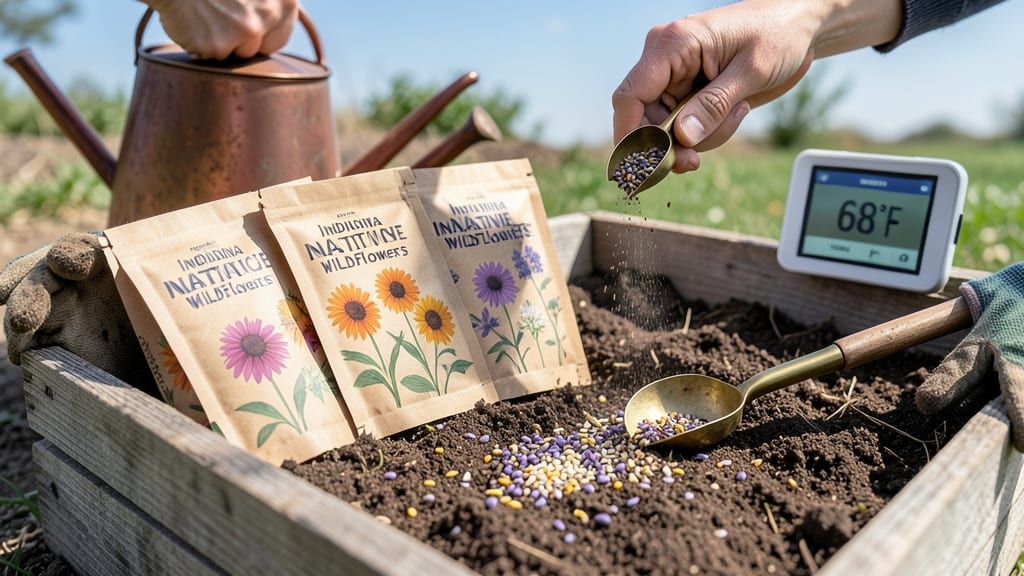
Planting wildflower seeds in Indiana at the right time means the difference between a burst of color by summer and a patch of dirt by next spring.
Indiana’s unpredictable spring weather can turn wildflower planting from a dream into a gamble—but timing your seeds right ensures vibrant blooms from spring to fall without the guesswork.
Most gardeners in zones 5b-6b swear by early spring (March to April) or late summer/fall (September to October) for the best germination rates.
Below, I break down the exact windows for your region, soil prep secrets, and the top wildflower varieties that thrive in Indiana’s climate.
Indiana’s ideal wildflower planting windows: month-by-month breakdown
Indiana’s USDA zones 5b-6b create a unique challenge for wildflower planting—unpredictable frost dates and shifting temperatures demand precision timing. The key is planting when soil temperatures consistently reach 40°F+ and remain frost-free for at least 4-6 weeks.
This ensures seeds germinate before late spring frosts or early fall freezes wipe out tender seedlings.
Most Indiana gardeners focus on spring planting (March-April), but fall planting (October-November) offers cooler soil temperatures and fewer weeds. The secret? Understanding your microclimate—whether you’re in northern Indiana’s zone 5b or southern Indiana’s zone 6b—can shift your planting window by 2-3 weeks.
For example, Evansville’s zone 6b can plant 2 weeks earlier than South Bend’s zone 5b.
Here’s the month-by-month breakdown of Indiana’s best wildflower planting windows, including frost risk analysis and soil temperature targets:
| Month | Planting Window | Soil Temp Target (°F) | Frost Risk | Best For |
|---|---|---|---|---|
| February | Late February (Zone 6b only) | 40-45°F | High (last frost: mid-April) | Early bloomers (e.g., wild violet, hepatica) |
| March | Mid-March (Zone 6b) / Late March (Zone 5b) | 45-50°F | Moderate (30% chance of frost) | Spring ephemerals (e.g., bloodroot, trillium) |
| April | Early April (Zone 6b) / Mid-April (Zone 5b) | 50-55°F | Low (post-last frost) | Sun-loving perennials (e.g., black-eyed Susan, coneflower) |
| May | Late May (backup window) | 60°F+ | None | Annuals (e.g., cosmos, zinnia) |
| September | Early September | 55-60°F | Low (first frost: mid-October) | Fall-blooming perennials (e.g., goldenrod, aster) |
| October | Mid-October (Zone 5b) / Late October (Zone 6b) | 45-50°F | Moderate (50% chance of frost by Nov 1) | Biennials (e.g., foxglove, hollyhock) |
| November | Early November (Zone 6b only) | 40°F+ | High (frost likely by Nov 15) | Cold-hardy species (e.g., winter aconite, snowdrop) |
Spring planting in March-April is ideal for perennial wildflowers like coneflower and butterfly weed, which establish deep roots before summer heat. The soil temperature must stay above 45°F for 7+ days to avoid germination delays. Use a soil thermometer to check—50°F+ is perfect for most seeds.
For annual wildflowers
Soil preparation secrets for Indiana wildflowers: pH, drainage, and native soil mixes
Indiana’s native wildflowers thrive when planted in soil that mimics their natural habitats—whether that’s well-draining clay or sandy loam. The key is balancing pH levels (aim for 6.0–7.0) and improving drainage without smothering delicate seeds. My soil prep routine starts with a simple test to identify your garden’s base conditions.
For clay-heavy soils (common in southern Indiana), I mix in composted pine bark or coarse sand to break up compaction. Northern Indiana’s sandy soils benefit from peat moss or leaf mold to retain moisture. Both amendments should be worked in 6–8 inches deep before planting.
- 🌱 Step 1: Test Soil pH ✅ Use a home pH kit ($10 at garden centers) to check your soil’s acidity. Most Indiana wildflowers prefer neutral to slightly acidic soil (6.0–7.0). If your soil is too alkaline, add sulfur (1 lb per 100 sq ft) 2–3 months before planting.
- 💧 Step 2: Improve Drainage ✅ For clay soils, till in 3 inches of compost + 1 inch of perlite. For sandy soils, blend peat moss with well-rotted manure (50/50 ratio). This creates a loamy texture that holds moisture without suffocating roots.
- ☀️ Step 3: Add Native Soil Mixes ✅ Boost germination with a native soil mix: combine 50% topsoil, 30% compost, and 20% coarse sand. For pollinator-friendly plots, sprinkle crushed limestone chips (¼ inch) to deter pests like slugs.
- 🌿 Step 4: Plant Companion Species ✅ Pair wildflowers with clover or vetch to fix nitrogen in the soil. These legumes improve soil fertility naturally, reducing the need for synthetic fertilizers. Plant them 1–2 weeks before sowing wildflower seeds.
- ✂️ Step 5: Lightly Rake & Mulch ✅ After scattering seeds, use a fine-tooth rake to press them ¼ inch into soil. Top with a thin layer of straw mulch (¼ inch) to conserve moisture and suppress weeds—critical in Indiana’s hot summers.
One of my biggest mistakes was over-amending soil with fresh manure, which can burn wildflower seeds. Instead, I now use aged compost or worm castings for a gentler nutrient boost. These organic amendments also encourage beneficial microbes that help seeds establish faster.
For large-scale plantings (like meadows), consider a no-till approach after the first year. Native wildflowers often self-seed and thrive in undisturbed soil. Just add a 2-inch mulch layer annually to maintain moisture and suppress weeds.
Remember, Indiana’s variable rainfall means your soil prep should prioritize water retention in dry spells and drainage after heavy rains. A well-prepared bed will give your wildflowers the head start they need to outcompete weeds and flourish year after year.